
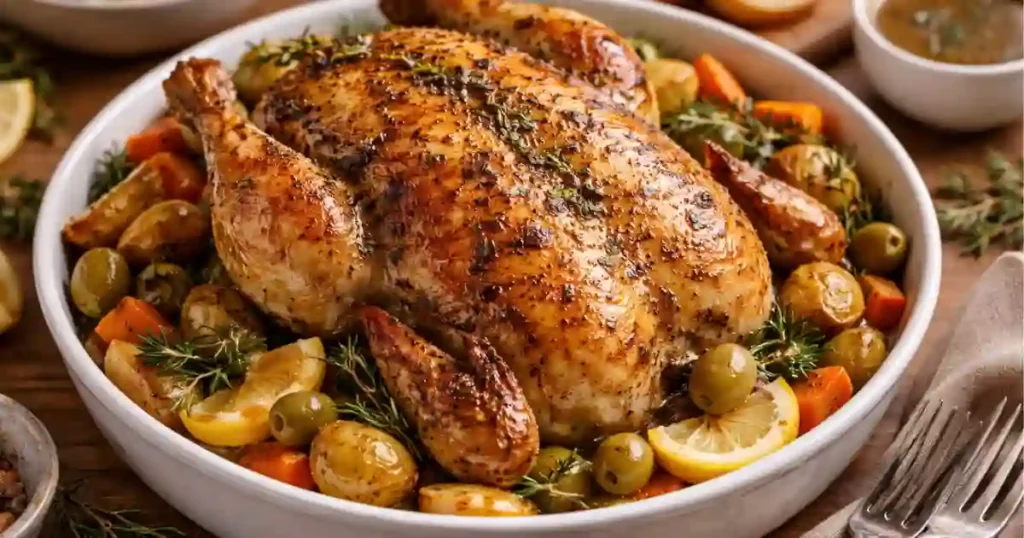
Roasting a whole chicken is one of those kitchen skills that feels basic on the surface but quickly exposes every small mistake. You follow a recipe, season generously, set the oven, and still end up with dry breast meat or skin that never quite crisps. If you are searching for how to make a perfect roasted whole chicken, chances are you want consistency more than creativity. You want a method that works every time, not just on a good day.
The truth is that a great roasted whole chicken is not about complicated techniques or expensive tools. It comes down to understanding heat, moisture, seasoning, and timing. Once those pieces click, the process becomes almost automatic. This guide walks you through each step in detail so you know not only what to do, but why it matters. The goal is simple. Juicy meat, crispy skin, and a chicken you feel confident serving.
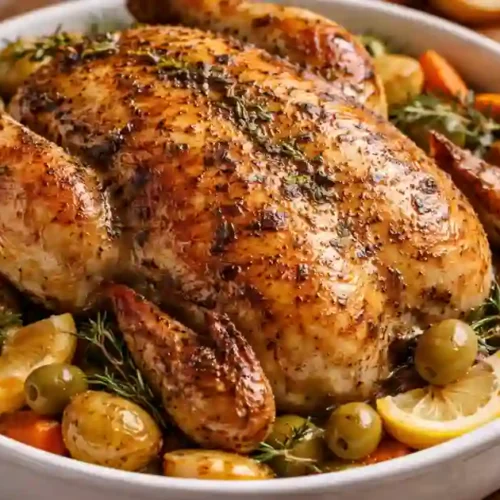
Perfect Roasted Whole Chicken

Ingredients
Chicken
- 1 whole chicken about 4 to 5 pounds
- 2 tbsp olive oil or unsalted butter
- 1 1/2 tsp kosher salt or to taste
- 1 tsp black pepper freshly ground
Optional Aromatics
- 1 lemon halved
- 4 cloves garlic
- 2 sprigs fresh rosemary or thyme
- 1 cup chicken broth for the roasting pan
- 1 onion roughly chopped
- 2 carrots chopped
- 2 stalks celery chopped
Instructions
- Preheat the oven to 450°F (230°C). Remove the chicken from packaging and pat completely dry with paper towels.
- Season the cavity of the chicken generously with salt and pepper. Stuff loosely with lemon, garlic, and herbs if using.
- Gently loosen the skin over the breast and thighs. Rub half of the olive oil or butter underneath the skin, then rub the remaining fat over the outside of the chicken. Season all over with salt and pepper.
- Scatter onion, carrots, celery, and garlic in the bottom of a roasting pan. Pour in the chicken broth.
- Place the chicken breast-side up on top of the vegetables. Roast uncovered at 450°F (230°C) for 15 to 20 minutes.
- Reduce the oven temperature to 350°F (175°C) and continue roasting until the thickest part of the thigh reaches 165°F (74°C), about 18 to 20 minutes per pound.
- If the skin browns too quickly, loosely tent the chicken with foil. Once done, remove from the oven and let rest for 15 to 20 minutes before carving.
Notes
Table of Contents
Table of Contents
Why You’ll Love This Recipe
- Reliable, repeatable results: This method removes the guesswork so your roasted whole chicken turns out juicy and well seasoned every time.
- Simple ingredients: No specialty items or complicated marinades. Everything is easy to find and easy to use.
- Crispy skin, tender meat: The temperature approach is designed specifically to balance browning with moisture.
- Perfect for any occasion: It works just as well for a quiet family dinner as it does for guests.
- Comforting and impressive: There is something deeply satisfying about bringing a golden roasted whole chicken to the table. It feels classic, generous, and quietly impressive without being fussy.
Why Roasting a Whole Chicken Is Worth It
A roasted whole chicken is one of the most practical meals you can make. It feeds multiple people, stretches into leftovers, and forms the base for soups, salads, and sandwiches later in the week. Compared to buying individual cuts, a whole chicken is usually more affordable and delivers better flavor when cooked properly.
Roasting also allows the chicken to cook evenly in a controlled environment. The oven surrounds the bird with steady heat, rendering fat from the skin while gently cooking the meat underneath. When done correctly, the breast stays moist, the thighs become tender, and the skin turns deeply golden without burning.
There is also a simplicity to it. One pan, a handful of ingredients, and a predictable outcome. Once you master roasted whole chicken, it becomes a dependable fallback meal that never feels boring.
Ingredients Needed
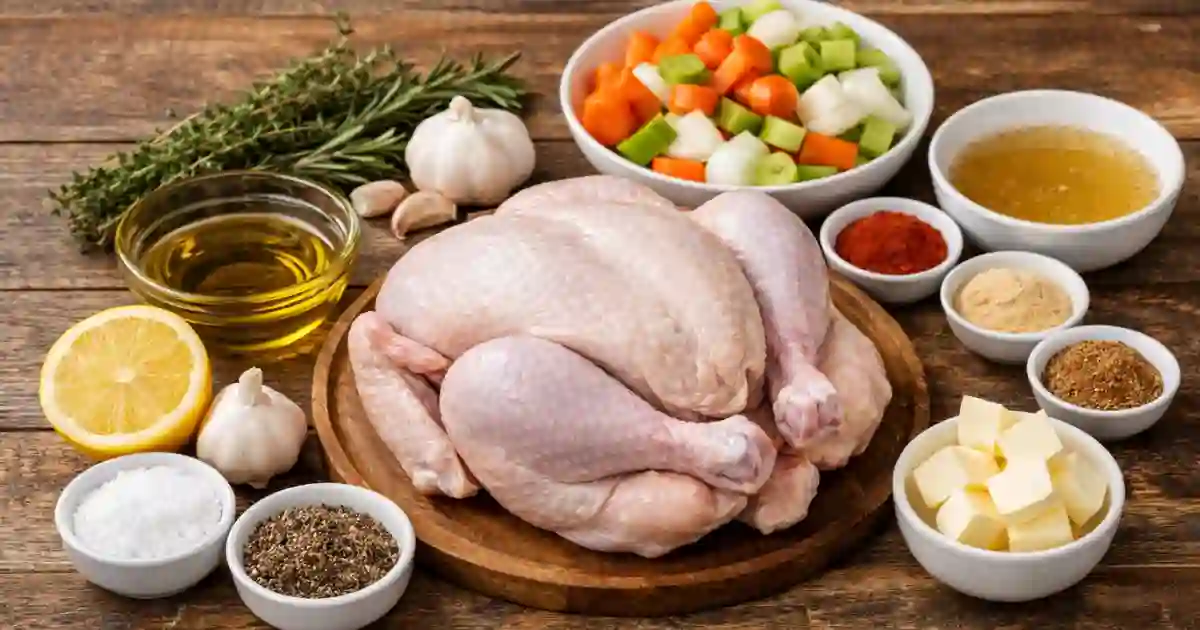
You do not need a long ingredient list to make a flavorful roasted whole chicken. In fact, keeping things minimal helps the natural flavor of the chicken stand out.
Essential Ingredients
- 1 whole chicken, 4 to 5 pounds
- Olive oil or unsalted butter
- Kosher salt
- Freshly ground black pepper
Optional Add Ins for Flavor
- Fresh herbs such as rosemary or thyme
- Garlic cloves
- Lemon, halved
- Onion, carrots, and celery
- Paprika, garlic powder, or onion powder
- Chicken broth
These optional ingredients enhance aroma and depth, but the core technique works even with just salt, pepper, and fat.
Step-by-Step Preparation Guide
Preparation is where 80% of your final result is decided.
Butter Under the Skin: Gently slide your fingers under the skin covering the breast and thighs to loosen it. Spread half of your softened butter directly onto the meat underneath.
Dry Thoroughly: Remove the chicken from its packaging and pat it completely dry inside and out using paper towels. Moisture is the enemy of crispiness; any surface water will cause the skin to steam rather than roast.
Season the Cavity: Season the inside cavity generously with salt and pepper. Stuff the lemon halves, garlic head, and fresh herb sprigs loosely inside.
PRO TIP: Trussiing your bird holds the legs and wings tight against the body, ensuring the thin breast meat cooks at the exact same rate as the thighs. Using a simple 100 pour 100 Cotton Culinary Kitchen Twine takes less than a minute and guarantees even cooking throughout.
Season the Exterior: Rub the remaining butter or olive oil over the outside skin. Coat generously with kosher salt and black pepper.
See how to make this Roasted Whole Chicken recipe in the video below.
Setting Up the Roasting Pan
What sits under the chicken matters just as much as what goes on top. Elevating the bird allows hot air to circulate underneath, preventing a soggy bottom.
Add the garlic cloves and herb sprigs, then pour in 1 cup of chicken broth.
Scatter the chopped onion, carrots, and celery in a heavy-bottomed pan or skillet.
KITCHEN MUST-HAVE: A heavy-duty Nonstick Roasting Pan with V-Rack Nonstick Roasting Pan With V Rack allows the heat to surround the bird completely while letting all the savory drippings fall into the vegetable bed for the ultimate homemade gravy.
Place the prepped chicken breast-side up directly on top of the vegetables or roasting rack.
Cooking Temperature and Timing Rules
Temperature control is critical for whole-chicken success:
Expect a 4 to 5 lb chicken to take approximately 75 to 90 minutes in total.
Phase 1 (Initial Blast of Heat): Pre-heat oven to 450°F (230°C). Roast the chicken for 15 to 20 minutes. High heat jumpstarts skin browning and rapidly renders surface fat.
Phase 2 (Gentle Roasting): Lower oven temperature to 350°F (175°C). Continue roasting for roughly 18 to 20 minutes per pound.
How to Know When Your Chicken Is Done
Relying solely on visual cues or timer bells can lead to raw legs or bone-dry breast.
THE SECRET TO JUICY MEAT: The only 100% reliable way to guarantee perfectly cooked chicken is by checking internal temperature. An Instant Read digital Meat Thermometer eliminates all guesswork. Insert the probe into the thickest part of the thigh without touching the bone your chicken is safely cooked when it reaches 165°F (74°C).
(If the skin gets too dark before reaching 165°F, loosely tent a sheet of aluminum foil over the top).
Why Resting the Chicken Is Important
Once the chicken comes out of the oven, let it rest for 15 to 20 minutes before carving. Resting allows the juices to redistribute throughout the meat instead of spilling out immediately.
If you cut too soon, even a properly cooked roasted whole chicken can seem dry. This short wait dramatically improves texture and flavor.
During this time, you can strain the pan juices and simmer them briefly to create a simple sauce or gravy.
Secrets for Ultra-Crispy Skin and Juicy Meat
The Fridge Dry-Brine: Season the chicken with salt and leave it uncovered in the fridge overnight. The dry cold air dehydrates the outer skin layer for unmatched crispiness.
Butter Under, Oil Over: Butter under the skin adds rich moisture to the meat; oil on the exterior helps heat transfer for an even golden color.
Never Baste: Opening the oven door to baste cools down the oven and pours liquid onto the skin, turning it soft and rubbery.
Common Roasted Whole Chicken Problems and Solutions
| Problem | Cause | Solution |
| Skin Is Rubber / Not Crispy | Excess surface moisture or low oven temp. | Pat dry thoroughly before cooking; blast with heat at 450°F initially or broil for the last 2 minutes. |
| Breast Meat Is Dry | Overcooking or high internal temp. | Pull chicken out when breast reaches 160°F—carryover cooking will bring it up to 165°F while resting. |
| Uneven Cooking | Cold chicken placed in hot oven. | Let chicken sit at room temperature for 30 minutes before roasting. |
Serving Ideas and Leftover Storage
How to Serve
Transfer the rested chicken to a wooden cutting board, carve into quarters or eight pieces, and spoon warm pan juices over the meat. Serve alongside garlic mashed potatoes, roasted asparagus, or a crisp green salad.
How to Store & Reheat
Reheating: Reheat gently in a 325°F oven covered loosely with foil until warm. Avoid microwaving to protect the texture.
Refrigerator: Store leftover meat in an airtight container with a spoonful of pan juices for up to 4 days.
Helpful Notes
If you want deeper flavor, seasoning the chicken and letting it rest uncovered in the refrigerator overnight helps dry the skin and improves browning. Bringing the chicken closer to room temperature before roasting also encourages more even cooking. If your oven runs hot or uneven, rotating the pan halfway through roasting can prevent overbrowning on one side.
For variations, the same technique works with different flavor profiles. Swap herbs, add spices to the butter, or use citrus other than lemon. Once you understand the core method, adjusting flavors becomes easy without risking the final texture.
Frequently Asked Question
Can I cook a whole chicken without a thermometer?
Yes, but it increases the risk of overcooking or undercooking. Clear juices and loose joints are helpful signs, but a thermometer removes guesswork and leads to better results.
How to roast a chicken so it stays moist?
This is the “holy grail” of roasting. It addresses the challenge of cooking the legs thoroughly without overcooking the lean breast meat.
How long should you roast a full chicken?
A fundamental logistics question. Most users look for a time-per-weight guide (e.g., 20 minutes per pound) to plan their meal effectively.
Is whole chicken done at 165 or 180?
This is a critical safety and quality question. While older recipes often suggested 180°F, modern food safety standards and culinary experts agree that 165°F (74°C) is the internal temperature for a perfectly cooked, safe, and juicy chicken.
How long to let a whole roasted chicken rest?
This is the most skipped but vital step. Resting (usually 15–20 minutes) allows the juices to reabsorb into the fibers; cutting it too soon results in all the moisture running out onto the cutting board.
Should I cover the chicken while roasting?
Users ask this to balance two goals: keeping the meat from drying out (covered) versus getting that golden, crispy skin (uncovered).
What are common roast chicken mistakes?
This covers the “what not to do” aspect, such as putting water in the pan (which steams the bird instead of roasting it) or failing to pat the skin dry before seasoning.
Estimated Nutrition Information
(Per serving, assuming 6 servings per 4.5 lb bird)
Sodium: 520 mg
Calories: 380 kcal
Protein: 42 g
Total Fat: 24 g
Saturated Fat: 7 g
Carbohydrates: 1 g
Conclusion
Mastering a roasted whole chicken gives you a foundational culinary building block. By controlling surface moisture, utilizing dual oven temperatures, and respecting the resting period, you’ll produce restaurant-quality roast chicken at home every single time. Try this recipe tonight, tag us with your results, and don’t forget to save your chicken carcass to make rich homemade bone broth!
If you enjoyed this Roasted Whole Chicken Recipe, you will love my another recipes too
. Mediterranean Chickpea Salad Recipe (Healthy, Easy & Quick)
. Cozy Vanilla Jasmine Milk Tea Recipe (Hot & Iced)
. Easy Authentic Chicken Biryani Recipe
. Crab and Shrimp Stuffed Salmon with Lemon Butter Sauce
. Easy Creamy Turtle Cheesecake Recipe with Caramel and Pecans
For more delicious and easy recipes, follow me on Facebook and Pinterest
This recipe was written and tested by Rasha, the founder of Recipesedeas. Rasha is a food enthusiast living in the USA, sharing her family-inspired recipes and culinary adventures