

Making homemade sushi sounds ambitious until you realize most people overcomplicate it. Honestly, that’s probably why so many first attempts end with rice glued to fingers, uneven rolls, and one dramatic moment where everything falls apart on the cutting board. But here’s the thing: homemade sushi is supposed to feel a little imperfect. That’s part of the charm.
The good news? You do not need a sushi chef’s training or a fancy kitchen setup to make sushi rolls at home that taste genuinely satisfying. You just need the right rice texture, a few fresh ingredients, and a couple of small tricks that most recipe posts barely explain.
This homemade sushi recipe is built specifically for beginners. It walks you through sushi rice, fillings, rolling techniques, common mistakes, and even what to do if you do not own a bamboo mat. Whether you want a cozy date-night dinner, a fun family cooking project, or simply cheaper sushi without sacrificing flavor, this guide covers everything in a realistic, stress-free way.

Beginner-Friendly Homemade Sushi Rolls

Equipment
- Bamboo sushi mat
- Sharp knife
- Rice cooker or saucepan
- Rice paddle or spoon
- Small bowl
- Plastic wrap
Ingredients
Sushi Rice
- 2 cups short-grain sushi rice rinsed until water runs mostly clear
- 2 cups water
- 1/4 cup rice vinegar
- 2 tablespoons granulated sugar
- 1 teaspoon salt
Sushi Roll Fillings
- 4 sheets nori seaweed sheets
- 1 avocado thinly sliced
- 1 cucumber cut into thin strips
- 8 sticks imitation crab
- 8 cooked shrimp optional
- 4 oz smoked salmon optional
For Serving
- 1/4 cup soy sauce
- 2 tablespoons pickled ginger
- 1 teaspoon wasabi optional
Instructions
- Rinse the sushi rice under cold water until the water runs mostly clear. This helps remove excess starch and prevents gummy rice.
- Cook the sushi rice with the water according to package instructions or in a rice cooker.
- While the rice cooks, combine rice vinegar, sugar, and salt in a small bowl. Stir until dissolved.
- Transfer the cooked rice to a large bowl and gently fold in the vinegar mixture using a rice paddle or spoon. Avoid overmixing.
- Allow the rice to cool to room temperature before assembling the sushi rolls.
- Place a sheet of nori shiny-side down on a bamboo sushi mat wrapped in plastic wrap.
- Lightly wet your hands to prevent sticking, then spread a thin layer of sushi rice evenly across the nori, leaving about 1 inch uncovered at the top edge.
- Add avocado, cucumber, imitation crab, shrimp, smoked salmon, or your preferred fillings horizontally across the center of the rice.
- Lift the bamboo mat and roll the sushi tightly forward while gently pressing to shape the roll evenly.
- Seal the edge of the nori with a small amount of water.
- Use a very sharp knife dampened with water to slice each sushi roll into 6 to 8 pieces. Wipe the knife clean between cuts for cleaner slices.
- Serve immediately with soy sauce, pickled ginger, and wasabi.
Notes
Table of Contents
Table of Contents
Why You’ll Love This Easy Homemade Sushi
• Beginner-friendly instructions that actually explain the confusing parts instead of assuming you already know them
• Uses simple grocery store ingredients without requiring expensive specialty fish
• Perfect for date nights, dinner parties, family cooking nights, or meal prep lunches
• Flexible filling ideas for seafood lovers, vegetarians, and picky eaters
• Much more affordable than restaurant sushi while still feeling special
• Includes practical troubleshooting tips so your rolls do not completely fall apart halfway through
What makes this homemade sushi recipe different is the balance between simplicity and realism. A lot of sushi tutorials either oversimplify the process or make it feel intimidating. This one lands somewhere in the middle. Your first rolls might look slightly messy. Mine definitely did. But once you taste fresh sushi rice with creamy avocado and crisp cucumber wrapped in nori, you stop caring about perfection surprisingly fast.
Essential Ingredients and Tools for Sushi Making
One reason people avoid making sushi at home is the assumption that it requires dozens of specialty ingredients. Actually, scratch that. Technically, you can go deep into authentic sushi equipment and premium fish sourcing. But for beginners? Simplicity wins.
Here’s what you really need:
Essential Sushi Ingredients
• Sushi rice
• Rice vinegar
• Sugar
• Salt
• Nori sheets
• Fresh cucumber
• Avocado
• Imitation crab, cooked shrimp, smoked salmon, or sushi-grade fish
• Soy sauce
• Pickled ginger
• Wasabi
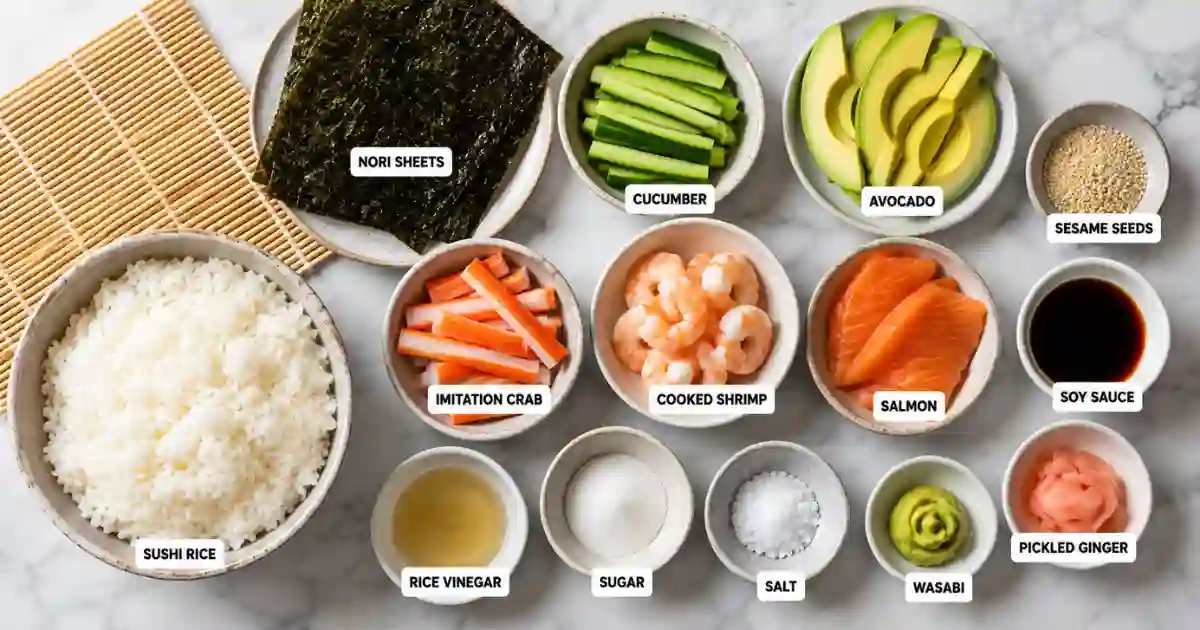
Sushi Ingredients & Tools Table
| Core Ingredients | Suggested Fillings | Serving & Toppings |
| • Short-grain sushi rice • Rice vinegar • Sugar and Salt • Nori sheets (Seaweed) | • Fresh cucumber and carrots • Creamy avocado • Imitation crab sticks • Cooked shrimp or Smoked salmon | • Soy sauce • Pickled ginger • Wasabi • Spicy mayo |
Short-grain sushi rice matters more than almost anything else here. Regular long-grain rice simply does not create that sticky texture sushi rolls need. People try it anyway. Regret usually follows.
Beginner Sushi Tools
• Bamboo sushi mat
• Sharp knife
• Small bowl of water
• Rice paddle or spoon
• Plastic wrap
If you do not own a bamboo mat, do not panic. You can absolutely use parchment paper or even a kitchen towel wrapped in plastic wrap. The internet sometimes acts like sushi mats are sacred equipment. They help, yes. But they are not magic.
The Secret to Perfect Sushi Rice
If homemade sushi fails, it is usually because of the rice. Not the fish. Not the rolling. Definitely not the avocado.
Sushi rice should feel sticky without becoming mushy. That balance sounds small, but it changes everything. Too dry? Rolls crack apart. Too wet? You end up with a gummy mess that somehow sticks to every surface except the nori.
Ingredients for Sushi Rice
• 2 cups sushi rice
• 2 cups water
• 1/4 cup rice vinegar
• 2 tablespoons sugar
• 1 teaspoon salt
How to Make Sushi Rice
- Rinse the sushi rice under cold water until the water runs mostly clear.
- Cook according to package instructions or in a rice cooker.
- While the rice cooks, combine rice vinegar, sugar, and salt in a small bowl.
- Let the rice cool slightly before gently folding in the vinegar mixture.
- Allow the rice to cool to room temperature before rolling sushi.
One mistake beginners make is using hot rice immediately. Warm rice tears nori and creates uneven rolls. Room temperature rice behaves completely differently.
Another small but important detail? Wet your fingers lightly before touching the rice. Otherwise, it clings to your hands like glue. Nobody talks about how weirdly frustrating this part feels the first time.
Why Does Sushi Rice Become Gummy?
Usually one of three reasons:
• Too much water during cooking
• Overmixing the rice
• Using the wrong rice variety
Good sushi rice should hold together while still showing individual grains. That texture is what gives homemade sushi its restaurant-style bite.
Best Beginner-Friendly Sushi Fillings
This is honestly where homemade sushi becomes fun. You stop thinking about strict authenticity and start realizing sushi night can be whatever you want it to be.
Beginner-Friendly Sushi Fillings
• Imitation crab and avocado
• Cooked shrimp with cucumber
• Smoked salmon and cream cheese
• Tuna with spicy mayo
• Tempura shrimp
• Egg omelet strips
If raw fish makes you nervous, cooked fillings are completely fine. In fact, many people prefer them at home because they feel safer and easier to prepare.
Vegetarian Sushi Ideas
• Avocado and cucumber
• Mango and carrot
• Sweet potato tempura
• Cream cheese and scallions
• Tofu with spicy mayo
One underrated trick? Texture contrast. Soft avocado paired with crunchy cucumber instantly makes homemade sushi taste more balanced.
And yes, spicy mayo changes everything.
How to Roll Sushi Step by Step
This is the section where most people tense up unnecessarily. Sushi rolling looks delicate online because professionals make it look effortless after years of practice.
Your first roll probably will not look symmetrical. Totally normal.
Step-by-Step Sushi Rolling
- Place a sheet of nori shiny-side down on a bamboo mat.
- Wet your hands lightly.
- Spread a thin layer of sushi rice across the nori.
- Leave about 1 inch uncovered at the top edge.
- Add fillings horizontally near the center.
- Lift the bamboo mat and roll tightly forward.
- Press gently to shape the roll.
- Seal the edge with a little water.
The biggest beginner mistake is overfilling the roll. People get ambitious and suddenly the sushi explodes from the sides like a burrito under pressure.
Less filling actually creates cleaner sushi rolls.
See how to make this recipe in the video below
How to Cut Sushi Cleanly
Use a very sharp knife and wipe it with a damp towel between slices. This sounds minor until you watch a dull knife completely crush a beautiful roll.
Cut each roll into 6 to 8 pieces.
Common Homemade Sushi Mistakes to Avoid
Everybody makes mistakes the first time. Honestly, even experienced home cooks still occasionally destroy a roll.
Mistakes to Avoid
• Using warm rice
• Overstuffing rolls
• Skipping the rice rinse
• Using dull knives
• Buying stale nori
• Pressing too hard while rolling
One particularly frustrating issue is soggy nori. If your ingredients contain too much moisture, the seaweed softens too quickly.
Dry ingredients slightly before rolling. Tiny detail. Huge difference.
Why Do Sushi Rolls Fall Apart?
Usually because:
• The rice layer is too thick
• The roll was not tight enough
• Too many fillings were added
A tighter roll with less filling almost always works better than a giant overloaded one.
Is Raw Fish Safe for Homemade Sushi?
This question quietly worries almost everyone.
The term “sushi-grade” is not heavily regulated in many places, which surprises people. Buying fish from a trusted seafood market matters more than flashy labeling.
For beginners, safer options include:
• Smoked salmon
• Cooked shrimp
• Imitation crab
• Seared tuna
• Tempura shrimp
If using raw fish:
• Buy from reputable seafood sellers
• Keep fish cold at all times
• Use it the same day whenever possible
Honestly, there is zero shame in avoiding raw fish entirely at home. Plenty of amazing sushi rolls use cooked ingredients.
Homemade Sushi Without a Bamboo Mat
No sushi mat? You can still make homemade sushi successfully.
Alternatives to a Sushi Mat
• Parchment paper
• Plastic wrap over a towel
• Flexible silicone baking mats
The goal is simply creating enough pressure to shape the roll evenly.
Some people even use cling wrap alone. It works surprisingly well, though it feels slightly chaotic the first time.
Fun Sushi Ideas for Date Nights and Parties
Homemade sushi works because it feels interactive. People naturally gather around ingredients and start experimenting.
Sushi Night Ideas
• DIY sushi rolling stations
• Build-your-own sushi platters
• Sushi and movie night
• Sushi dinner parties
• Family sushi competitions
And financially? Homemade sushi can save a ridiculous amount of money compared to restaurant prices.
A sushi dinner for four at a restaurant might easily cost over $100. Homemade versions often cost less than half that.
There is also something oddly satisfying about eating slightly imperfect sushi you made yourself. It feels more personal. Less polished. Weirdly more memorable.
Serving, Storing, and Nutrition Information
Best Ways to Serve Homemade Sushi
• Arrange sushi on a wooden board or dark serving plate for contrast
• Garnish with sesame seeds, sliced green onions, or spicy mayo drizzle
• Serve with soy sauce, pickled ginger, and wasabi
• Pair with miso soup or edamame for a complete meal
Fresh sushi tastes best immediately after rolling. The texture changes as it sits, especially the nori.
How to Store Homemade Sushi
• Store leftovers in an airtight container in the refrigerator
• Best eaten within 24 hours
• Avoid freezing because rice texture changes significantly
• Keep sauces separate until serving
Cold sushi rice becomes firmer in the fridge. Let refrigerated sushi sit at room temperature for about 15 minutes before eating.
Nutrition Information
Estimated Nutrition Per Roll
Calories: 250–320
Protein: 8–14g
Carbohydrates: 38–45g
Fat: 7–12g
Fiber: 3–5g
Sodium: Varies depending on soy sauce and fillings
Nutrition Facts Table
| Nutrient | Estimated Amount (Per Roll) |
| Calories | 250 – 320 kcal |
| Protein | 8 – 14 g |
| Carbohydrates | 38 – 45 g |
| Fat | 7 – 12 g |
| Fiber | 3 – 5 g |
Nutrition varies based on fillings and sauces used.
Helpful Notes
• Wet hands prevent rice sticking
• Use less filling than you think you need
• Sharp knives matter more than expensive tools
• Room temperature rice rolls better
• Fresh avocado improves texture dramatically
• Toasted sesame seeds add restaurant-style flavor
One thing people rarely mention? Homemade sushi gets easier very quickly. The first roll feels awkward. By the fourth or fifth roll, your hands suddenly understand the process.
Kind of like learning to wrap a burrito without everything escaping from the bottom.
Frequently Asked Questions (FAQ) for Homemade Sushi
Can I make homemade sushi without raw fish?
Absolutely. Cooked shrimp, imitation crab, smoked salmon, tofu, and vegetables all work beautifully.
What rice is best for sushi?
Short-grain Japanese sushi rice creates the best sticky texture for homemade sushi rolls.
Why is my sushi rice too sticky?
Usually because of excess water or overmixing after cooking.
Can I refrigerate sushi overnight?
Yes, but sushi tastes best fresh. Refrigerate in an airtight container and eat within 24 hours.
Do I need a bamboo mat?
No. Parchment paper or plastic wrap can work surprisingly well for beginners.
Can I make homemade sushi ahead of time?
Yes, but homemade sushi tastes best fresh. If you need to prepare it ahead, make the sushi rice a few hours early and store it covered at room temperature. Fully assembled sushi rolls can be refrigerated for a short time, though the nori may soften slightly. For the best texture and flavor, try to serve sushi within 24 hours.
What can I use instead of nori seaweed?
If you are not a fan of seaweed, you can use thin cucumber slices, soy paper, rice paper, or even lettuce wraps for a different twist. Some people skip the outer wrap completely and make sushi bowls instead. Honestly, sushi becomes a lot less intimidating once you realize the rules are more flexible than they seem.
Why does my sushi roll unravel after cutting?
This usually happens when the roll is too loose or overfilled. Applying gentle pressure while rolling helps the ingredients stay compact. Another important detail is letting the roll rest for about a minute before slicing. It sounds unnecessary, but that short pause helps everything settle into shape.
What sauces go best with homemade sushi?
Soy sauce is the classic option, but homemade sushi becomes much more exciting with extra sauces. Popular choices include spicy mayo, eel sauce, sriracha, ponzu sauce, and yum yum sauce. A drizzle of spicy mayo with toasted sesame seeds can make even a simple cucumber roll taste surprisingly restaurant-worthy.
Conclusion
Homemade sushi feels intimidating right up until the moment you realize it is mostly about rhythm, not perfection. The rice gets easier. The rolling gets cleaner. And eventually you stop obsessing over whether your sushi looks restaurant-quality because honestly? Fresh homemade sushi has its own kind of charm.
What surprises most people is how fun the process becomes. A simple sushi night somehow turns into conversation, experimenting, laughing at crooked rolls, and reaching for “just one more piece.”
And maybe that’s the real reason homemade sushi keeps people coming back to it. Not because every roll looks flawless, but because the experience feels surprisingly satisfying from start to finish.
If you enjoyed this Homemade Sushi Recipe, you will love my [Bacon Potato and Egg Casserole Recipe and Smash Gyoza Recipe ] recipe too
For more delicious and easy recipes, follow me on Facebook and Pinterest
If you enjoyed this recipe, feel free to leave a comment below or follow me on my culinary journey!
This recipe was written and tested by Rasha, the founder of Recipesedeas. Rasha is a food enthusiast living in the USA, sharing her family-inspired recipes and culinary adventures