
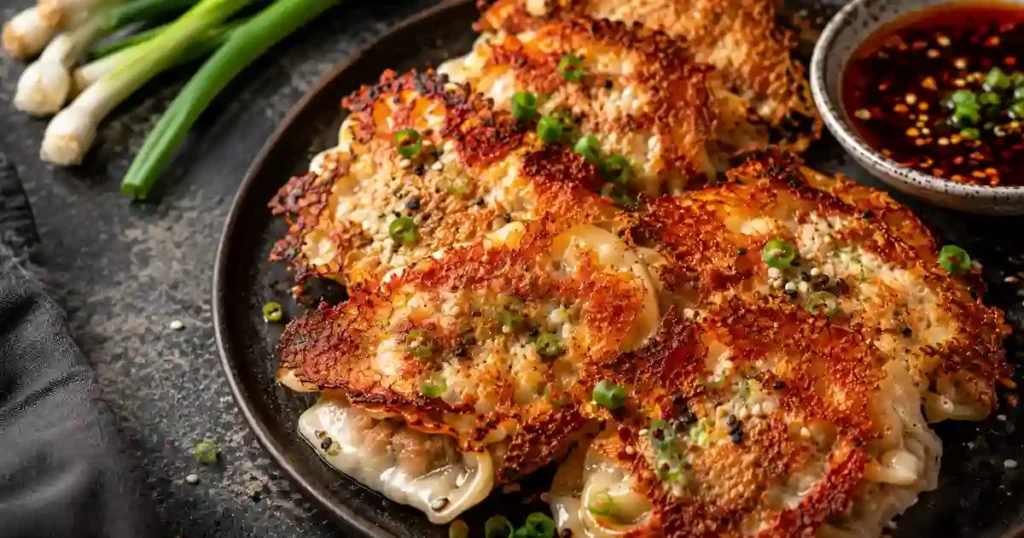
There’s something oddly satisfying about hearing dumplings crackle in a hot pan after a long day. Maybe it’s the sound. Maybe it’s the promise of crispy edges and juicy filling without spending two hours folding tiny pleats like a professional chef on YouTube. Either way, this smash gyoza recipe hits that sweet spot between comfort food and “wow, I actually made this myself.”
Traditional gyoza can feel intimidating at first. The folding. The sealing. The inevitable moment where one bursts open and suddenly your kitchen looks like a dumpling crime scene. Smash gyoza changes all of that. You simply press the filling onto the wrapper directly in the pan, creating an ultra crispy bottom with far less effort and honestly… maybe even more flavor.
What makes this version stand out is the texture contrast. Crispy golden wrappers underneath. Juicy savory filling on top. A little spicy dipping sauce on the side. It’s the kind of meal people pretend they’ll “just try one” of before quietly eating six straight from the skillet.
If you’ve been craving an easy dumpling recipe that feels impressive without becoming a weekend project, this one’s probably going to stay in your rotation for a while.
Smash Gyoza
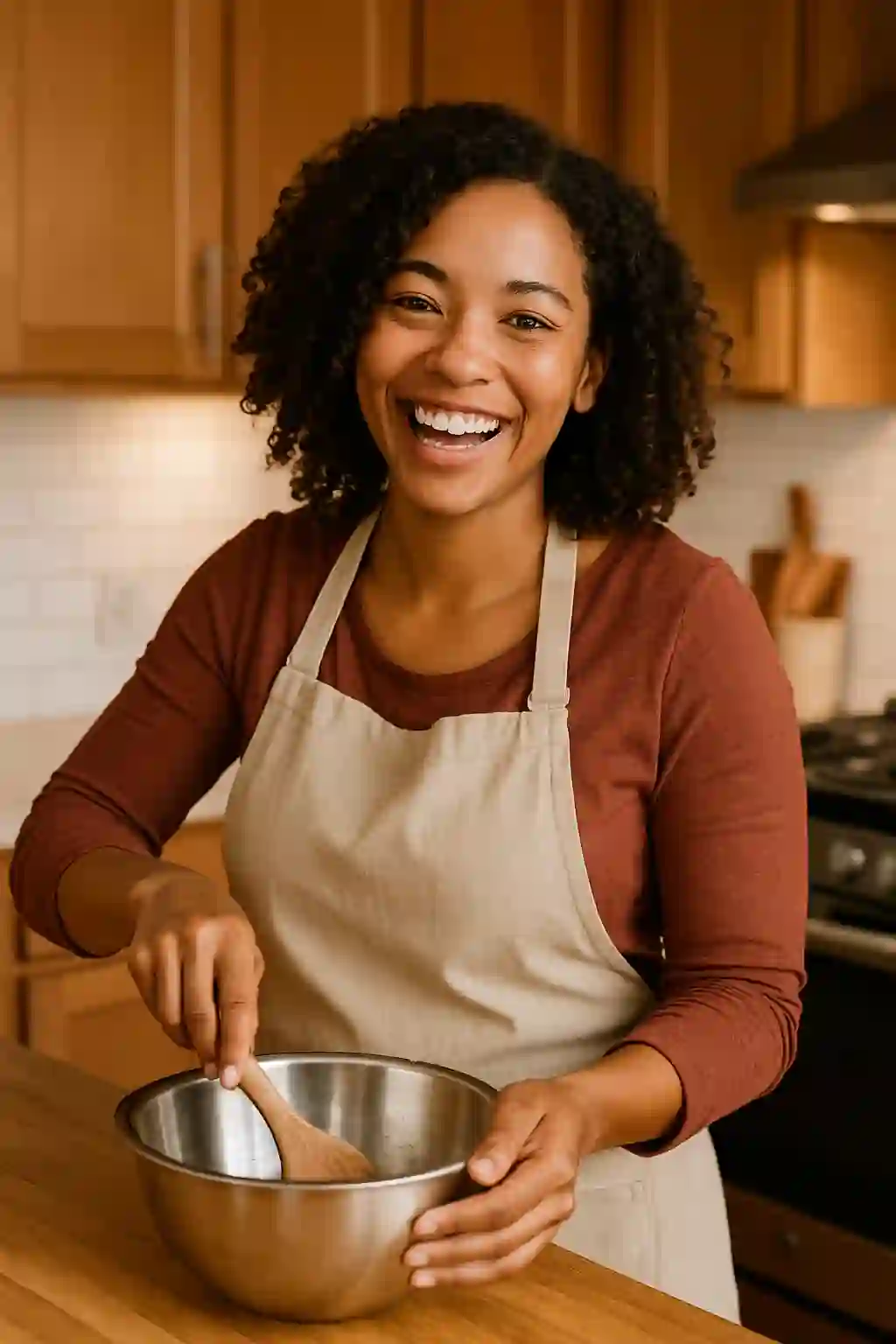
Equipment
- Large nonstick skillet
- Mixing bowl
- Spatula
- Knife
- Cutting board
- Measuring spoons
Ingredients
For the Filling
- 1 pound ground pork 80/20 preferred
- 2 cups finely shredded cabbage lightly salted and squeezed dry
- 3 green onions thinly sliced
- 3 cloves garlic minced
- 1 tablespoon fresh ginger grated
- 1 tablespoon soy sauce
- 1 tablespoon sesame oil
- 1 teaspoon rice vinegar
- 1 teaspoon salt or to taste
- 1/2 teaspoon black pepper or to taste
- 1/4 cup water chestnuts finely chopped, optional
For the Wrappers
- 20 round gyoza wrappers
- 2 tablespoons neutral oil for frying
- 1/4 cup water for steaming
For the Dipping Sauce
- 2 tablespoons soy sauce
- 1 tablespoon rice vinegar
- 1 tablespoon chili crisp or chili oil
- 1 teaspoon sesame seeds
- 1 teaspoon honey optional drizzle
Instructions
- In a large mixing bowl, combine the ground pork, shredded cabbage, green onions, garlic, ginger, soy sauce, sesame oil, rice vinegar, salt, black pepper, and optional water chestnuts. Mix gently until just combined.
- Heat a large nonstick skillet over medium heat and add a thin layer of neutral oil.
- Place the gyoza wrappers directly into the skillet. Spoon a small amount of filling onto each wrapper and gently flatten the filling with the back of a spoon.
- Cook uncovered for 3 to 4 minutes until the bottoms become golden brown and crispy.
- Carefully add water to the pan and immediately cover with a lid. Steam the gyoza for 4 to 5 minutes until the filling is fully cooked.
- Remove the lid and continue cooking for another 1 to 2 minutes until the remaining water evaporates and the bottoms crisp again.
- In a small bowl, mix together soy sauce, rice vinegar, chili crisp, sesame seeds, and optional honey to create the dipping sauce.
- Serve the smash gyoza immediately while hot and crispy with the dipping sauce on the side.
Notes
Why You’ll Love This Smash Gyoza Recipe
• Quick and beginner friendly with no complicated pleating or folding
• Crispy golden bottoms that taste almost restaurant quality
• Uses simple ingredients you can find in most grocery stores
• Perfect for weeknight dinners, game nights, or casual gatherings
• Easily customizable with pork, chicken, shrimp, or vegetarian fillings
• Delivers the comfort of homemade dumplings with far less work
What really makes smash gyoza special is the cooking method itself. Flattening the filling directly onto the wrapper creates more contact with the hot pan, which means extra crunch in every bite. And honestly? That crispy texture is what keeps people coming back for another batch before the first one even cools down.
The Science of Steam and Sear: Why Smash Gyoza Stays Juicy
One of the reasons smash gyoza tastes so ridiculously satisfying comes down to something surprisingly simple: the balance between steam and sear.
At first glance, it just looks like dumplings sizzling in a pan. But there’s actually a very specific cooking reaction happening in those few minutes. The bottom layer crisps while the steam trapped under the lid gently cooks the filling from above. That combination creates the texture contrast people obsess over after the first bite.
The searing stage develops flavor through browning. As the wrapper hits the hot oil, it forms that deep golden crust packed with savory richness and crunch. Then the steam phase steps in before the filling dries out. Instead of blasting the meat with direct heat the entire time, the moisture keeps everything tender and juicy inside.
Honestly, this is why smash gyoza often feels more satisfying than frozen dumplings or rushed takeout versions. The texture has layers. Crispy edges. Soft wrapper pockets. Juicy filling. Tiny bits of caramelization.
And weirdly enough, timing matters more than fancy ingredients here.
Too much steam? The bottoms turn soggy.
Too much searing? Dry filling.
The sweet spot is what creates that restaurant style balance where the dumplings almost crackle when lifted from the pan but still stay moist in the center.
A few key things help maintain that perfect texture:
• Medium heat cooks more evenly than high heat
• A lid traps steam quickly and prevents drying
• Oil creates the crispy lace effect underneath
• Resting the dumplings for 1 minute after cooking helps the filling settle
There’s also something emotional about that steam moment when you lift the lid. The smell hits first. Garlic, sesame oil, ginger. Then the sizzling comes back louder as the moisture evaporates. If you cook often, you probably know the feeling already. That tiny moment where you suddenly realize dinner is going to be very good.
What Is Smash Gyoza?
Smash gyoza is a modern shortcut version of traditional Japanese gyoza where the filling is pressed directly onto the dumpling wrapper while cooking instead of being folded and sealed individually.
The trend exploded online because it solves the one thing many people dislike about homemade dumplings: the tedious prep work. Instead of carefully shaping each piece, you simply flatten the filling onto the wrapper in the skillet. The result is thinner, crispier, and a little more rustic in the best possible way.
Traditional gyoza usually has a soft steamed top and crisp bottom. Smash gyoza leans harder into crunch. More surface area touches the pan, which creates those deeply golden crispy edges people obsess over online.
And strangely enough, the “imperfect” look actually makes it more appealing. It feels homemade. Casual. Less performative. Like the kind of food someone cooks because they genuinely want comfort food at 9 PM, not because they’re filming a cooking competition.
Ingredients for the Best Smash Gyoza
| Component | Ingredient | Technical Role | Pro Tip |
| Wrapper | Gyoza/Wonton Wrappers | Provides the crispy vessel | Keep wrappers covered with a damp cloth to prevent drying before use. |
| Protein | Ground Pork (80/20) | Adds fat for juiciness | Use pork with a bit of fat; lean meat will turn dry during the “smash” phase. |
| Aromatic | Fresh Ginger & Garlic | Neutralizes meat scents | Grate the ginger finely so it melts into the filling without being fibrous. |
| Crunch | Shredded Cabbage | Adds moisture and volume | Salt the cabbage and squeeze out excess water to prevent a soggy wrapper. |
For the Filling
• 1 pound ground pork
• 2 cups finely shredded cabbage
• 3 green onions sliced thin
• 3 garlic cloves minced
• 1 tablespoon grated ginger
• 1 tablespoon soy sauce
• 1 tablespoon sesame oil
• 1 teaspoon rice vinegar
• Salt and black pepper to taste
• Optional: chopped water chestnuts for crunch
For the Wrappers
• Round gyoza wrappers
• Neutral oil for frying
• Water for steaming
For the Dipping Sauce
• Soy sauce
• Rice vinegar
• Chili crisp or chili oil
• Sesame seeds
• Optional honey drizzle
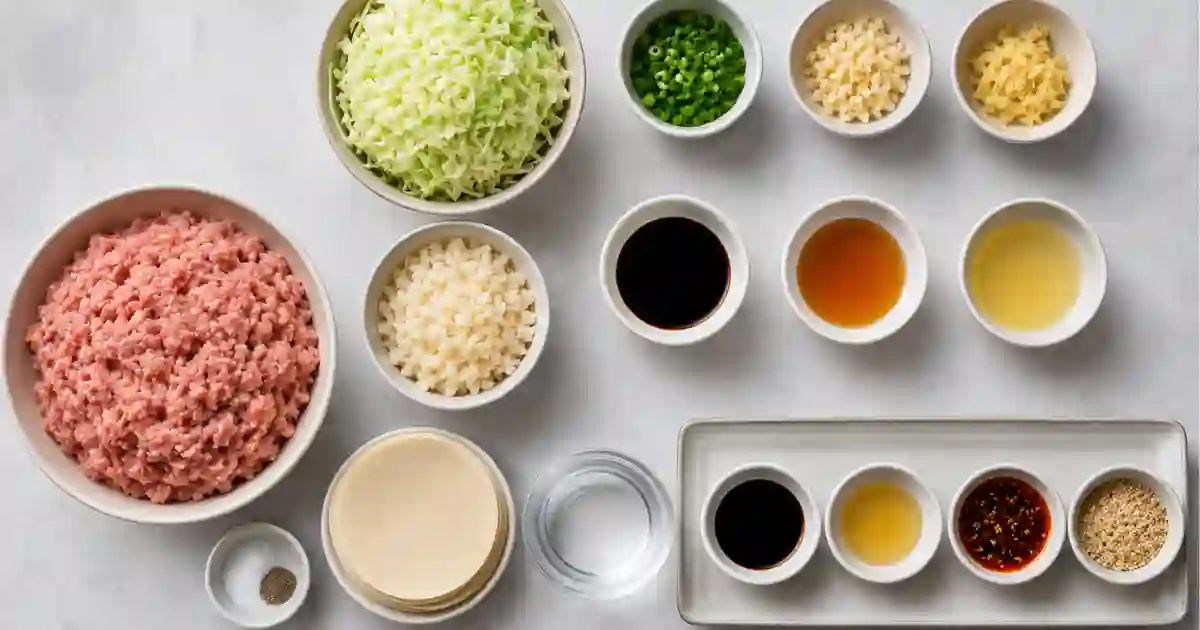
The Secret Ingredient: Why Water Chestnuts or Cabbage Matter
A lot of people assume the meat is the star of smash gyoza. Technically, yes. But the real difference between average dumplings and genuinely addictive ones often comes from the vegetables mixed into the filling.
Water chestnuts and cabbage completely change the texture.
Cabbage adds moisture and softness while helping the filling stay tender during cooking. As it cooks down, it releases subtle sweetness that balances the saltiness of soy sauce and sesame oil. It also stretches the filling naturally without making the dumplings feel heavy.
Water chestnuts do something different.
They add crunch.
Not overwhelming crunch. More like tiny crisp bites hidden inside the filling that keep the texture interesting. It’s subtle enough that some people can’t immediately identify what makes the dumplings taste better, but they notice something feels more balanced.
Actually, this is one of those restaurant tricks many home cooks overlook.
Without vegetables, ground pork alone can feel dense or greasy after a few bites. The cabbage lightens everything. The water chestnuts create contrast. Together they stop the filling from becoming one heavy texture all the way through.
If you want the best texture possible:
• Finely chop cabbage so it blends evenly
• Salt cabbage lightly first to remove excess water
• Dice water chestnuts small enough for subtle crunch
• Avoid overloading the filling with watery vegetables
Some people skip water chestnuts entirely because they think they’re optional. And technically they are. But once you try them in smash gyoza, it’s hard not to notice the difference afterward.
It’s kind of like adding pickles to a burger. You may not think about them constantly, but remove them and suddenly something feels missing.
Water chestnuts might sound random at first, but they add this subtle crunch that keeps the filling from feeling too soft. It’s one of those tiny details restaurant kitchens quietly rely on.
And if you can’t find gyoza wrappers? Honestly, wonton wrappers still work. Slightly different texture, but still delicious.
The Secret to Crispy Smash Gyoza
The biggest mistake people make with smash gyoza is using heat that’s too high too early.
A screaming hot pan sounds logical until the wrappers burn before the filling cooks through. Medium heat works better because it gives the wrappers enough time to slowly develop that deep golden crust.
Another important trick is steam control. After the bottoms crisp slightly, adding a splash of water and covering the pan creates steam that cooks the filling without drying it out. Then once the lid comes off, the remaining moisture evaporates and the bottoms crisp again.
That second crisping phase? That’s the magic.
A few helpful texture tips:
• Avoid overfilling the wrappers
• Pat cabbage dry if it holds excess moisture
• Let the pan reheat between batches
• Don’t move them too early while crisping
• Use enough oil to coat the surface lightly
You’ll know they’re ready when the bottoms release naturally from the pan. If they stick aggressively, they probably need another minute.
How to Make Smash Gyoza
Step 1: Prepare the Filling
In a large bowl, combine ground pork, cabbage, green onions, garlic, ginger, soy sauce, sesame oil, and rice vinegar.
Mix gently until combined.
Not aggressively. Overmixing can make the filling dense, and nobody really wants chewy dumplings.
Step 2: Heat the Pan
Add a thin layer of oil to a large nonstick skillet over medium heat.
Place the wrappers directly into the pan.
Then spoon a small amount of filling onto each wrapper and gently flatten it using the back of the spoon.
This is the “smash” part.
It feels oddly satisfying, honestly.
Step 3: Crisp the Bottoms
Cook uncovered for about 3 to 4 minutes until the bottoms become golden brown.
You should hear a steady sizzling sound. Not violent popping. Gentle sizzling.
Step 4: Steam the Gyoza
Add a few tablespoons of water carefully into the pan and cover immediately.
Steam for 4 to 5 minutes until the filling cooks through completely.
Step 5: Crisp Again
Remove the lid and continue cooking another 1 to 2 minutes until the water evaporates and the bottoms crisp again.
That final crunch is everything.
Serve immediately with dipping sauce.
See how to make this recipe in the video below
Why Does Smash Gyoza Taste So Good?
Smash gyoza tastes so satisfying because it combines multiple textures in one bite: crispy fried wrapper, juicy savory filling, and a slightly chewy center. The smashed cooking method also creates more caramelization, which adds deeper flavor.
That contrast between crunchy and juicy is what makes people keep reaching for another one without really thinking about it.
Best Variations for Smash Gyoza
Chicken Smash Gyoza
Swap pork for ground chicken if you want something lighter. Add a little extra sesame oil to maintain moisture.
Spicy Korean Inspired Version
Mix gochujang into the filling and top with kimchi after cooking.
This version disappears ridiculously fast at parties.
Vegetarian Smash Gyoza
Use mushrooms, tofu, cabbage, carrots, and green onions for a hearty meat free option.
Shrimp Smash Gyoza
Chop shrimp finely and combine with garlic, ginger, and cabbage for a sweeter seafood flavor.
Air Fryer Method
Yes, technically you can use an air fryer.
Will it taste identical? Not quite. You lose a bit of the pan fried texture. Still good though, especially when you don’t want to stand over the stove.
What to Serve with Smash Gyoza
Smash gyoza works best with simple sides that balance the richness.
Good pairings include:
• Cucumber salad
• Miso soup
• Chili garlic noodles
• Steamed rice
• Pickled vegetables
• Kewpie mayo sauces
• Asian slaw
A cold cucumber salad next to hot crispy dumplings creates this really satisfying contrast. Especially during warmer months.
These crispy dumplings are a showstopper on their own. If you’re looking for a refreshing balance to the rich, fried texture, pair them with our [Creamy Fresh Fruit Salad] for a bright finish. Or, for a full Pan-Asian feast, serve them alongside our [Sheet Pan Chicken Souvlaki] the Mediterranean and Asian fusion flavors work surprisingly well for a modern culinary journey.
Serving and Storage Tips
Serving Suggestions
• Serve directly from the skillet for maximum crispiness
• Sprinkle sesame seeds and sliced green onions on top
• Add chili crisp for extra heat and texture
• Pair with small dipping bowls for a restaurant style feel
• Serve on a wooden board or dark plate to highlight the golden crust
Storage Tips
Store leftover smash gyoza in an airtight container in the refrigerator for up to 3 days.
To freeze, arrange cooked dumplings on a tray first so they don’t stick together, then transfer to freezer bags once solid.
Reheating Tips
For best texture, reheat in a skillet over medium heat until crispy again.
Microwaving works in emergencies, but let’s be honest, the wrappers lose that crunch pretty quickly.
Air fryers also work surprisingly well for reheating.
Helpful Notes
• Finely shred cabbage so the filling cooks evenly
• Don’t overcrowd the skillet or the wrappers may steam instead of crisp
• A nonstick pan makes the process dramatically easier
• Slightly wet hands help prevent sticking while handling wrappers
• Chili oil mixed with soy sauce creates an easy dipping sauce in seconds
• If the wrappers tear occasionally, it’s fine. Actually, scratch that. It’s normal.
Some of the crispiest pieces usually come from the messier batches anyway.
Frequently Asked Questions for Smash Gyoza Recipe
Can I use store bought gyoza wrappers?
Yes. In fact, most people do. Fresh wrappers are great, but store bought versions work perfectly for smash gyoza.
Why is my gyoza sticking to the pan?
Usually the pan wasn’t hot enough or the dumplings needed more time to crisp before moving.
Can I make smash gyoza ahead of time?
Yes. You can prepare the filling one day ahead and refrigerate it until ready to cook.
Can I freeze smash gyoza?
Absolutely. Freeze them after cooking and reheat in a skillet or air fryer.
What’s the best meat for smash gyoza?
Ground pork is traditional because it stays juicy and flavorful, but chicken, shrimp, and turkey also work well.
Can I make smash gyoza without pork?
Yes, absolutely. Ground chicken, turkey, shrimp, tofu, or mushrooms all work well in smash gyoza. The key is keeping enough moisture in the filling so the dumplings stay juicy while crisping in the pan.
What dipping sauce goes best with smash gyoza?
A simple mix of soy sauce, rice vinegar, and chili oil is the most popular option. You can also add sesame oil, garlic, honey, or chili crisp for extra flavor and heat.
Are smash gyoza wrappers supposed to be crispy?
Yes. One of the biggest differences between traditional gyoza and smash gyoza is the texture. Smash gyoza is designed to have extra crispy golden edges with a juicy center.
Can I cook smash gyoza in advance for parties?
Yes. You can cook them ahead of time and reheat them in a skillet or air fryer before serving. They’re actually great for parties because they stay flavorful even after reheating.
What vegetables work best in smash gyoza filling?
Cabbage is the classic choice, but carrots, mushrooms, green onions, chives, and finely chopped bok choy also work beautifully. Just avoid vegetables with too much water unless you drain them first.
Nutrition Information
Approximate nutrition per serving:
• Calories: 320
• Protein: 18g
• Carbohydrates: 24g
• Fat: 17g
• Fiber: 2g
• Sodium: 620mg
Nutrition values may vary depending on wrapper brand, filling variations, and dipping sauces used.
Conclusion
Smash gyoza somehow manages to feel both lazy and impressive at the same time. Maybe that’s why people love it so much. You get the comfort and flavor of homemade dumplings without spending your entire evening folding wrappers at the kitchen counter.
And honestly, once you hear that first crispy sizzle from the pan, it’s hard not to get a little obsessed with the process.
The best part is how adaptable it is. You can keep it classic with pork and cabbage, go spicy with Korean flavors, or clean out random vegetables from the fridge and still end up with something genuinely satisfying.
Not every viral recipe deserves the hype. This one probably does.
For more delicious and easy recipes, follow me on Facebook and Pinterest
If you enjoyed this recipe, feel free to leave a comment below or follow me on my culinary journey!
This recipe was written and tested by Rasha, the founder of Recipesedeas. Rasha is a food enthusiast living in the USA, sharing her family-inspired recipes and culinary adventures