
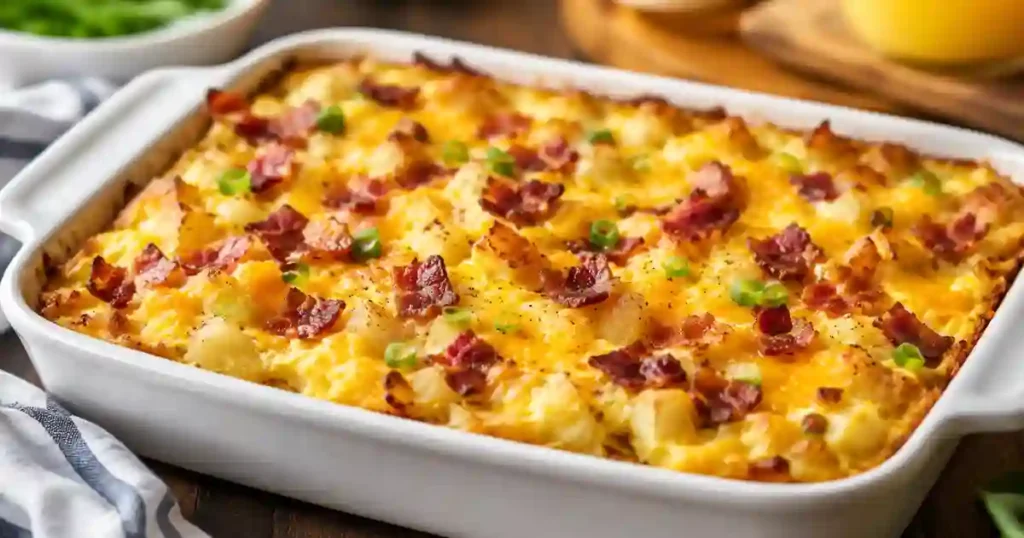
There’s something oddly comforting about waking up to the smell of bacon and melted cheese drifting through the kitchen. Especially on mornings when the house feels chaotic, coffee hasn’t kicked in yet, and everyone’s somehow hungry at the exact same time. That’s where this bacon potato and egg casserole quietly saves the day.
This recipe isn’t just another breakfast casserole tossed together with eggs and frozen potatoes. The balance here actually matters. Crispy bacon adds smoky depth, the potatoes turn golden around the edges, and the eggs bake into this soft, fluffy texture that somehow feels hearty without being heavy. Honestly, that’s harder to pull off than food blogs make it sound.
It’s the kind of breakfast bake people start picking at straight from the pan while saying they’ll “just have a small slice.” Then they come back for more.
And maybe the best part? You can prep most of it ahead of time. Holiday mornings, weekend brunches, overnight guests, meal prep Sundays… this casserole fits into all of it without demanding too much from you.
Bacon Potato and Egg Casserole

Equipment
- 9×13-inch baking dish
- Large mixing bowl
- Whisk
- Skillet
- Measuring Cups
Ingredients
Casserole
- 12 large eggs
- 1 package frozen hash browns, thawed about 30 ounces
- 10 slices bacon, cooked and crumbled
- 2 cups shredded cheddar cheese
- 1 cup whole milk
- 1 small onion, diced
- 1 bell pepper, diced
- 1 teaspoon salt adjust to taste
- 1/2 teaspoon black pepper
- 1/2 teaspoon garlic powder
- 1 tablespoon butter or cooking spray for greasing
Instructions
- Preheat the oven to 350°F (175°C). Grease a 9×13-inch baking dish with butter or cooking spray.
- Spread the thawed hash browns evenly across the bottom of the prepared baking dish. Season lightly with salt, black pepper, and garlic powder.
- Sprinkle the cooked crumbled bacon evenly over the potatoes. Scatter the diced onion and bell pepper across the top.
- Evenly distribute the shredded cheddar cheese over the casserole layers.
- In a large bowl, whisk together the eggs, milk, remaining salt, and black pepper until fully combined and slightly frothy.
- Slowly pour the egg mixture evenly over the casserole ingredients.
- Bake uncovered for 45 to 50 minutes, or until the center is just set and a knife inserted into the middle comes out mostly clean.
- Allow the casserole to rest for 10 minutes before slicing and serving.
Notes
Table of Contents
Table of Contents
Why You’ll Love This Bacon Potato and Egg Casserole Recipe
• Easy to make ahead for busy mornings, holidays, and brunch gatherings
• Uses simple ingredients you probably already recognize without needing specialty items
• Crispy bacon, fluffy eggs, melty cheese, and golden potatoes create the perfect texture contrast
• Feeds a crowd without feeling bland or cafeteria-style
• Flexible enough for substitutions like sausage, vegetables, or different cheeses
• Reheats surprisingly well without turning rubbery the next day
• Perfect for Christmas morning, Easter brunch, weekend meal prep, or breakfast-for-dinner nights
• Comforting, filling, and genuinely satisfying in a way cold cereal could never compete with
What really makes this bacon potato and egg casserole stand out is the texture balance. A lot of breakfast casseroles end up watery or dense. This one avoids both by layering ingredients carefully and baking at the right temperature long enough for the potatoes to crisp slightly while the eggs stay soft and creamy.
Recipe Card
Prep Time
15 minutes
Cook Time
50 minutes
Total Time
1 hour 5 minutes
Servings
8 servings
Calories
Approximately 420 calories per serving
Recipe Type
Breakfast casserole, brunch recipe, make-ahead breakfast
Tags
Breakfast casserole, egg bake, bacon casserole, holiday breakfast, brunch recipe
Print | Save | Share
★★★★☆ 4.9/5 from readers
Why This Bacon Potato and Egg Casserole Works
Some breakfast casseroles feel like they were designed purely to “feed people” rather than actually taste good. You know the kind. Dry eggs. Mushy potatoes. Cheese that somehow disappears into the background. This recipe avoids that trap completely.
The secret is layering flavor instead of relying on salt alone. Bacon creates a smoky base that naturally seasons the potatoes while baking. The cheese melts into the eggs instead of sitting on top like an afterthought. And frozen hash browns? They actually work better here than fresh potatoes because they release less moisture and crisp more evenly.
There’s also a practical reason people keep searching for recipes like this. Morning stress is real. Especially around holidays. Nobody wants to juggle pancakes, eggs, bacon, and toast simultaneously while guests wander into the kitchen asking when breakfast will be ready.
This casserole solves that quietly.
You prep it once, bake it, and suddenly everyone thinks you worked way harder than you actually did.
The Biggest Mistake Most People Make With Egg Casseroles
The number one issue is excess moisture.
Too many vegetables, undercooked potatoes, or overly high oven temperatures can create watery layers that ruin the texture. Actually, scratch that. Rubbery eggs might be even worse.
To avoid both:
- Cook bacon before adding it
- Use thawed hash browns when possible
- Don’t overload the casserole dish
- Bake until the center is just set
- Let the casserole rest before slicing
That resting step matters more than people think. Give it at least 10 minutes. The structure finishes settling during that time.
The Science of Protein Coagulation: Why Eggs Turn Rubbery
Eggs seem simple until they betray you. One minute your breakfast casserole looks creamy and fluffy in the oven, and the next? Dry, rubbery, oddly squeaky eggs that feel more like cafeteria food than comfort food.
What’s actually happening comes down to protein coagulation.
When eggs heat up, their proteins begin unfolding and tightening together. At first, this is a good thing. It transforms liquid eggs into that soft custardy texture everyone wants in a breakfast casserole. But once the temperature climbs too high, those proteins tighten excessively and start squeezing out moisture. That’s when the eggs become firm, dry, and rubbery.
Honestly, most people assume they simply “overcooked breakfast.” Technically true. But the science is more specific than that.
Egg proteins begin setting around 144°F and fully coagulate between 158°F and 180°F. The closer you push eggs toward the higher end of that range, the more aggressively moisture gets expelled. That moisture has nowhere to go except into the casserole itself, which explains why overbaked egg casseroles can feel both dry and watery at the same time. Weird contradiction, but very real.
How to Prevent Rubbery Eggs in a Breakfast Casserole
A few small adjustments make a huge difference:
• Bake at moderate temperatures instead of blasting high heat
• Add dairy like milk or cream to slow protein tightening
• Remove the casserole when the center is just set
• Let it rest after baking so carryover heat finishes cooking gently
• Avoid reheating too aggressively in the microwave
Actually, that resting step matters more than people realize. The eggs continue stabilizing for several minutes after leaving the oven. Cutting immediately interrupts that process and can affect texture.
Why Dairy Helps Egg Casseroles Stay Creamy
Milk and cream dilute egg proteins slightly, which slows coagulation and creates a softer final texture. Fat also coats some protein structures, helping the casserole feel richer and less dense.
That’s why casseroles made with only eggs sometimes taste firmer and slightly spongy.
Why do eggs become rubbery when overcooked?
Eggs turn rubbery because heat causes their proteins to tighten excessively and squeeze out moisture. The longer eggs cook past their ideal temperature, the firmer and drier they become.
Why is my breakfast casserole watery?
Breakfast casseroles usually become watery from excess moisture in potatoes or vegetables, underbaking, or covering the dish too tightly while hot. Using thawed hash browns and allowing the casserole to rest before slicing helps prevent this problem.
Ingredients You’ll Need for Bacon Potato and Egg Casserole
One reason this bacon potato egg casserole works so well is because the ingredient list stays uncomplicated. No trendy ingredients. No expensive cheese blends nobody can pronounce. Just familiar breakfast staples layered the right way.
Main Ingredients
• 12 large eggs
• 1 package frozen hash browns, thawed
• 10 slices bacon, cooked and crumbled
• 2 cups shredded cheddar cheese
• 1 cup milk
• 1 small onion, diced
• 1 bell pepper, diced
• Salt and black pepper
• Garlic powder
• Butter or cooking spray for greasing
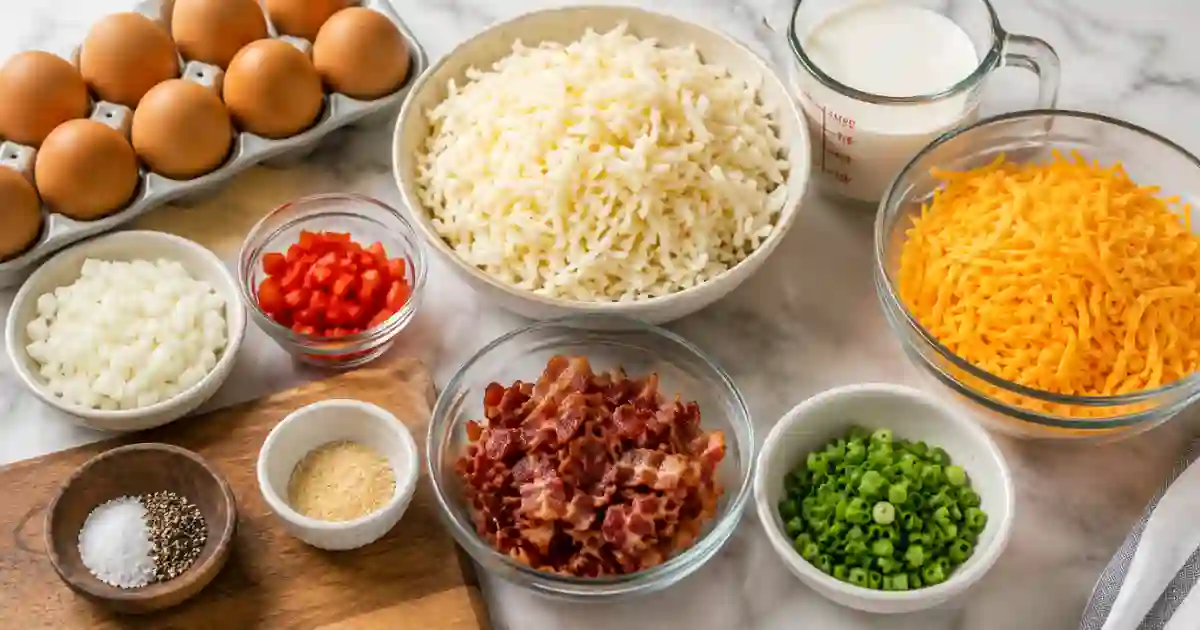
| Component | Ingredient | Technical Role | Pro Tip |
| Protein Base | 12 Large Eggs | Provides structure and fluffiness | Whisk until frothy to incorporate air for a lighter rise. |
| Texture Base | Thawed Hash Browns | Absorbs flavor and adds crunch | Thaw and pat dry to prevent a watery bottom layer. |
| Flavor Booster | Thick-Cut Bacon | Adds smokiness and fat | Cook until 80% crisp before adding; it finishes in the oven. |
| Stabilizer | Whole Milk | Prevents the eggs from drying out | Avoid skim milk; the fat is needed to keep the proteins soft. |
The cheddar brings sharpness, but honestly, mixing cheeses works even better if you want more depth. Monterey Jack adds creaminess while pepper jack gives subtle heat.
And bacon? Use thick-cut if possible. Thin bacon tends to disappear inside the casserole instead of creating those savory bites people actually notice.
Best Cheese Options for Breakfast Casseroles
Different cheeses completely change the personality of this casserole.
• Cheddar: Sharp, classic, reliable
• Gruyère: Rich and slightly nutty
• Monterey Jack: Creamy and mild
• Pepper Jack: Adds heat without overpowering
• Mozzarella: Extra melty texture
Some people combine three cheeses. Which sounds excessive until you taste it.
Can I use fresh potatoes instead of frozen hash browns?
Yes, but fresh potatoes should be partially cooked first. Raw potatoes release more moisture and take longer to soften, which can affect the casserole texture.
How to Make Bacon Potato and Egg Casserole
This casserole comes together pretty quickly once your ingredients are prepped. The key is not rushing the layering process. Tiny details make a bigger difference here than most people expect.
Step 1: Prepare the Baking Dish
Preheat your oven to 350°F.
Grease a 9×13-inch baking dish with butter or cooking spray to prevent sticking.
Step 2: Layer the Potatoes
Spread the thawed hash browns evenly across the bottom of the dish.
Season lightly with salt, pepper, and garlic powder.
This first layer creates the crispy base. If the potatoes are still frozen solid, the casserole may bake unevenly.
The Maillard Reaction: Achieving Golden Hash Brown Perfection
That crispy golden layer on the edges of a good breakfast casserole? The part people secretly scrape from the corners first?
That’s the Maillard reaction doing its thing.
And honestly, it’s one of the biggest reasons some casseroles taste deeply savory while others feel flat and pale.
The Maillard reaction occurs when proteins and sugars interact under heat, creating hundreds of new flavor compounds and that rich golden-brown color people instinctively associate with “properly cooked” food. It’s the same reaction responsible for toasted bread, seared steak, roasted coffee, and crispy bacon.
Hash browns are perfect candidates for it because potatoes naturally contain starches and sugars that brown beautifully under the right conditions.
See how to make this Bacon Potato and Egg Casserole recipe in the video below
Why Some Hash Browns Stay Pale and Soggy
Moisture is usually the problem.
Wet potatoes steam instead of brown. That steaming effect blocks surface temperatures from climbing high enough for the Maillard reaction to happen efficiently.
Frozen hash browns actually work surprisingly well because they’re partially dried during processing. But if excess ice or water remains, crispiness suffers fast.
How to Get Crispy Golden Hash Browns in a Casserole
For better browning and texture:
- Thaw frozen hash browns before baking
- Pat excess moisture dry with paper towels
- Use enough fat from bacon or butter
- Spread potatoes evenly instead of packing tightly
- Bake uncovered for proper evaporation
- Allow edge exposure for crispier corners
Actually, overcrowding the dish might be the most common mistake. Dense layers trap steam, which softens the potatoes before browning can happen.
Why Golden Brown Food Tastes Better
The Maillard reaction creates complex savory flavors humans naturally perceive as richer and more satisfying. That deep roasted flavor isn’t just visual. It’s chemical.
Which explains why pale casseroles often taste strangely unfinished even when fully cooked.
What causes hash browns to turn golden brown?
Hash browns turn golden brown because of the Maillard reaction, where heat transforms natural sugars and proteins into flavorful browned compounds during cooking.
Step 3: Add Bacon and Vegetables
Sprinkle the cooked bacon evenly over the potatoes.
Add diced onion and bell pepper across the surface.
Some people sauté the vegetables first for extra sweetness. Honestly, both methods work. Raw vegetables give a slightly fresher texture while sautéed ones taste deeper and softer.
Step 4: Add Cheese
Scatter shredded cheddar cheese generously over the top.
Don’t compress it down too much. Loose layering helps everything bake evenly.
Step 5: Prepare the Egg Mixture
In a large bowl, whisk together:
• Eggs
• Milk
• Salt
• Pepper
Whisk until fully combined and slightly frothy.
Then slowly pour the mixture over the casserole.
Step 6: Bake
Bake uncovered for 45 to 50 minutes.
The edges should look golden while the center stays slightly soft but set. If you jiggle the pan and the center moves like liquid, it needs more time.
How to Know When the Egg Casserole Is Fully Cooked
Insert a knife into the center.
If it comes out mostly clean with no liquid egg, it’s ready.
The casserole will continue cooking slightly after removal from the oven, so avoid overbaking.
Can I prepare this casserole the night before?
Yes. Assemble the casserole, cover it tightly, and refrigerate overnight. Bake the next morning as directed.
Make Ahead, Storage, and Freezing Tips
This is where the recipe becomes genuinely useful instead of just “Pinterest pretty.”
Because realistically? Most people searching for a bacon potato and egg casserole aren’t looking for culinary adventure. They want something dependable that reduces stress.
And this recipe absolutely delivers there.
Make Ahead Instructions
You can assemble everything the night before baking.
Simply:
- Prepare the casserole fully
- Cover tightly with foil or plastic wrap
- Refrigerate overnight
- Bake fresh in the morning
You may need to add 5 to 10 extra minutes to the baking time if it goes into the oven cold.
Storage Tips
Store leftovers in an airtight container in the refrigerator for up to 4 days.
For best texture:
• Reheat individual portions in the oven or air fryer
• Microwave works, but the potatoes soften faster
Actually, air fryer reheating is wildly underrated for casseroles. It brings back those crispy edges surprisingly well.
Can You Freeze Breakfast Casserole?
Yes, this casserole freezes well.
To freeze:
- Cool completely
- Slice into portions
- Wrap tightly
- Freeze up to 2 months
Thaw overnight before reheating for the best texture.
How long does egg casserole last in the fridge?
Properly stored egg casserole typically lasts 3 to 4 days in the refrigerator.
Easy Variations and Substitutions
One reason people keep returning to breakfast casseroles is flexibility. Once you understand the base formula, you can adjust almost everything depending on mood, leftovers, or dietary needs.
Sausage Version
Replace bacon with breakfast sausage for a richer flavor.
Italian sausage also works surprisingly well if you want a more savory brunch vibe.
Vegetarian Version
Skip the meat entirely and add:
• Mushrooms
• Spinach
• Roasted peppers
• Green onions
Just avoid overly watery vegetables unless cooked first.
Southwest Style
Add:
• Pepper jack cheese
• Jalapeños
• Black beans
• Salsa on top after baking
This version feels especially good for brunch gatherings.
Dairy-Free Option
Use dairy-free cheese and unsweetened almond milk.
The texture changes slightly, but it still works well.
Can I use different meats?
Absolutely. Ham, sausage, turkey bacon, and even shredded chicken can work in this breakfast casserole recipe.
Serving and Storage Tips for Bacon Potato and Egg Casserole
Presentation honestly changes how people experience casseroles. Even casual brunch food feels more inviting with a few simple additions.
Serving Ideas
• Garnish with chopped green onions or parsley
• Serve with fresh fruit for balance
• Add hot sauce or salsa on the side
• Pair with cinnamon rolls or toast
• Serve alongside coffee or fresh orange juice
For holiday brunches, placing the casserole in the center of the table in the baking dish creates that cozy family-style feel people naturally gather around.
Reheating Tips
For best results:
• Oven: 350°F for 15 minutes
• Air fryer: 5 to 7 minutes
• Microwave: 1 to 2 minutes
The oven keeps the texture closest to freshly baked.
This hearty bake is a breakfast champion. If you’re hosting a larger brunch, pair it with our [Fluffy Pancakes Recipe] for a sweet and savory balance. Or, for a refreshing Mediterranean start to the day, serve it alongside our [Creamy Fresh Fruit Salad] to brighten the palate.
Helpful Notes
• Let the casserole rest before slicing for cleaner pieces
• Thick-cut bacon creates better texture than thin bacon
• Don’t overmix the eggs or the texture can become dense
• Freshly shredded cheese melts better than pre-shredded bags
• Slightly underbaking is better than overbaking because eggs continue setting after removal
• A glass baking dish usually cooks more evenly than metal for casseroles like this
One tiny thing people rarely mention? Season carefully. Bacon and cheese already bring saltiness, so adding too much extra salt early can throw everything off.
Frequently Asked Questions for Bacon Potato and Egg Casserole
Can I freeze bacon potato and egg casserole?
Yes. Cool completely, wrap tightly, and freeze for up to 2 months.
Can I use fresh potatoes instead of frozen hash browns?
Yes, but fresh potatoes should be partially cooked before adding them to the casserole. Raw potatoes take longer to soften and may release extra moisture while baking.
How do I keep my egg casserole fluffy instead of dense?
Whisk the eggs until fully combined but avoid overmixing. Also, don’t overbake the casserole. Removing it when the center is just set helps maintain a soft, fluffy texture.
What cheese melts best in a breakfast casserole?
Cheddar is the most popular option because it melts well and adds sharp flavor, but Monterey Jack, Gruyère, mozzarella, and pepper jack also work beautifully.
Can I make this bacon potato and egg casserole for meal prep?
Absolutely. Slice the casserole into portions after baking and store them in airtight containers. It reheats well for quick weekday breakfasts.
What can I serve with a breakfast casserole for brunch?
Fresh fruit, cinnamon rolls, avocado toast, yogurt parfaits, roasted vegetables, and coffee pair perfectly with a hearty breakfast casserole.
.
Why are my eggs rubbery?
Rubbery eggs usually happen from overbaking or excessive oven temperature.
Can I make this casserole without cheese?
Yes, though the texture becomes less creamy and slightly less rich.
What potatoes work best?
Frozen hash browns are easiest and most reliable, though diced potatoes also work.
Can I use turkey bacon?
Yes. Turkey bacon works well, though traditional bacon adds more flavor depth.
Nutrition Information
Approximate per serving:
• Calories: 420
• Protein: 22g
• Carbohydrates: 18g
• Fat: 28g
• Saturated Fat: 11g
• Fiber: 2g
• Sodium: 710mg
Nutrition values vary depending on cheese, bacon type, and serving size.
Final Thoughts
Some recipes survive because they’re trendy. Others stick around because people genuinely rely on them. This bacon potato and egg casserole falls into that second category.
It’s comforting without trying too hard. Flexible enough for regular weekends but dependable enough for holidays when you really don’t want breakfast failing in front of guests.
And honestly, there’s something satisfying about pulling a bubbling casserole from the oven while everyone else is still half asleep and wandering toward the smell of bacon.
That moment alone kind of makes the dish worth it.
For more delicious and easy recipes, follow me on Facebook and Pinterest
If you enjoyed this recipe, feel free to leave a comment below or follow me on my culinary journey!
This recipe was written and tested by Rasha, the founder of Recipesedeas. Rasha is a food enthusiast living in the USA, sharing her family-inspired recipes and culinary adventures