
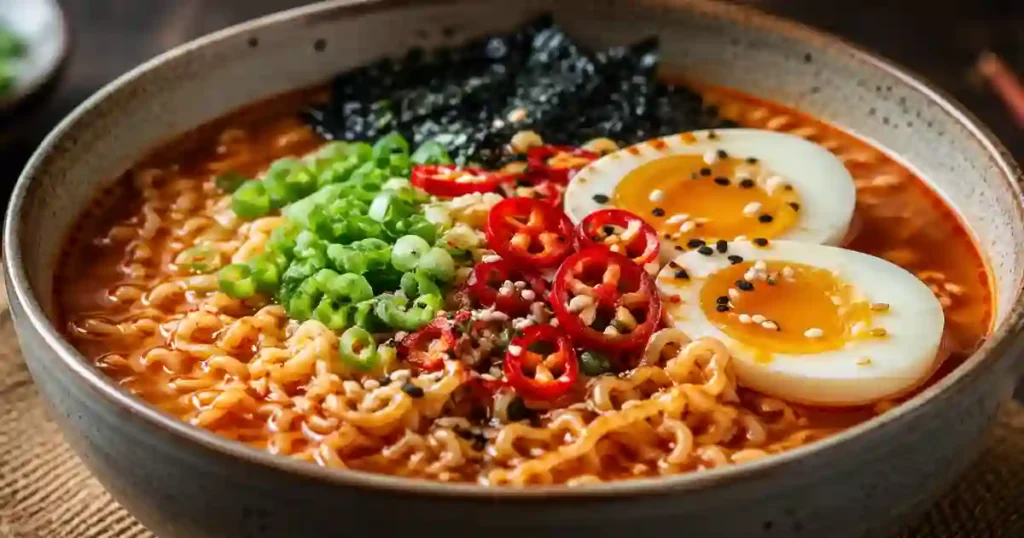
Spicy ramen noodles are one of those meals people think they already understand. Boil noodles, add a packet, maybe toss in chili flakes. Done. But that version? It rarely hits the way you expect. It fills you up, sure, but it doesn’t stick with you.
This recipe fixes that.
If you’ve ever craved something bold, slightly messy, a little too spicy for comfort but still impossible to stop eating, you’re in the right place. These spicy ramen noodles are designed for real-life cravings. Late nights, quick dinners, those moments when you open the fridge and think, “I need something good, fast.”
Here’s the difference. Instead of relying on pre-made seasoning, this spicy ramen recipe builds flavor intentionally. Heat, salt, fat, and umami all come together in a way that actually tastes like something you’d order out. Maybe better. Actually… yeah, better.
And let’s be honest for a second. Takeout ramen sounds great until you’re paying way too much for something you could tweak at home in under 20 minutes. This version gives you that control. More heat if you want it. Less salt if you don’t. Extra protein if you’re hungry.
It’s flexible, fast, and kind of addictive in a way that sneaks up on you.
Table of Contents
Table of Contents
Why These Spicy Ramen Noodles Are Better Than Takeout
What makes this spicy ramen recipe different?
- Built from real ingredients, not just seasoning packets
- Fully customizable heat level
- Works with instant ramen or fresh noodles
- Ready in about 15 to 20 minutes
Can spicy ramen noodles actually taste better than takeout?
Yes. When you control the sauce and balance the flavors yourself, you avoid the overly salty, one-note taste that a lot of takeout ramen has. The result is deeper, richer, and more satisfying.
Why You’ll Love This Recipe
- Quick and easy to make in just 15 to 20 minutes, perfect for busy weeknights
- Uses simple pantry ingredients you likely already have at home
- Better than takeout with richer flavor and full control over spice level
- Easy to customize with eggs, chicken, tofu, shrimp, or vegetables
- Budget-friendly and ideal for students, families, or late-night cravings
- Comforting, bold, and incredibly satisfying when you need something warm and flavorful
What makes this spicy ramen noodles recipe stand out is the balanced sauce. Instead of relying only on instant seasoning, this version builds real flavor with garlic, chili, soy sauce, and a touch of sweetness for depth and richness.
The Secret to a Perfect Spicy Ramen Sauce
This is where most spicy ramen noodles fall apart. The sauce either ends up too salty, weirdly flat, or just aggressively spicy without any depth. You taste heat, but nothing else. And after a few bites, it gets boring.
The real secret is balance. Not complicated ingredients. Just balance.
A good spicy ramen sauce works in layers. First comes the fat, usually oil, which carries flavor. Then heat, from chili paste or flakes. Then umami, which gives that deep savory punch. And finally, a bit of sweetness or acidity to round everything out.
Miss one of those, and something feels off. You might not know exactly what, but you’ll notice it.
Here’s the part people skip. They rush. They mix everything cold and dump it on noodles. It works, technically, but it never develops that rich, slightly glossy texture that makes ramen feel restaurant-level.
The 4-layer flavor method
- Oil for richness and mouthfeel
- Chili for heat and intensity
- Soy sauce or miso for umami depth
- A small sweet element to balance everything
When these come together properly, the sauce clings to the noodles instead of pooling at the bottom. That’s when you know you did it right.
Why does my spicy ramen taste bland?
Usually, it comes down to one of these:
- Not enough fat to carry flavor
- Too much water diluting the sauce
- Skipping umami ingredients
- Fear of seasoning properly
It’s not about adding more spice. It’s about building smarter.
Ingredients for Spicy Ramen Noodles
Let’s keep this simple, because honestly, complicated ingredient lists are where most people lose interest. This spicy ramen recipe uses things you can actually find and probably already have.
At the same time, there’s room to upgrade if you want to push it further.
Core ingredients
- Ramen noodles (instant or fresh)
- Garlic, minced
- Soy sauce
- Chili paste or chili flakes
- Oil (sesame or neutral)
- Brown sugar or honey
- Green onions
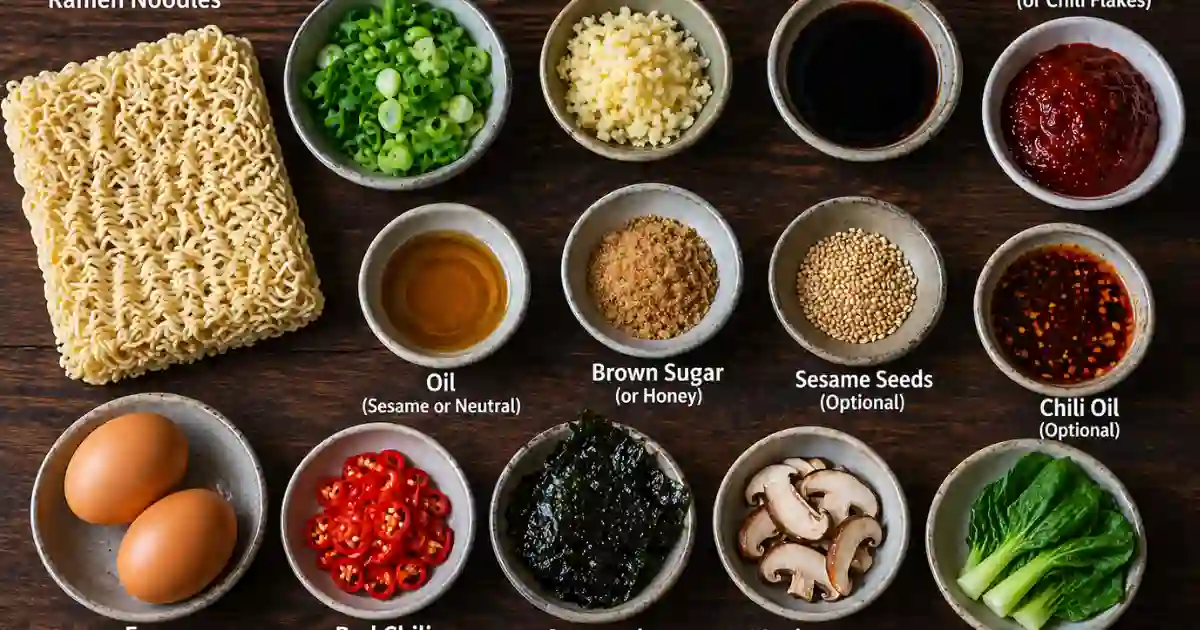
That’s your base. Nothing fancy, but when combined properly, it creates a surprisingly rich flavor.
Optional upgrades
- Soft boiled egg
- Tofu, chicken, or shrimp
- Peanut butter for creaminess
- Gochujang for deeper heat
- Lime juice for brightness
Here’s where it gets interesting. The same base recipe can feel completely different depending on what you add. Creamy, sharp, extra spicy, slightly sweet. It’s kind of hard to mess up once you understand the structure.
What noodles work best for spicy ramen?
Instant ramen works perfectly fine. In fact, it’s what most people use. Just skip the seasoning packet or use only a small portion. Fresh ramen noodles give a better texture, but they’re not required.
How to Make Spicy Ramen Noodles Step by Step
This is the part where things either come together or fall apart. The steps are simple, but small details matter more than you’d expect.
Start by cooking your ramen noodles according to the package instructions. Drain them, but don’t overcook. Slightly firm noodles hold sauce better.
While that’s happening, heat oil in a pan over medium heat. Add garlic and let it cook just until fragrant. Not browned. Burnt garlic ruins everything, and yeah, it happens fast.
Now add your chili paste or flakes. Stir for a few seconds to release the heat into the oil. This step alone makes a huge difference. It deepens the flavor instead of leaving it sharp and raw.
Next, add soy sauce and a small amount of sugar. Stir until everything blends into a glossy sauce. If it looks too thick, add a splash of water. If it looks too thin, let it reduce slightly.
Toss in your cooked noodles and mix well. The sauce should coat everything evenly, not sit at the bottom.
Quick steps recap
- Cook and drain noodles
- Heat oil and sauté garlic
- Add chili and activate flavor
- Mix in soy sauce and sweetener
- Combine with noodles and toss
See how to make this recipe in the video below
How do I know when it’s done?
When the noodles are evenly coated and slightly glossy, you’re there. If they look dry, add a bit more oil or water. If they taste flat, adjust salt or spice.
Easy Ways to Customize Your Spicy Ramen
This is where spicy ramen noodles become your recipe, not just something you follow. Once the base is done, everything else is flexible.
Some days you want something light. Other days, you want something rich and heavy that feels like comfort food. Both are possible here.
Adjusting spice level
- Mild: Use less chili and add more oil
- Medium: Balanced chili and soy
- Very spicy: Add chili oil or fresh peppers
The trick is to increase heat gradually. It’s easier to add more than to fix something that’s already too intense.
Protein and texture ideas
- Egg for richness
- Tofu for a softer bite
- Chicken or shrimp for something more filling
- Crushed peanuts or sesame seeds for crunch
Can I make this spicy ramen creamy?
Yes, and it changes everything. Add a spoon of peanut butter or a splash of coconut milk. It softens the heat and creates a thicker, more indulgent sauce.
Common Mistakes When Making Spicy Ramen
A lot of people think spicy ramen noodles are foolproof. They’re not difficult, but a few small mistakes can ruin the final result.
The most common one is overusing water. Too much liquid turns everything into a diluted mess. The sauce should coat, not drown.
Another issue is relying too much on salt. Soy sauce is already salty. Adding more without balancing it makes the dish harsh instead of flavorful.
Then there’s heat imbalance. Either too little, which makes it boring, or too much, which masks everything else.
Common mistakes to avoid
- Overcooking noodles
- Burning garlic
- Using too much sauce liquid
- Ignoring balance between flavors
Why does my ramen taste too salty?
Because it probably is. Try adding a small amount of sugar, acid like lime juice, or even more noodles to balance it out.
Spicy Ramen Variations You Should Try
Once you’ve made spicy ramen noodles a few times, you’ll probably start experimenting without even thinking about it. That’s usually where the best versions come from.
There’s no single “correct” version. Just different directions depending on what you’re in the mood for.
Popular variations
- Korean style with gochujang for deeper spice
- Creamy spicy ramen with peanut butter or milk
- Garlic-heavy version for bold flavor
- Sweet and spicy with honey and chili
Each version changes the experience slightly. Some feel heavier, some lighter, some more intense.
What’s the easiest variation to start with?
The creamy version. It’s forgiving, hard to mess up, and balances spice well.
Serving and Storage Tips
Serving Suggestions
Serve these spicy ramen noodles immediately while hot for the best texture and flavor.
For better presentation and extra flavor, top with:
- Soft boiled eggs
- Sliced green onions
- Sesame seeds
- Chili oil drizzle
- Crispy garlic
- Crushed peanuts
- Fresh lime wedges
- Grilled chicken or tofu
If serving guests, use deep bowls and layer toppings neatly on top instead of mixing everything in. It makes the dish feel more restaurant-style and visually appealing.
Storage Tips
Store leftover spicy ramen noodles in an airtight container in the refrigerator for up to 2 days.
Keep in mind that noodles naturally absorb sauce over time, so the texture becomes softer after storage.
Reheating Tips
For best results:
- Reheat in a pan over low heat
- Add 1 to 2 tablespoons of water to loosen the sauce
- Stir gently until warmed through
Microwave works too, but stovetop reheating keeps the texture much better.
Helpful Notes
- Do not overcook the noodles since they continue softening after mixing with the sauce
- Toasting garlic lightly improves flavor, but burnt garlic can ruin the dish quickly
- If your ramen tastes too salty, add a splash of water or a squeeze of lime juice
- Peanut butter creates a creamy spicy ramen variation that many people love
- Gochujang gives a deeper Korean-style flavor compared to regular chili flakes
- A fried egg on top adds richness and makes the meal feel much more complete
- Fresh ramen noodles give better texture, but instant ramen works perfectly well
Honestly, the best version usually comes after the second time you make it. The first time teaches you the base. The second time becomes yours.
Nutrition Information
Estimated Nutrition Per Serving
- Calories: 420 to 480 kcal
- Protein: 12 to 18g
- Carbohydrates: 45 to 55g
- Fat: 18 to 24g
- Fiber: 3 to 5g
- Sodium: 700 to 950mg
Nutrition may vary depending on the type of noodles used and optional add-ins like eggs, chicken, tofu, or peanut butter.
For a lighter version, reduce oil and use low-sodium soy sauce.
Spicy Ramen Noodles

Equipment
- Medium pot
- Large skillet or frying pan
- Tongs or chopsticks
- Knife
- Cutting board
Ingredients
Ramen Base
- 2 packs ramen noodles instant or fresh, seasoning packet mostly discarded
- 3 cloves garlic minced
- 2 tbsp soy sauce low sodium preferred
- 1 tbsp chili paste or chili flakes
- 1.5 tbsp sesame oil or neutral cooking oil
- 1 tbsp brown sugar or honey
- 2 stalks green onions sliced
Optional Toppings
- 2 soft boiled eggs optional
- 1 tbsp peanut butter for creamy variation
- 1 tbsp gochujang for Korean-style variation
- 1 tbsp lime juice for brightness
Instructions
- Cook the ramen noodles according to the package instructions until just tender. Drain well and set aside. Avoid overcooking so the noodles stay slightly firm.
- Heat sesame oil in a large skillet over medium heat. Add the minced garlic and sauté for about 30 seconds until fragrant. Do not let it brown or burn.
- Add the chili paste or chili flakes to the pan and stir for a few seconds so the heat releases into the oil. This deepens the flavor and creates a richer sauce.
- Pour in the soy sauce and add the brown sugar or honey. Stir well until the sauce becomes glossy and slightly thickened. If needed, add 1 to 2 tablespoons of water to loosen the sauce.
- Add the cooked noodles to the pan and toss thoroughly so every strand is coated evenly in the spicy sauce.
- Top with sliced green onions and any optional toppings like soft boiled eggs, tofu, chicken, shrimp, sesame seeds, or crushed peanuts. Serve immediately while hot.
Notes
FAQs About Spicy Ramen Noodles
Can I make spicy ramen noodles without instant ramen?
Yes, absolutely. You can use fresh ramen noodles, udon, soba, rice noodles, or even spaghetti in a pinch. The sauce is what creates the flavor.
How do I make spicy ramen less spicy?
Use less chili paste or flakes and add a little extra oil, peanut butter, or honey to soften the heat without losing flavor.
Can I add protein to spicy ramen noodles?
Yes. Chicken, shrimp, tofu, eggs, or even leftover beef work really well. This makes the meal more filling and balanced.
What makes ramen taste more like restaurant ramen?
Layering flavor properly. Garlic, oil, chili, umami from soy sauce or miso, and proper noodle texture make the biggest difference.
Can I use instant ramen for this recipe?
Yes. Just skip most of the seasoning packet and use your own sauce.
How long does it take to make spicy ramen?
About 15 to 20 minutes from start to finish
Can I meal prep spicy ramen noodles?
Kind of. The sauce holds well, but noodles are best fresh. If you store it, expect a slightly softer texture.
Are spicy ramen noodles healthy?
They can be, depending on ingredients. Using less oil and adding protein or vegetables helps balance the meal.
Final Thoughts on This Spicy Ramen Recipe
Spicy ramen noodles are one of those meals that seem simple until you actually get them right. Then suddenly, it’s not just a quick dinner anymore. It becomes something you come back to.
What makes this recipe work isn’t complexity. It’s attention. Small adjustments, a bit of awareness, and honestly, a willingness to taste as you go.
You might tweak it next time. Add more heat. Reduce the salt. Try a different protein. That’s kind of the point.
Because once you understand how spicy ramen works, you stop following recipes and start building your own.
And yeah, that’s when it gets really good.
For delicious and easy recipes, follow me on my Facebook and Pinterest
If you enjoyed this recipe, feel free to leave a comment below or follow me on my culinary journey!
This recipe was written and tested by Rasha, the founder of Recipesedeas. Rasha is a food enthusiast living in the USA, sharing her family-inspired recipes and culinary adventures