
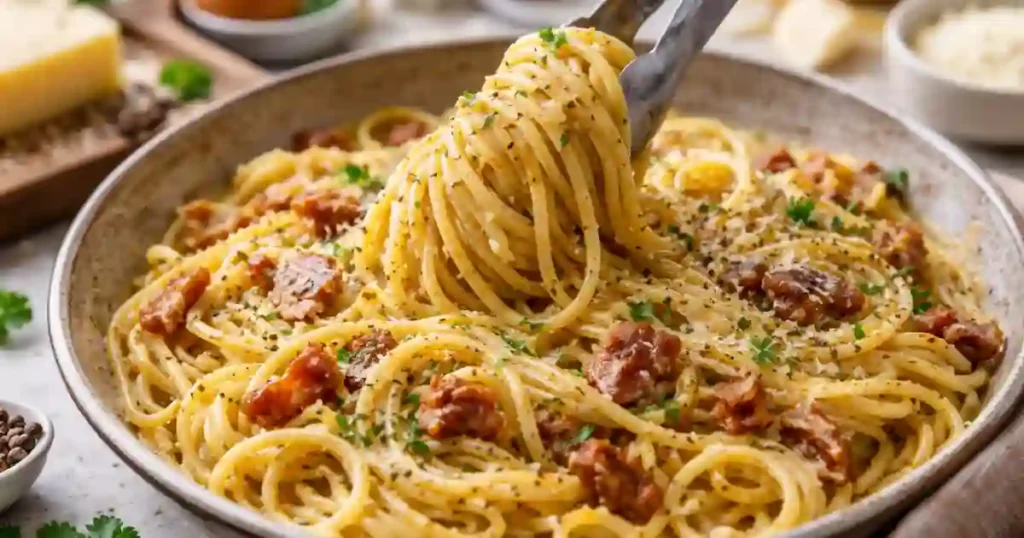
Why authentic spaghetti carbonara often goes wrong
You’re looking for an authentic spaghetti carbonara recipe, but somehow it keeps going sideways. Too dry. Too runny. Or worse… it turns into scrambled eggs with pasta.
Yeah, that happens more often than people admit.
At first glance, carbonara looks almost too simple. Pasta, eggs, cheese, cured pork. That’s it. No fancy ingredients, no complicated steps. So you expect it to just work.
But then it doesn’t.
Maybe you’ve had that moment where you stare into the pan thinking, “Wait… is this supposed to look like this?” Or you panic and add cream because something feels off. Honestly, most people go through that phase.
The real issue is not the recipe itself. It’s the tiny details that no one really explains properly. Heat control. Timing. Texture. Those invisible things that make or break the dish.
And here’s the strange part. Once you truly understand what’s happening, carbonara suddenly feels easy. Almost obvious. But until that point, it can feel frustratingly unpredictable.
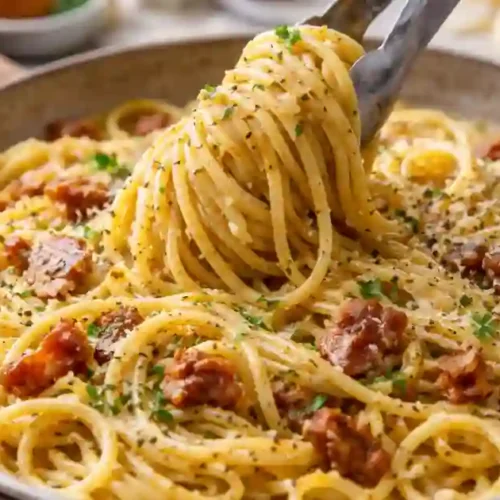
Authentic Spaghetti Carbonara

Ingredients
Main Ingredients
- 400 g spaghetti
- 150 g guanciale cut into small pieces
- 3 egg yolks
- 1 egg whole
- 80 g Pecorino Romano cheese finely grated
- 1 tsp black pepper freshly ground
Instructions
- Bring a large pot of salted water to a boil and cook the spaghetti until al dente.
- While the pasta cooks, place guanciale in a cold pan and cook over medium heat until crispy and the fat is rendered.
- In a bowl, whisk together egg yolks, whole egg, grated Pecorino Romano, and black pepper until smooth.
- Reserve about 1 cup of pasta water, then drain the spaghetti.
- Add the hot pasta to the pan with guanciale, removing the pan from direct heat.
- Quickly pour in the egg and cheese mixture while tossing continuously to create a creamy sauce.
- Add reserved pasta water a little at a time until the sauce becomes smooth and glossy.
- Serve immediately with extra Pecorino Romano and black pepper on top.
Notes
Table of Contents
Table of Contents
Why You’ll Love This Spaghetti Carbonara Recipe
- Quick and surprisingly simple once you understand the technique
- Uses just a handful of real, traditional ingredients
- No cream, yet incredibly creamy and rich
- Perfect for a cozy dinner or impressing guests without trying too hard
- Feels like restaurant quality but made at home
There’s something oddly satisfying about getting this right. Maybe it’s because it doesn’t rely on shortcuts. When the sauce turns silky and clings perfectly to the pasta, it feels earned.
Also, let’s be honest for a second. A lot of carbonara recipes play it safe. They add cream, extra ingredients, or simplify the process too much. This version does the opposite. It respects the original method while actually explaining what’s going on, so you’re not just following steps blindly.
And once it clicks, it becomes one of those go-to meals you keep coming back to.
Authentic spaghetti carbonara recipe explained simply
Let’s strip it down to what actually matters.
A true spaghetti carbonara recipe uses just five ingredients:
- Spaghetti
- Guanciale
- Eggs
- Pecorino Romano
- Black pepper
That’s it. No cream. No garlic. No extras.
The creaminess doesn’t come from adding something heavy. It comes from emulsifying eggs, cheese, and a bit of pasta water. That’s the entire magic.
Here’s the simplified flow:
- Cook the pasta
- Render the guanciale
- Mix eggs and cheese
- Combine everything carefully
Sounds straightforward. And technically, it is. But that final step is where things either come together beautifully or completely fall apart.
What actually makes carbonara creamy
It’s all about gentle heat.
The sauce forms from residual warmth, not direct cooking. If the pan is too hot, the eggs cook too fast and turn into clumps. If it’s too cool, the sauce stays thin and doesn’t bind.
It’s a balancing act that feels slightly uncomfortable at first. Like you’re guessing. And in a way, you are. Until you develop the instinct for it.
Ingredients for authentic spaghetti carbonara
When it comes to a proper spaghetti carbonara recipe, ingredients matter more than you think.
Here’s what you need:
- 400 g spaghetti
- 150 g guanciale
- 3 egg yolks plus 1 whole egg
- 80 g Pecorino Romano
- Freshly ground black pepper
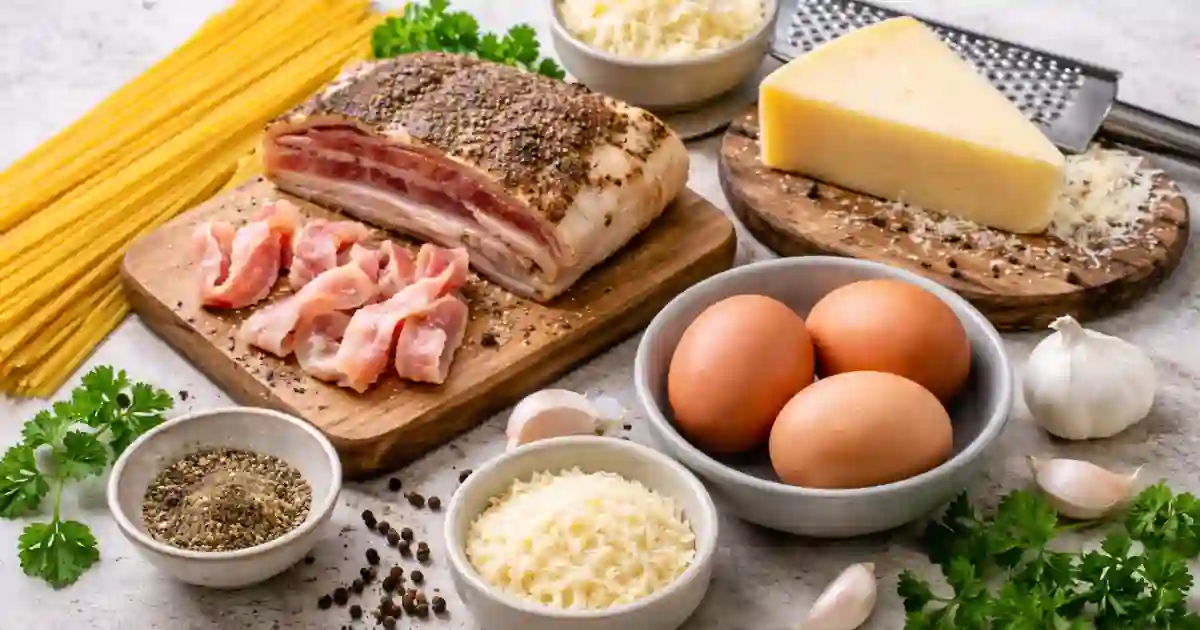
Guanciale vs pancetta vs bacon
This is where things start to drift from authenticity.
Guanciale comes from pork cheek and has a deeper, richer flavor. It’s fattier and more intense. Pancetta is a common substitute. Regular bacon works too, but it changes the dish quite a bit.
The first time you use guanciale, it kind of clicks. You suddenly understand why it’s the traditional choice.
Why Pecorino instead of Parmesan
Pecorino Romano is sharper and saltier. Parmesan is milder and smoother.
A lot of people mix both, which is fine. But if you’re aiming for the authentic spaghetti carbonara recipe, Pecorino is the key player.
And yes, it does change the overall taste more than you might expect.
Step by step guide to perfect carbonara
This is the part where things usually get tricky.
- Bring a large pot of salted water to a boil and cook the spaghetti until al dente
- Cut the guanciale into small pieces and cook it slowly until crispy
- In a bowl, mix egg yolks, whole egg, Pecorino, and black pepper
- Save some pasta water before draining
- Add the hot pasta to the guanciale pan, but remove the pan from heat first
- Pour in the egg and cheese mixture while stirring
- Add pasta water gradually until the sauce becomes creamy
This is the moment where most people hesitate.
You might think, “Is this too thick? Too loose? Am I messing this up?” That hesitation is normal. It’s part of learning the dish.
How to recognize the perfect texture
The sauce should coat the pasta smoothly. Not dripping. Not clumpy. Just a glossy, silky layer that sticks to every strand.
If it looks scrambled, the heat was too high. If it looks watery, the emulsion didn’t form properly.
See how to make Authentic Spaghetti Carbonara recipe in the video below.
The 5 most common spaghetti carbonara mistakes
Let’s be real. These happen all the time.
- Too much heat
The number one reason carbonara fails - Skipping pasta water
Without it, the sauce cannot bind - Using the wrong cheese
Too mild equals bland - Poor timing
Everything needs to come together quickly - Adding cream
It makes things easier, but changes the dish completely
Why does carbonara turn into scrambled eggs
Because the temperature is too high.
Eggs need gentle heat to form a creamy sauce. Once they cook too fast, there’s no going back.
Why cream does not belong in carbonara and why people still use it
This is where things get a bit opinionated.
Adding cream makes carbonara more stable. It hides mistakes. It gives you a predictable result.
And honestly, it doesn’t taste bad.
But it removes what makes carbonara unique. The delicate balance between egg, cheese, and fat gets lost. Everything becomes smoother, but also less interesting.
Still, people use it. Because it feels safe.
I get that. I used to do the same.
But once you nail the authentic version, it’s hard to go back.
Tips for creamy carbonara without cream
If you want that perfect texture, focus on technique:
- Use enough Pecorino
- Always save pasta water
- Work quickly but stay controlled
- Remove the pan from heat before adding eggs
And maybe the most honest tip of all
Don’t expect perfection on your first try
Carbonara is one of those dishes you learn by feeling, not just following instructions.
Variations and substitutions
Not everyone has access to traditional ingredients, and that’s fine.
You can try:
- Pancetta instead of guanciale
- Parmesan or a mix of cheeses
- Different pasta shapes like rigatoni
Is it still authentic? Not really. But it can still be delicious.
And sometimes, that matters more.
Serving and Storage Tips
How to serve spaghetti carbonara properly
Carbonara is best served immediately. Not in five minutes. Not “let’s wait for everyone to sit down.” Right away.
To elevate the presentation a bit:
- Use warm plates so the sauce stays creamy longer
- Add a final sprinkle of Pecorino and freshly cracked black pepper
- Twist the pasta into a nest shape using tongs for a cleaner look
- Serve with a simple side like a light salad or crusty bread
It’s a simple dish, so small details make a big difference.
How to store and reheat carbonara
Here’s the honest answer. Carbonara does not store well.
If you have leftovers:
- Store in an airtight container in the fridge for up to 1 day
- Reheat gently on low heat with a splash of water
Even then, the texture won’t be the same. The sauce tends to thicken or separate. It’s still edible, just not… magical anymore.
If possible, cook only what you’ll eat.
Helpful Notes for Perfect Carbonara
A few things that don’t always get mentioned, but probably should:
- The type of pasta water matters more than you think. It should be starchy, not just salty
- Finely grated cheese melts better and creates a smoother sauce
- If your eggs are too cold, the sauce can struggle to emulsify properly
- Work fast when combining everything, but don’t rush blindly
Also, a small reality check
Your first attempt might not be perfect. Mine definitely wasn’t. Actually, it was pretty bad. But something improves each time. The texture gets closer. The timing feels less stressful.
And eventually, you stop second-guessing every step.
Nutrition Information (Per Serving Approximation)
- Calories: 550 to 650 kcal
- Protein: 20 to 25 g
- Carbohydrates: 60 to 70 g
- Fat: 25 to 35 g
- Saturated Fat: 10 to 15 g
- Sodium: Moderate to high due to cheese and cured meat
Keep in mind, this isn’t a “light” dish. It’s rich, filling, and meant to be enjoyed that way.
But that’s kind of the point, isn’t it?
Frequently asked questions about spaghetti carbonara
Can I make spaghetti carbonara without guanciale?
Yes, you can. Pancetta is the closest substitute and works really well. Bacon is also an option, but it has a smokier flavor that slightly changes the dish. It’s still good, just not fully traditional.
Why is my carbonara sauce not creamy?
This usually happens when there isn’t enough pasta water or the mixture wasn’t combined properly. The starch in the water helps bind everything together. Also, if the heat is too low, the sauce won’t emulsify correctly.
Do I need to use only egg yolks for carbonara?
Not necessarily. Many traditional recipes use mostly yolks with one whole egg for balance. Yolks create a richer and creamier texture, while the whole egg slightly lightens the sauce.
Can you reheat carbonara
Not really. The sauce changes texture and becomes dry or clumpy.
Can you replace the eggs
Then it’s no longer carbonara. Eggs are essential.
Why does my carbonara taste bland
Usually it comes down to the cheese or not enough pepper.
Conclusion: carbonara is simple until it isn’t
At first, a spaghetti carbonara recipe looks almost too basic. Too few ingredients. Too easy.
But that simplicity leaves no room for mistakes.
And that’s exactly what makes it challenging.
At some point, after a few attempts, something clicks. The sauce comes together. The texture feels right. And suddenly, it all makes sense.
You might even wonder why it felt so difficult before.
Maybe because simple dishes don’t forgive shortcuts. Or maybe because the smallest details matter more than we expect.
For delicious and easy recipes, follow me on my Facebook and Pinterest
This recipe was written and tested by Rasha, the founder of Recipesedeas. Rasha is a food enthusiast living in the USA, sharing her family-inspired recipes and culinary adventures