
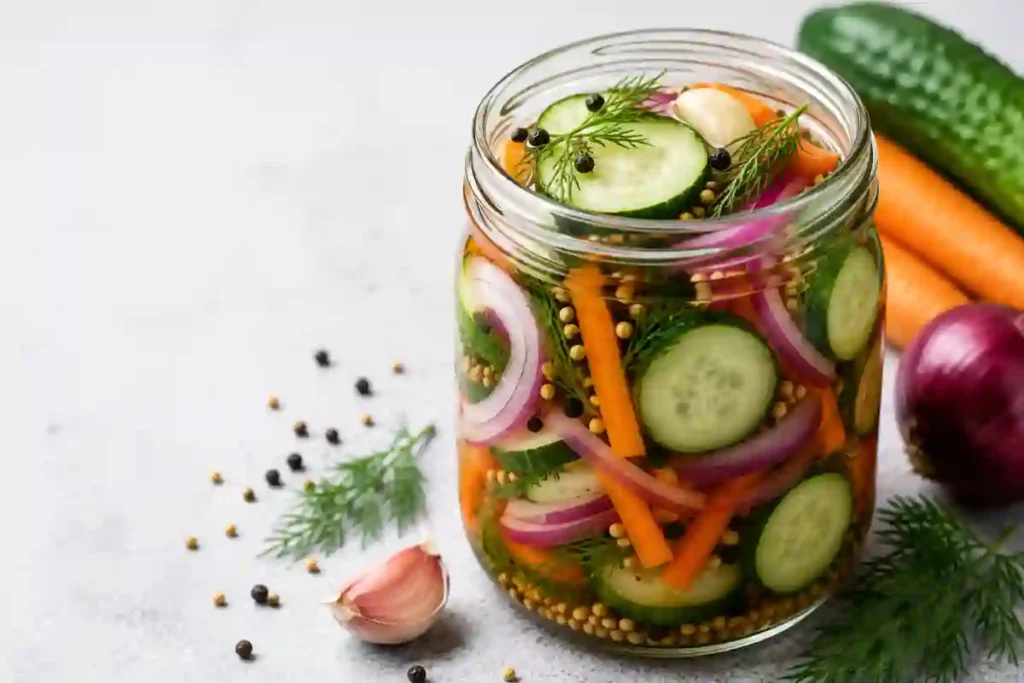
Pickling is one of the easiest ways to preserve fresh vegetables while adding bold, tangy flavor to everyday meals. Whether you’ve harvested a basket of cucumbers from your garden, bought seasonal produce at the farmers market, or simply want to reduce food waste, learning how to pickle vegetables is a practical kitchen skill that pays off quickly.
The best part? You don’t need expensive equipment or years of experience. A simple vinegar-based brine, a clean jar, and fresh vegetables are enough to create crisp, flavorful pickles that can be enjoyed within a day or two. Once you understand the basics, you can experiment with herbs, spices, and different vegetables to create recipes that suit your own taste.
In this guide, you’ll learn everything you need to know from choosing the right ingredients to making the perfect brine, avoiding common mistakes, and storing your homemade pickles safely.
Easy Homemade Pickled Vegetables

Equipment
- Glass mason jars with lids
- Medium saucepan
- Measuring Cups
- Measuring spoons
- Sharp chef’s knife
- Cutting board
- Wide-mouth canning funnel (optional)
Ingredients
Vegetables
- 4 cups Fresh vegetables Cucumbers, red onions, carrots, cauliflower, radishes, jalapeños, green beans, or asparagus
Basic Pickling Brine
- 1 cup White distilled vinegar (5% acidity)
- 1 cup Filtered water
- 1 tbsp Kosher salt Do not use iodized salt
- 1 tbsp Granulated sugar Optional
Optional Herbs & Spices
- 2 cloves Garlic
- 2 sprigs Fresh dill
- 1 tsp Mustard seeds
- 1 tsp Whole black peppercorns
- 1 Bay leaf
- 1/2 tsp Red pepper flakes Optional
Instructions
- Wash the vegetables thoroughly under cold running water. Clean the jars with hot, soapy water and dry completely.
- Slice the vegetables into uniform pieces, such as cucumber spears, carrot sticks, onion rings, or cauliflower florets.
- Place garlic, dill, mustard seeds, peppercorns, bay leaf, and any additional spices into the bottom of each jar. Pack the vegetables tightly, leaving about 1/2 inch (1.25 cm) of headspace.
- In a saucepan, combine the vinegar, water, kosher salt, and optional sugar. Heat over medium until the salt dissolves completely. Do not boil vigorously.
- Carefully pour the warm brine over the vegetables until completely submerged.
- Tap the jars gently to release trapped air bubbles. Seal with lids, cool to room temperature, and refrigerate.
- Allow the pickles to chill for at least 24 hours before serving. For the best flavor, refrigerate for 2 to 5 days.
Notes
Table of Contents
Table of Contents
What Is Pickling?
Pickling is a method of preserving food by immersing it in an acidic solution. Most home cooks use a mixture of vinegar, water, salt, and optional sugar to create a brine that helps preserve vegetables while developing their flavor.
There are two main methods of pickling:
- Quick Pickling (Refrigerator Pickles): Relies on vinegar for acidity and is stored in the refrigerator. Quick pickles are simple, fast, and ideal for beginners.
- Fermentation: Uses salt instead of vinegar. Natural bacteria convert vegetable sugars into lactic acid over several days or weeks, creating complex flavors.
If you’re just starting, quick pickling is the easiest place to begin.
Why Make Homemade Pickles?
Homemade pickles offer several advantages over store-bought varieties. They allow you to completely control:
- Salt and sugar content
- Spice intensity and fresh herbs
- Type of vinegar used
- Overall crunchiness and freshness
They are also a great way to preserve vegetables before they spoil, reducing food waste while saving money. Since you control every ingredient, you can create unique flavor combinations that aren’t available on grocery store shelves.
Best Vegetables for Pickling
| Vegetable Type | Best Cut Style | Crispness Rating |
| Cucumbers | Spears or rounds | ⭐⭐⭐⭐⭐ |
| Red Onions | Thin slices | ⭐⭐⭐⭐⭐ |
| Carrots | Sticks or thin coins | ⭐⭐⭐⭐☆ |
| Cauliflower | Small florets | ⭐⭐⭐⭐⭐ |
| Radishes & Jalapeños | Thin rounds | ⭐⭐⭐⭐☆ |
| Green Beans & Asparagus | Whole spears | ⭐⭐⭐⭐⭐ |
Tip: Always choose the freshest produce available. Firm, unbruised vegetables produce the crispiest pickles.
Essential Pickling Ingredients
Vinegar: Provides necessary acidity. Use vinegars with at least 5% acidity (White distilled, Apple cider, White wine, or Rice vinegar).
Water: Filtered or distilled water is ideal because chlorine in tap water can affect flavor or discolor pickles.
Salt: Use Pickling salt or Kosher salt (without additives/anti-caking agents). Avoid iodized table salt, which makes the brine cloudy.
Sugar: Balances acidity. Adjust to taste or omit entirely.
Herbs & Spices: Whole peppercorns, dill weed, garlic cloves, mustard seeds, bay leaves, red pepper flakes, and coriander seeds.
KITCHEN ESSENTIAL: For storing quick refrigerator pickles safely, use airtight, wide-mouth Glass Masson Jars With Leak Proof Lids.
Basic Pickling Brine
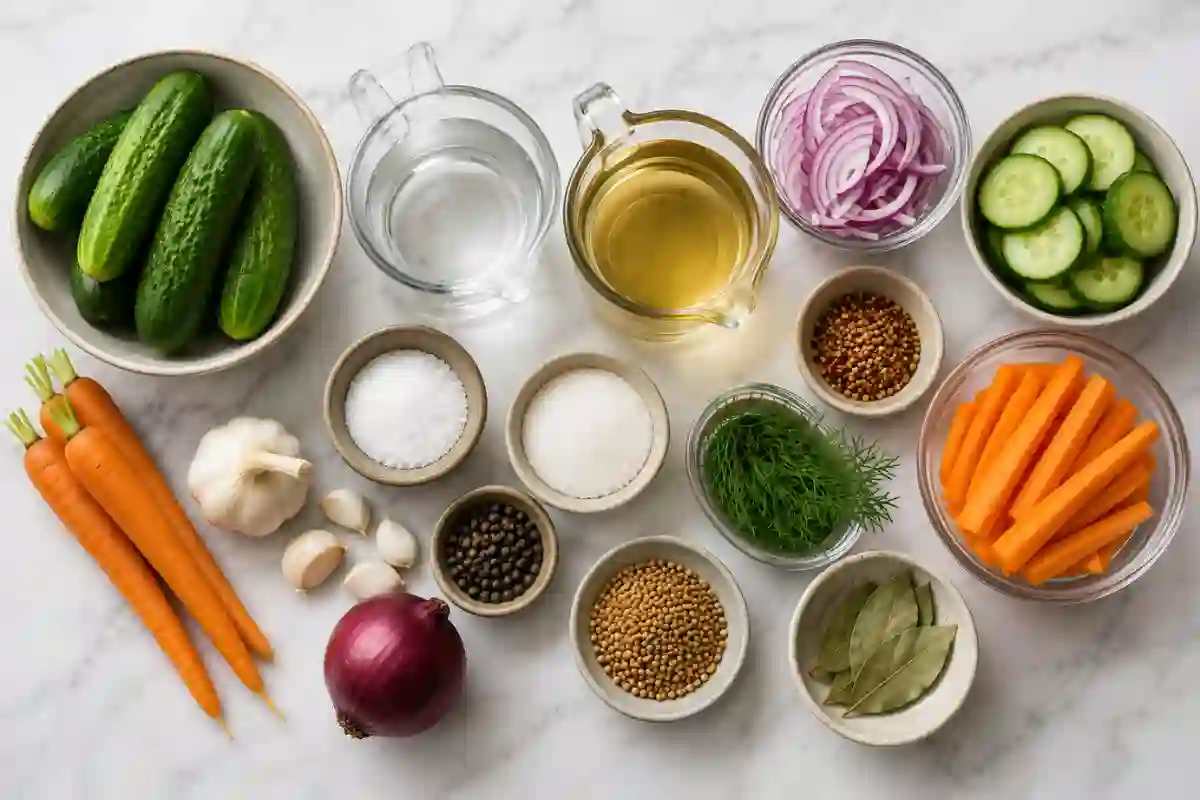
A dependable all-purpose brine consists of:
- 1 cup white vinegar
- 1 cup water
- 1 tablespoon kosher salt
- 1 tablespoon sugar (optional)
Bring the mixture to a gentle simmer until the salt dissolves completely.
Remove from the heat before pouring it over your vegetables.
Equipment You’ll Need
Fortunately, refrigerator pickling requires very little equipment:
Glass mason jars with tight lids
Medium stainless steel saucepan
Measuring cups and spoons
Sharp chef’s knife and cutting board
Wide-mouth canning funnel (optional, but prevents spills)
PREP TIP: Achieve perfectly uniform vegetable slices for even pickling with a high-precision Stainless Steel Mandoline Slicer.
How to Pickle Vegetables Step-by-Step
Basic All-Purpose Brine Recipe
- 1 cup white distilled vinegar
- 1 cup filtered water
- 1 tablespoon kosher salt
- 1 tablespoon granulated sugar (optional)
Step 1: Wash & Prepare Produce
Wash vegetables thoroughly under cold running water. Clean your glass jars with hot, soapy water and dry them completely.
Step 2: Slice Vegetables
Slice vegetables into uniform sizes so they absorb the brine evenly (e.g., cucumber spears, thin onion rings, or carrot sticks).
Step 3: Pack the Jars
Place your aromatics (garlic, dill, spices) at the bottom of the jar first. Tightly pack the vegetables into the jar, leaving about 1/2 inch of space at the top.
CLEANUP PRO TIP: Pour hot brine safely without making a mess on your counter using a Stainless Steel Wide-Mouth Funnel & Kitchen Tongs Set.Stainless Steel Wide-Mouth Funnel & Kitchen Tongs Set
Step 4: Make & Pour the Brine
Combine vinegar, water, salt, and sugar in a saucepan. Heat until the salt and sugar dissolve completely (a gentle simmer is enough; do not boil vigorously). Carefully pour the warm brine over the packed vegetables, ensuring they are fully submerged.
Step 5: Cool & Refrigerate
Tap the jar gently to release any trapped air bubbles. Allow the jars to cool to room temperature, seal tightly with lids, and store in the refrigerator.
Wait Time: While quick pickles can be eaten after 24 hours, their flavor improves dramatically after 2 to 5 days.
See how to make this recipe in the video below.
Shelf Life & Storage Times
Refrigerator pickles must be kept cold. Here is how long they typically last:
| Vegetable | Refrigerator Shelf Life |
| Cucumbers | 2–4 weeks |
| Red Onions | 3–4 weeks |
| Carrots & Cauliflower | Up to 1 month |
| Jalapeños & Peppers | 1 month |
Discard immediately if you notice mold, off-odors, or unusual cloudiness.
Common Pickling Mistakes
Using Old Vegetables
Fresh vegetables produce crisp pickles.
Older vegetables often become soft.
Weak Brine
Too much water reduces acidity and flavor.
Stick to tested ratios.
Wrong Salt
Avoid iodized salt.
Pickling or kosher salt produces clearer brine.
Not Waiting Long Enough
Fresh pickles improve dramatically after sitting for several days.
Patience makes a difference.
Reusing Brine Too Many Times
Used brine loses strength.
For the best quality, prepare fresh brine for each batch.
Delicious Flavor Variations
Classic Dill
- Fresh dill
- Garlic
- Mustard seeds
- Peppercorns
Sweet Pickles
- Extra sugar
- Cinnamon
- Cloves
Spicy Pickles
- Jalapeños
- Red pepper flakes
- Black pepper
Mediterranean Style
- Oregano
- Lemon peel
- Garlic
- Bay leaves
Asian-Inspired
- Rice vinegar
- Ginger
- Garlic
- Sesame seeds
Storage Tips
Always refrigerate quick pickles.
Use clean utensils when removing vegetables from the jar.
Keep vegetables submerged beneath the brine whenever possible.
Store jars tightly sealed to maintain freshness.
Below is an estimated nutrition panel for the Easy Homemade Pickled Vegetables recipe. This assumes the recipe makes 8 servings (½ cup / 75 g each) and that only a small amount of the brine is consumed.
Nutrition Information (Estimated)
| Nutrient | Amount |
|---|---|
| Serving Size | ½ cup (75 g) |
| Calories | 18 kcal |
| Total Fat | 0 g |
| Saturated Fat | 0 g |
| Trans Fat | 0 g |
| Cholesterol | 0 mg |
| Sodium | 320 mg |
| Total Carbohydrates | 4 g |
| Dietary Fiber | 1 g |
| Total Sugars | 2 g |
| Added Sugars | 1 g |
| Protein | 0.5 g |
| Vitamin A | 45 mcg (5% DV) |
| Vitamin C | 4 mg (4% DV) |
| Calcium | 18 mg (2% DV) |
| Iron | 0.3 mg (2% DV) |
| Potassium | 110 mg (2% DV) |
Recipe Yield
- Servings: 8
- Serving Size: ½ cup (75 g)
Note: Nutrition values are estimates and may vary depending on the vegetables used, the amount of sugar added, and how much brine is consumed. Most of the sodium remains in the brine, so the actual sodium intake may be lower if the vegetables are drained before serving.
Frequently Asked Questions pickle-vegetables
Can I pickle frozen vegetables?
Fresh vegetables provide the best texture. Frozen vegetables lose cell structure upon thawing and become soft and mushy in brine.
Do I need special canning jars for quick pickles?
No. Any clean glass jar with a tight-fitting lid works for refrigerator quick-pickling since no hot water bath canning is involved.
Why are my pickles soft instead of crunchy?
Soft pickles usually result from using older vegetables, weak brine ratios, or storing them past their prime.
Can I reuse pickle brine?
You can reuse it once for another batch of refrigerator pickles, but the flavor and acidity will be weaker. For the best results, make a fresh batch.
Why are my pickles soft?
Soft pickles usually result from older vegetables, weak brine, or storing them too long.
How soon can I eat homemade pickles?
Most quick pickles are ready after 24 hours, but their flavor continues to improve over the next few days.
Final Thoughts
Learning how to pickle vegetables is a simple skill that opens the door to countless flavor combinations. Once you understand the basics fresh produce, a balanced brine, and proper storage you can customize every batch with your favorite herbs, spices, and vegetables. Whether you’re preserving a garden harvest or adding a tangy crunch to everyday meals, homemade pickles are an easy way to make the most of fresh ingredients. Start with a classic recipe, experiment with different flavors, and you’ll soon have a refrigerator stocked with delicious pickles ready for sandwiches, salads, snacks, and more.
If you enjoyed this Breakfast Sliders Recipe, you will love my another recipes too
. Ultimate Baked Breakfast Sliders for a Crowd
. Date Shake Recipe (Creamy, Naturally Sweet & Foolproof)
. Best Cornbread Breakfast Casserole Recipe: Easy Make-Ahead Brunch
. Easy Chicken Mushroom Stir Fry (Ready in 30 Minutes!)
. Baked Rigatoni with Sausage That Feels Like Real Comfort Food
For more delicious and easy recipes, follow me on Facebook and Pinterest
This recipe was written and tested by Rasha, the founder of Recipesedeas. Rasha is a food enthusiast living in the USA, sharing her family-inspired recipes and culinary adventures