
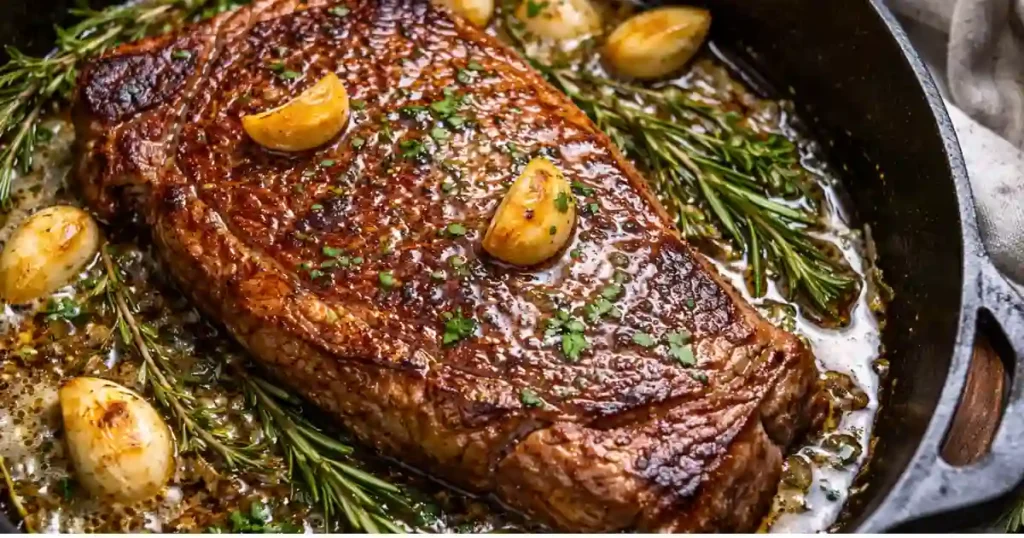
Why Most Pan Seared Steak with Garlic Butter Goes Wrong
Let’s be honest for a second. If you’ve ever tried making pan seared steak with garlic butter at home and ended up with something gray, chewy, or weirdly dry, you’re not alone. It’s almost frustrating how something that looks so simple can go so wrong.
The issue usually isn’t effort. It’s timing, heat, and a few small mistakes that don’t seem like mistakes at all. Like putting the steak in the pan too early. Or flipping it because you feel like you should. Or worse, adding butter at the beginning thinking it’ll “soak in more flavor.” It doesn’t. It burns.
Most recipes don’t talk about that part. They just give steps. But what you’re really missing is awareness. That moment when the steak hits the pan and instead of a sharp, aggressive sizzle, you hear a soft hiss. That’s already a problem.
The real reasons your steak fails
- The pan isn’t hot enough when the steak goes in
- The steak surface is too wet
- You’re flipping based on time, not visual cues
- Butter is added too early and burns before it flavors anything
- You’re overcrowding the pan without realizing it
And yeah, maybe you’ve followed recipes exactly and still didn’t get that crust. That’s because crust isn’t just a step. It’s a reaction. And once you understand that, everything shifts.
Why does pan seared steak fail?
Most pan seared steak fails because of low heat, moisture on the surface, and incorrect timing when flipping or adding butter.
Table of Contents
Table of Contents
Why You’ll Love This Pan Seared Steak with Garlic Butter
- Quick and surprisingly simple, even if you’ve messed up steak before
- Uses minimal ingredients but still delivers that rich, steakhouse flavor
- Creates a deep, golden crust that most home cooks struggle to achieve
- Perfect for date nights, small dinners, or honestly just treating yourself
- Feels impressive without actually being complicated
There’s something oddly satisfying about getting this right. That moment when the butter hits the pan and the garlic starts to bloom, it just feels like you’re doing something serious. And maybe it’s just me, but once you nail the crust on a pan seared steak with garlic butter, it’s hard to settle for anything less.
What You Actually Need for Pan Seared Steak with Garlic Butter
You don’t need a long grocery list. In fact, the simpler this is, the better your pan seared steak with garlic butter turns out. But here’s the thing, each ingredient has a job. Skip one or use it wrong, and the result changes more than you’d expect.
At first glance, it’s just steak, salt, butter, garlic. But the details matter more than the list itself.
Core ingredients
- Steak, preferably ribeye or strip
- Salt, preferably coarse
- Fresh garlic cloves
- Unsalted butter
- Neutral oil like avocado or canola
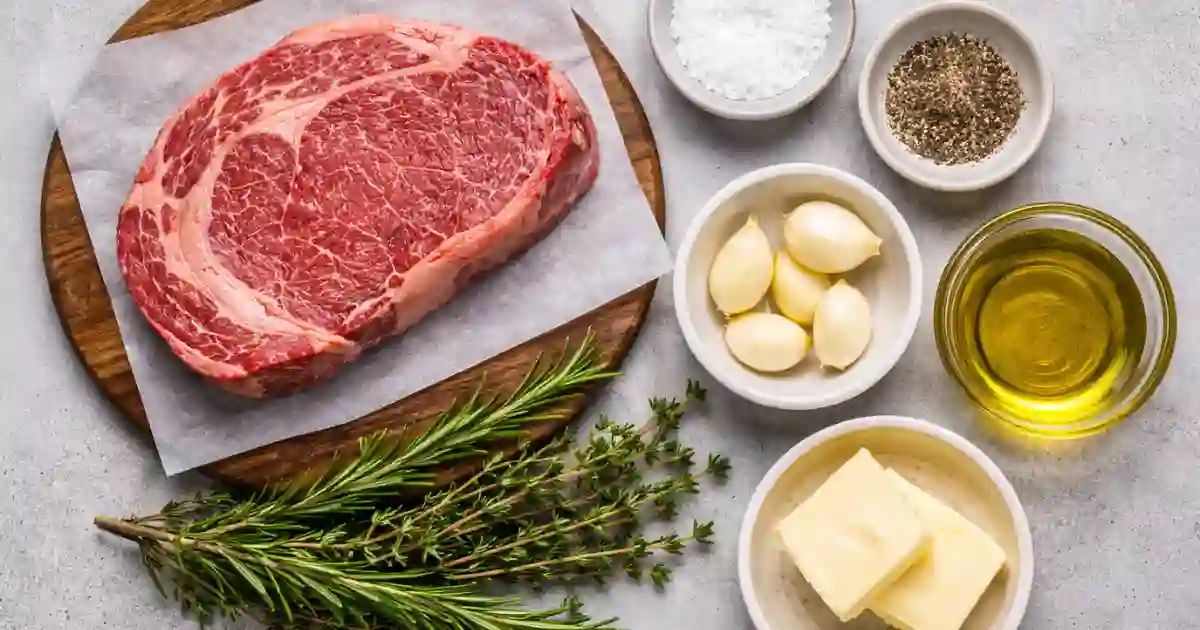
That’s it. No marinades. No complicated seasoning blends. And yeah, that might feel too minimal if you’re used to layering flavors. But this method is about control, not masking.
Why each ingredient matters
The steak itself should be thick enough to develop a crust without overcooking inside. Thin steaks rush everything and leave you guessing. Salt draws out moisture first, which sounds bad, but then it reabsorbs and seasons deeply. That’s where flavor actually builds.
Butter adds richness, but only at the right moment. Garlic infuses into that butter, not the steak directly. That distinction matters more than it seems.
Do you need a cast iron pan?
Not technically. But it helps a lot. A heavy pan holds heat better, which is critical for getting that crust. Lighter pans tend to drop temperature too fast, especially when the steak hits.
The Step by Step Method for Pan Seared Steak with Garlic Butter
This is where things usually feel mechanical in most recipes. Do this, wait this long, flip. But honestly, that approach is part of the problem. Cooking steak is less about timing and more about reading what’s happening in front of you.
Start by taking your steak out of the fridge about 30 to 45 minutes before cooking. Cold steak hitting a hot pan creates uneven cooking, and yeah, it matters more than people think.
Pat the steak completely dry. Like really dry. If there’s visible moisture, you’re already reducing your chances of getting a crust.
Heat your pan until it’s almost aggressively hot. Add a thin layer of oil, then place the steak down gently. You should hear a sharp, immediate sizzle. If you don’t, something’s off.
Let it sit. This part feels wrong, but don’t move it. The steak will release naturally when the crust forms.
The core process
- Heat pan until very hot
- Add oil
- Place steak and leave it untouched
- Flip only when a crust forms naturally
- Add butter and garlic after flipping
- Tilt pan and baste continuously
That basting step is where things start to feel like a restaurant technique. Spoon the melted garlic butter over the steak repeatedly. It builds flavor fast.
See how to make this recipe in the video below
How long should you cook it?
It depends. Thickness, heat, and preference all change the timing. Which is why relying on minutes alone doesn’t really work.
The Secret to a Perfect Crust on Pan Seared Steak with Garlic Butter
This is the part people chase. That deep, golden brown crust that almost looks like it came out of a steakhouse kitchen. And weirdly, it’s not about fancy technique. It’s about removing obstacles.
Moisture is the biggest enemy here. If your steak surface is wet, it steams instead of sears. That’s why drying it matters more than seasoning sometimes.
Heat is the second factor. Not medium high. Not “kind of hot.” Actually hot. The kind where you hesitate slightly before putting the steak in.
What actually creates crust
- High, stable heat
- Dry surface
- Enough time without interference
And here’s something people don’t always realize. Flipping once is not a strict rule. Sometimes flipping more often can cook more evenly. Sounds contradictory, right? It kind of is. But crust formation still requires uninterrupted contact at some point.
Why isn’t my steak forming a crust?
Because either the pan isn’t hot enough, the steak is wet, or you’re moving it too soon.
Garlic Butter Technique Most People Get Wrong
This one is subtle, but it changes everything. Most people add butter at the beginning. It feels logical. More time equals more flavor, right?
Not really.
Butter has milk solids that burn quickly at high heat. So if you add it too early, you end up with bitter flavors instead of that rich, nutty finish you’re expecting.
The correct timing is after the first flip. That way, the pan has already done the heavy searing work.
Proper garlic butter timing
- Sear first side
- Flip steak
- Lower heat slightly
- Add butter and crushed garlic
- Begin basting immediately
That’s when the aroma hits. And if you’ve ever smelled that moment, you know it’s different. It’s deeper. More layered.
Can garlic burn during basting?
Yes, if the heat is too high. That’s why reducing the heat slightly matters right after flipping.
How to Know When Your Pan Seared Steak with Garlic Butter Is Done
This is where most people get stuck. You either overcook it because you’re unsure, or you cut into it too early and lose juices.
There are a few ways to check doneness, but none of them are perfect on their own. It’s more about combining signals.
Touch is one method. A rare steak feels soft and springy, while a well done steak feels firm. But that takes practice, and honestly, it’s not always reliable at first.
Visual cues help too. The juices that rise to the surface change as the steak cooks.
Doneness guide (approximate)
- Rare: cool red center
- Medium rare: warm red center
- Medium: pink center
- Well done: little to no pink
A thermometer is the most accurate tool, but even then, you need to remove the steak slightly early because it continues cooking while resting.
Should you rest your steak?
Yes. Always. Around 5 to 10 minutes. This lets juices redistribute instead of spilling out immediately.
Common Mistakes That Ruin Pan Seared Steak with Garlic Butter
Some mistakes are obvious. Others are sneaky and feel like you’re doing things right when you’re not.
The most common ones
- Cooking straight from the fridge
- Not drying the steak
- Using low heat
- Adding butter too early
- Flipping based on time instead of crust
- Skipping the resting step
And maybe the biggest one is rushing. Steak punishes impatience more than most foods. Which is ironic, because it also cooks quickly.
What is the biggest mistake when cooking steak?
Not using high enough heat and interfering too early during searing.
Variations and Upgrades for Pan Seared Steak with Garlic Butter
Once you get the base method down, this is where things get interesting. You can start adjusting flavors without breaking the technique.
Try adding fresh herbs like thyme or rosemary during the butter basting stage. They infuse into the fat and subtly coat the steak.
Different cuts behave differently too. Ribeye is forgiving because of its fat. Strip steak is leaner but still flavorful. Filet is tender but needs careful cooking to avoid drying out.
Simple upgrades
- Add rosemary or thyme to butter
- Finish with flaky salt
- Use compound butter for extra flavor
- Deglaze the pan for a quick sauce
And honestly, once you nail the basics, you start trusting yourself more. You stop following steps blindly and start reacting to what’s happening in the pan.
Serving and Storage Tips
Serving this steak well is half the experience. You could technically just throw it on a plate and call it done, but a few small touches make it feel completely different.
How to serve it better
- Slice against the grain for a more tender bite
- Spoon extra garlic butter over the top right before serving
- Pair with simple sides like mashed potatoes, roasted vegetables, or even a light salad
- Let it rest fully before cutting so juices stay inside
And honestly, presentation matters more than people admit. A clean slice, a little butter gloss on top, maybe even a pinch of flaky salt, it just feels elevated.
Storage and reheating
If you somehow have leftovers, which isn’t always the case, here’s how to handle them without ruining the texture.
- Store in an airtight container in the fridge for up to 3 days
- Reheat gently in a pan over low heat with a bit of butter
- Avoid microwaving if possible since it toughens the meat quickly
Freezing is possible, but it does change the texture slightly. It’s not bad, just not the same.
Helpful Notes for Better Results
This is the stuff most recipes skip, but it’s usually where things go right or wrong.
- Let the steak come close to room temperature before cooking
- Drying the surface thoroughly is not optional if you want a crust
- Don’t panic if the steak sticks at first, it will release naturally
- Butter timing matters more than quantity
- If the pan starts smoking too aggressively, lower the heat slightly instead of pulling the steak out
And here’s something that feels a bit contradictory. You’ll hear “don’t touch the steak,” but sometimes adjusting slightly or flipping more than once can actually help. It depends on your pan and heat. You kind of learn that part by doing it.
Nutrition Information (Approximate per serving)
(Based on 1 steak with garlic butter, assuming ~250–300g ribeye)
- Calories: 650–750 kcal
- Protein: 45–55 g
- Fat: 50–60 g
- Saturated Fat: 20–25 g
- Carbohydrates: 0–2 g
- Sugar: 0 g
- Cholesterol: 120–150 mg
- Sodium: 400–600 mg
This can vary depending on the cut of steak and how much butter you actually use. And realistically, most people don’t measure butter precisely when basting… so yeah, consider this a close estimate, not an exact science.
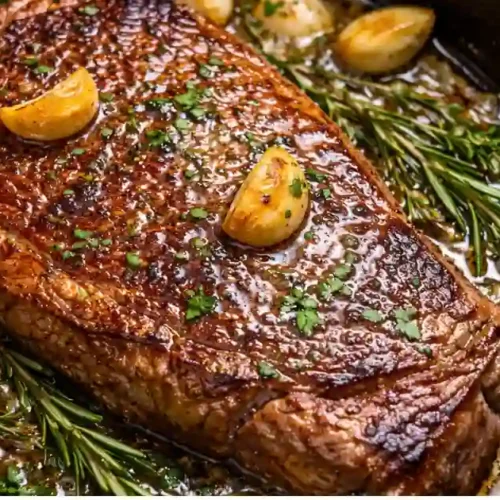
Pan Seared Steak with Garlic Butter

Ingredients
Steak
- 2 ribeye or strip steaks about 1 to 1.5 inches thick
- 1 tsp coarse salt or to taste
- 0.5 tsp black pepper
Cooking
- 1 tbsp neutral oil such as avocado or canola oil
- 2 tbsp unsalted butter
- 3 cloves garlic lightly crushed
- 2 sprigs fresh thyme or rosemary optional
Instructions
- Remove the steaks from the refrigerator and let them sit at room temperature for 30 to 40 minutes before cooking.
- Pat the steaks completely dry with paper towels to remove any surface moisture.
- Season both sides generously with salt and black pepper.
- Heat a heavy skillet over medium-high heat until very hot. Add the neutral oil and swirl to coat.
- Place the steaks into the pan and let them cook undisturbed until a deep golden crust forms, about 2 to 4 minutes.
- Flip the steaks once the crust releases naturally from the pan.
- Reduce the heat slightly and add butter, garlic, and optional herbs to the pan.
- Tilt the pan and continuously spoon the melted garlic butter over the steaks for about 1 to 2 minutes.
- Continue cooking until the desired doneness is reached, using visual cues or a thermometer.
- Remove the steaks from the pan and let them rest for 5 to 10 minutes before slicing and serving.
Notes
FAQs About Pan Seared Steak with Garlic Butter
Can I use frozen steak for pan seared steak with garlic butter?
You can, but it’s not ideal. Thawing fully allows for more even cooking and better crust development.
What’s the best thickness for steak?
Around 1 to 1.5 inches works best. Thinner cuts cook too fast and don’t develop the same crust.
Should I season the steak right before cooking or earlier?
Both can work, but seasoning about 30 to 40 minutes before cooking allows the salt to penetrate deeper.
Why does my garlic taste bitter?
It’s usually burning. Add it later in the cooking process and lower the heat slightly when basting.
Do I need a cast iron pan for pan seared steak with garlic butter?
No, but it helps retain heat better and gives more consistent crust.
How long should I rest steak after cooking?
About 5 to 10 minutes depending on thickness.
Can I use olive oil instead of neutral oil?
You can, but it has a lower smoke point and may burn at high heat.
Why is my steak chewy?
It’s usually overcooked or sliced incorrectly against the grain.
Conclusion
Cooking pan seared steak with garlic butter isn’t complicated, but it’s also not as automatic as most recipes make it seem. There’s a small learning curve, and yeah, you’ll probably mess up once or twice.
But once you start noticing the details, the sound of the sear, the smell of the butter, the way the crust forms, it clicks.
And after that, it’s hard to go back to guessing.
For delicious and easy recipes, follow me on my Facebook and Pinterest
If you enjoyed this recipe, feel free to leave a comment below or follow me on my culinary journey!
This recipe was written and tested by Rasha, the founder of Recipesedeas. Rasha is a food enthusiast living in the USA, sharing her family-inspired recipes and culinary adventures