
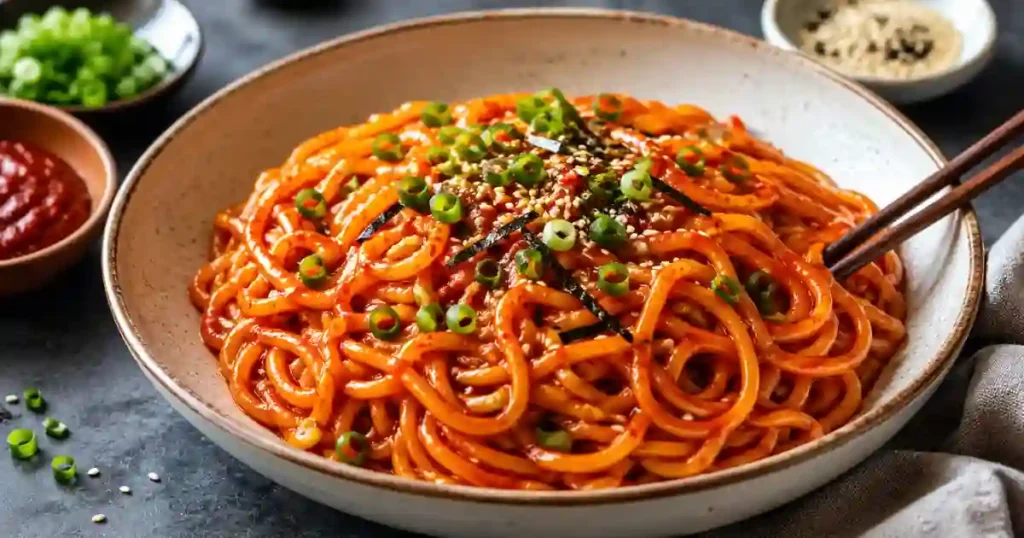
Gochujang noodles sound simple on paper, right? Just noodles tossed in a spicy Korean chili paste sauce. But if you’ve ever tried making them at home, you might’ve noticed something slightly off. Either the sauce feels too sharp, too flat, or weirdly one dimensional. And that’s the part most recipes don’t really talk about.
Because honestly, the magic of gochujang noodles is not just the heat. It’s that deep, almost confusing balance of spicy, sweet, savory, and umami that kind of sneaks up on you after the first bite. The kind of dish you make once… and then suddenly crave at 11:30 p.m. a few days later.
This version is built differently. It leans into flavor layering, fixes the common mistakes most people do not even realize they are making, and gives you enough flexibility to adapt it to your mood. Whether you want it creamy, extra spicy, or just comforting after a long day, this guide walks you through it in a way that actually makes sense.
And yeah, we will get into the recipe. But more importantly, you will understand why it works. That’s the difference.
Table of Contents
Table of Contents
Why Gochujang Noodles Hit So Hard (And Why Most Recipes Miss It)
There’s something oddly addictive about gochujang noodles. Not just tasty. Addictive in that quiet, almost sneaky way where you keep going back for another bite without thinking too much about it.
It mostly comes down to balance. Gochujang itself is already layered. It is spicy, slightly sweet, fermented, and deeply savory. But here’s the catch. If you don’t support those layers correctly, it can taste either too aggressive or just… flat.
A lot of recipes treat gochujang like a one-note ingredient. They add it, maybe some soy sauce, maybe garlic, and call it done. That’s where things start to fall apart. Because without acidity, sweetness control, and fat, the sauce never fully opens up.
And let’s be honest, that’s probably why some homemade versions feel disappointing. Not bad, just not memorable.
The real trick is building around it. A touch of sweetness to round the heat. Some fat to carry flavor across the noodles. A bit of acidity to cut through everything. When those elements align, the dish shifts from “pretty good” to something you keep thinking about later.
Why does gochujang taste so complex?
Gochujang is made through fermentation, which naturally develops umami and depth. That fermentation is what gives it that slightly funky, rich undertone that you cannot replicate with regular chili sauces.
If you have ever wondered why your noodles tasted spicy but not satisfying, this is probably why.
What Are Gochujang Noodles, Really?
At their core, gochujang noodles are a fusion-style dish. They are not strictly traditional Korean cuisine, but they borrow heavily from Korean flavors, especially the use of gochujang as a base.
Think of it as a flexible comfort dish. You take noodles, coat them in a bold sauce built around gochujang, and then customize from there. Vegetables, protein, toppings, it all depends on your mood.
But there’s a subtle misconception here. Many people assume it is just about heat. It’s not.
Gochujang noodles are more about contrast than intensity. You get spice, yes, but also sweetness, saltiness, and a kind of slow-building richness that makes the dish feel complete.
And maybe this is just personal bias, but it feels like one of those meals that fits oddly specific moments. Late evenings. Rainy days. That weird space between wanting comfort food and something exciting.
Are gochujang noodles always vegan?
Not necessarily. Traditional versions can include eggs, meat, or seafood. But the base sauce itself can easily be made vegan, which is why it is so popular in plant-based cooking.
Ingredients That Make or Break This Recipe
This is where things get interesting. Because the difference between average and incredible gochujang noodles is not effort. It’s ingredient balance.
You do not need a long list. But each ingredient needs to do something specific.
- Gochujang
The backbone. Provides spice, umami, and depth. - Soy sauce or tamari
Adds saltiness and enhances overall flavor. - Garlic
Sharpness and aroma. Fresh is noticeably better. - Sweetener such as maple syrup or sugar
Balances heat and rounds out the sauce. - Oil or vegan butter
Carries flavor and adds richness. - Vinegar or lime juice
Brightens everything and prevents heaviness. - Noodles
Texture matters more than you think. Slightly chewy noodles work best.
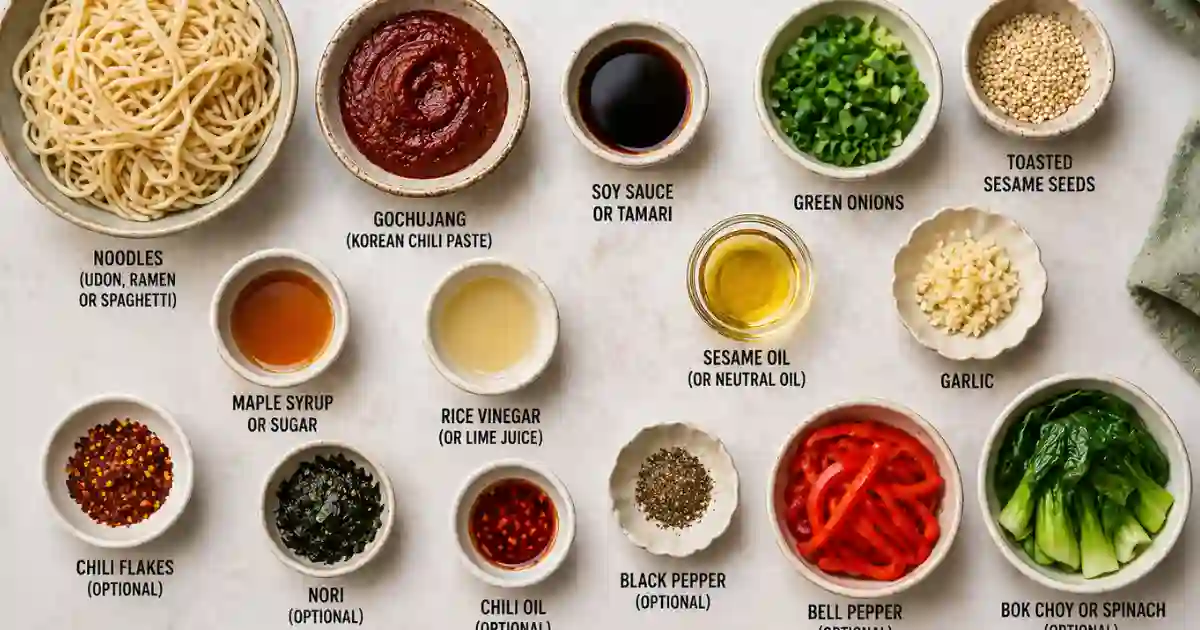
Here’s where people hesitate. Do you really need all of these? Technically no. But skipping one often creates imbalance.
And you might not notice immediately. But you will feel it in the final bite.
Can I substitute gochujang?
You can try, but it will not taste the same. Mixing chili paste with miso and a bit of sugar gets close, but it lacks that fermented depth.
How to Make Gochujang Noodles Without Messing It Up
Start with boiling your noodles. Sounds obvious, but this is actually one of the easiest places to mess up. Slightly undercook them. Not raw, just a bit firmer than usual. They will finish cooking in the sauce later.
While that’s happening, make your sauce. Combine gochujang, soy sauce, sweetener, garlic, oil, and a splash of acid. Taste it. It should feel slightly stronger than you want. That’s intentional.
Now heat a pan. Medium heat works best. Add a bit of oil, then pour in the sauce. Let it warm gently. Do not rush this. If it burns, the whole flavor profile shifts in a bad way.
Add your noodles directly into the sauce. Toss continuously. This is where things come together. The starch from the noodles thickens the sauce slightly, making it cling better.
If it feels too thick, add a splash of water. If it feels too thin, let it cook a bit longer.
And here’s the part people skip. Taste again at the end. Adjust. Maybe a bit more sweetness. Maybe a tiny splash of vinegar.
That final adjustment is usually the difference between good and great.
See how to make this recipe in the video below.
What if my sauce looks too thick?
Add small amounts of water or noodle cooking water while tossing. It helps loosen the sauce without diluting flavor too much.
Common Mistakes That Ruin Gochujang Noodles
You could follow the recipe and still feel like something is off. Usually, it comes down to a few small things.
- Overcooking noodles
Leads to mushy texture that cannot hold sauce properly. - Too much gochujang
Sounds counterintuitive, but it can overpower everything else. - Skipping acidity
Without it, the dish feels heavy and slightly dull. - Not tasting during cooking
This one is bigger than it sounds. - Using low heat incorrectly
Too low and the sauce never develops. Too high and it burns.
Honestly, most of these are fixable mid-cooking. But only if you notice them.
Why do my noodles taste flat?
Usually because the balance is off. Add a bit of acid or sweetness and taste again. It often fixes it immediately.
Customizing Your Gochujang Noodles
This is where the recipe becomes yours.
If you want it creamy, add a spoon of peanut butter or a splash of plant-based cream. It softens the heat and adds richness.
If you want more protein, tofu works well. Pan-fry it separately for better texture.
If you want it less spicy, reduce the gochujang slightly and increase sweetness.
And if you are not sure what you want, start simple. Then adjust next time.
Can I make it gluten-free?
Yes. Use gluten-free noodles and tamari instead of soy sauce.
Why Your Gochujang Sauce Tastes Flat (And How to Fix It)
This is probably the most overlooked part.
When a sauce tastes flat, it usually means one of three things is missing. Salt, acid, or contrast.
Try this quick fix approach:
- Too spicy → add sweetness
- Too heavy → add acid
- Too dull → add a bit more soy sauce
Sometimes it feels like guesswork. But after a couple of tries, you start noticing patterns.
And weirdly, that’s when cooking becomes more intuitive.
Is it normal to adjust the sauce at the end?
Yes. In fact, it is expected. Most great dishes are adjusted right before serving.
Why You’ll Love This Recipe
- Quick and easy to make even on busy days
- Uses simple ingredients that are easy to find
- Perfect for weeknight dinners or late-night cravings
- Easily customizable based on your taste
- Delivers a balanced flavor that feels restaurant-quality
- Works for both beginners and experienced cooks
There is something quietly satisfying about getting this dish right. Not just because it tastes good, but because it feels like you figured something out. Like you unlocked a small cooking secret.
Serving and Storage Tips
Serving these noodles well actually makes a difference. A simple bowl works, but adding toppings elevates the experience.
Try finishing with sliced green onions, sesame seeds, or a drizzle of sesame oil. Even a squeeze of lime right before serving can brighten everything.
For storage, keep leftovers in an airtight container in the fridge. They usually last up to three days.
When reheating, add a splash of water before warming them up. This helps loosen the sauce and brings back the original texture.
Microwave works fine, but reheating in a pan gives better results.
Helpful Notes
- Always taste as you go. It sounds obvious, but it is easy to forget.
- Slightly undercook noodles before adding to sauce
- Do not skip acidity, even a small amount matters
- Adjust spice gradually instead of all at once
Balanced Gochujang Noodles

Ingredients
Noodles
- 200 g noodles (udon, ramen, or spaghetti) slightly undercooked
Sauce
- 2 tbsp gochujang
- 1.5 tbsp soy sauce or tamari
- 2 cloves garlic minced
- 1 tbsp maple syrup or sugar
- 1 tbsp oil or vegan butter
- 1 tsp vinegar or lime juice
Optional Add-ins
- 1 cup mixed vegetables (bell peppers, mushrooms, spinach) optional
- 100 g tofu or protein of choice optional, cooked separately
Instructions
- Bring a pot of water to a boil and cook the noodles until slightly underdone. Drain and set aside.
- In a bowl, mix gochujang, soy sauce, garlic, sweetener, oil, and vinegar or lime juice. Taste and adjust if needed.
- Heat a pan over medium heat and add a small amount of oil. Pour in the sauce and let it warm gently without burning.
- Add the cooked noodles directly into the pan and toss continuously to coat them evenly in the sauce.
- If the sauce becomes too thick, add a splash of water or reserved noodle cooking water to loosen it.
- Add optional vegetables or protein if using, and mix well until heated through.
- Taste the noodles and adjust with extra sweetness, acidity, or soy sauce as needed before serving.
Notes
Frequently Asked Questions
Can I make this less spicy?
Yes. Reduce the amount of gochujang and increase the sweetener slightly to maintain balance.
What noodles work best?
Chewy noodles like udon or ramen hold the sauce well, but spaghetti can work in a pinch.
Can I prepare the sauce in advance?
Yes. Store it in the fridge for up to five days and mix before using.
Can I make gochujang noodles if I’ve never used gochujang before?
Absolutely. And honestly, this is one of the easiest entry points. Gochujang might seem intimidating at first, but once you balance it with a bit of sweetness and acidity, it becomes surprisingly approachable. Start with a smaller amount, taste, then build up. That way, you stay in control instead of the spice controlling you.
Why do my gochujang noodles taste too spicy or overpowering?
This happens more often than people admit. It usually means the sauce is missing balance. Try adding:
A little sugar or maple syrup to soften the heat
A splash of vinegar or lime juice to brighten it
A bit of oil or butter to mellow the intensity
Sometimes it’s not about reducing spice… it’s about supporting it.
What protein can I add to make this more filling?
If you want to turn this into a full meal, here are some solid options:
Crispy tofu for a plant-based boost
Fried or soft-boiled eggs for richness
Chicken or shrimp if you’re not vegan
Quick tip: cook protein separately first for better texture, then mix in at the end.
Can I meal prep gochujang noodles?
Yes, but with a small catch. The noodles tend to absorb sauce over time, which can make them a bit dry.
To fix that when reheating:
Add a splash of water or broth
Reheat gently in a pan instead of blasting in the microwave
It won’t be exactly the same as fresh… but still very good.
What vegetables go best with gochujang noodles?
This is where you can get creative, but some combinations just work better:
Bell peppers for sweetness
Mushrooms for umami depth
Spinach or bok choy for freshness
Carrots for crunch
If you’re unsure, start simple. Then build your version over time.
Is gochujang healthy?
It depends on how you use it. Gochujang itself contains fermented ingredients, which can be beneficial, but it also has salt and sugar.
In this recipe, balance is key. When combined with whole ingredients like vegetables and good-quality noodles, it fits well into a balanced diet.
Nutrition
Approximate per serving:
- Calories: 400 to 500
- Carbohydrates: 60g
- Protein: 10 to 15g
- Fat: 12 to 18g
- Fiber: 3 to 5g
Values vary depending on ingredients and portion size.
Conclusion
There’s something oddly personal about a dish like this. It starts as a simple idea, just noodles and sauce, but somewhere along the way it becomes more than that.
Maybe it is the way you tweak it each time. Maybe it is the way it fits into your routine. Or maybe it is just one of those meals that feels reliable when everything else feels a bit unpredictable.
Either way, once you get the balance right, it sticks with you.
And yeah… you will probably make it again sooner than you expect.
If you enjoyed this Gochujang Noodles, you will love my [Cottage Cheese Toast and Biscoff Icebox Cake] recipe too
For more delicious and easy recipes, follow me on Facebook and Pinterest
If you enjoyed this recipe, feel free to leave a comment below or follow me on my culinary journey!
This recipe was written and tested by Rasha, the founder of Recipesedeas. Rasha is a food enthusiast living in the USA, sharing her family-inspired recipes and culinary adventures