
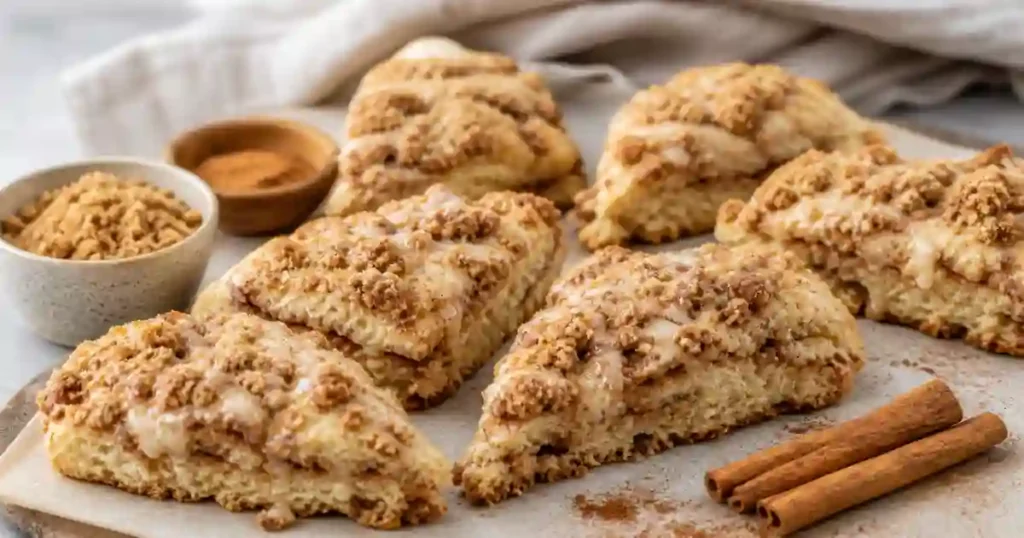
If you’ve been searching for cinnamon streusel scones that actually turn out soft instead of dry, you’re not alone. Most recipes promise that bakery-style texture, but somewhere between mixing the dough and pulling them out of the oven, things go… a little disappointing.
These cinnamon streusel scones are built differently. They’re tender in the center, lightly crisp on the edges, and topped with that crumbly, buttery streusel that feels almost unfairly good. The kind you pick apart with your fingers before even taking a proper bite. Or maybe that’s just me.
This guide walks you through everything. Not just what to do, but what to notice, what might go wrong, and how to fix it before it even happens. Because let’s be honest, nobody wants to waste butter and hope for the best.
Table of Contents
Table of Contents
Why These Cinnamon Streusel Scones Actually Work
There’s a reason some scones feel like soft clouds while others resemble slightly sweet bricks. It usually comes down to technique, not ingredients.
This recipe focuses on controlling texture at every step. The butter stays cold, the dough stays light, and the mixing is intentional rather than rushed. That balance creates a structure that holds together without becoming dense. It sounds simple, but it’s where most recipes quietly fail.
You’ll also notice something subtle while making these. The dough doesn’t fight you. It comes together gently, almost like it knows where it’s going. That’s usually a good sign. If your past scones felt sticky or overly stiff, this will feel different.
Why is texture so important in cinnamon streusel scones?
Because texture is the whole experience. The contrast between the soft interior and the crumbly cinnamon topping is what makes cinnamon streusel scones stand out. Without that balance, they’re just… sweet biscuits. And that’s not what we’re here for.
What Makes a Perfect Cinnamon Streusel Scone
A really good cinnamon streusel scone isn’t just about flavor. It’s about contrast. That first bite should feel layered.
The outside should have a slight crispness. Not hard, just enough to give structure. The inside should be tender and slightly fluffy, with visible layers that pull apart rather than crumble. Then there’s the topping, which should feel buttery and slightly crunchy, not sandy or dry.
Texture checklist
- Soft, tender interior that breaks apart easily
- Light golden edges with slight crispness
- Crumbly streusel that holds together when pressed
- Warm cinnamon aroma that hits before the first bite
If one of these is missing, the whole thing feels off. And honestly, you notice it immediately.
What do cinnamon streusel scones taste like?
They’re warm, buttery, and gently sweet with a deep cinnamon flavor. The streusel adds a slightly caramelized crunch, which makes each bite feel richer than it actually is. It’s comforting in a way that’s hard to explain until you try it.
The Science of Cold Butter in Scone Baking
If you’ve ever wondered why every decent cinnamon streusel scones recipe insists on cold butter, this is where things get interesting. It’s not just tradition or some baking myth people keep repeating. There’s actual science behind it, and once you understand it, a lot of baking confusion starts to make sense.
Cold butter is responsible for creating those soft, layered interiors that separate good scones from dry, forgettable ones. When small chunks of cold butter are mixed into the dough, they stay solid right up until the moment they hit the oven. Then something subtle but powerful happens. The butter melts and releases steam. That steam pushes against the dough, forming tiny air pockets.
Those pockets? That’s your texture.
What happens if the butter isn’t cold?
If the butter is soft or melted before baking, you lose that steam effect entirely. Instead of lifting the dough, the butter blends in too evenly. The result is flatter, denser cinnamon streusel scones that feel more like cake than layered pastry. Not terrible, just… not what you were aiming for.
And honestly, this is where a lot of people go wrong without realizing it. The dough might look fine. It might even feel right. But the structure is already compromised.
How to handle butter the right way
- Use butter straight from the fridge, not room temperature
- Cut it into small cubes before mixing
- Work quickly to prevent it from warming up
- If your kitchen feels warm, pause and chill the dough
There’s a small mental shift here. You’re not trying to “mix” the butter in completely. You’re trying to leave pieces of it intact.
Why does this matter for cinnamon streusel scones specifically?
Because these scones rely on contrast. The soft interior, the slightly crisp edges, the crumbly topping. Without that internal lift from cold butter, the whole balance feels off.
Do I really need to chill the dough?
Not always, but it helps more than people expect. Even a short chill can firm up the butter again and improve the final texture. It’s one of those steps that feels optional until you compare results side by side.
And then you kind of stop skipping it.
Can I use melted butter instead?
Technically yes, but you’ll get a completely different texture. The scones will be softer but dense, with no real layering. If that’s what you’re going for, it can work. But for classic cinnamon streusel scones, cold butter is what gives them their signature structure.
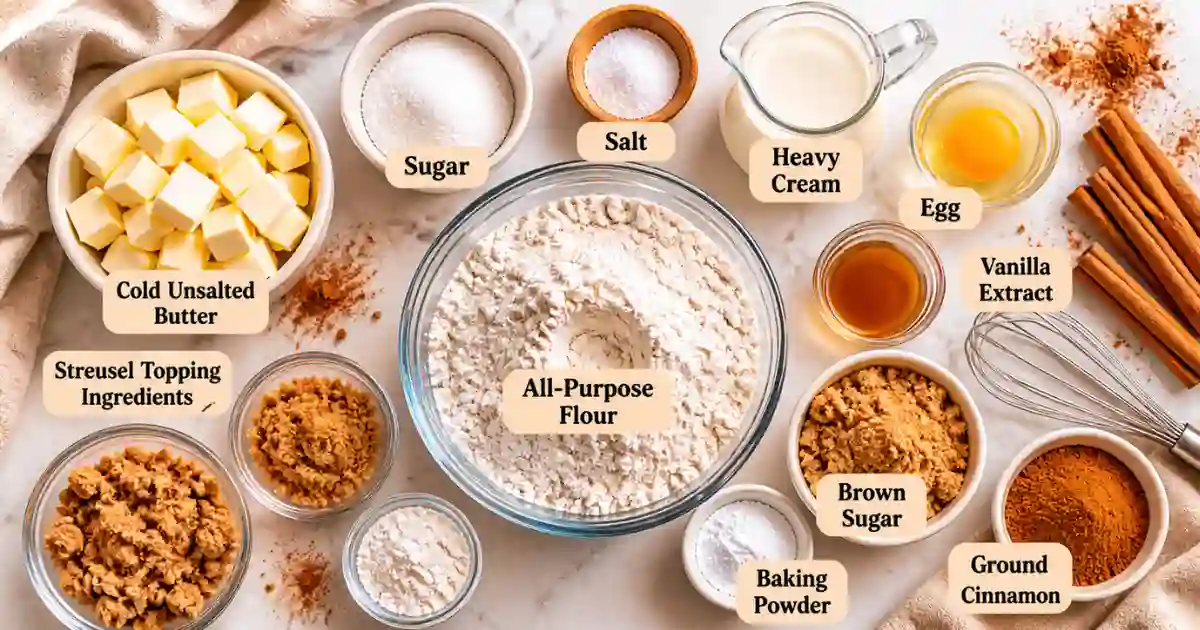
Ingredients for Cinnamon Streusel Scones
Ingredients matter, but how you use them matters more. Still, understanding their role helps you avoid subtle mistakes.
For the scones
- All purpose flour
- Sugar
- Baking powder
- Salt
- Cold unsalted butter
- Heavy cream
- Egg
- Vanilla extract
The cold butter is non negotiable. It creates steam pockets while baking, which leads to that soft, layered texture. If it melts too early, the scones flatten and lose structure.
For the cinnamon streusel
- Brown sugar
- Flour
- Ground cinnamon
- Cold butter
This mixture should feel like damp sand when pressed. Not too dry, not too wet. If you’re unsure, press it between your fingers. It should clump slightly.
Cinnamon Streusel Scone Substitution Guide
| Ingredient | Best Choice | Why it matters | Substitute |
| Fat | Cold Unsalted Butter | Creates steam pockets for flakiness | Frozen Margarine (Texture will vary) |
| Liquid | Heavy Cream | High fat content ensures tenderness | Whole Milk + 1 tsp Lemon Juice |
| Flour | All-Purpose Flour | Provides the right protein balance | 50% Whole Wheat (For heartier texture) |
| Sweetener | Brown Sugar (for streusel) | Adds moisture and caramel notes | Coconut Sugar |
Can I substitute ingredients?
Yes, but carefully. Swapping cream for milk will reduce richness. Using margarine instead of butter will change the texture entirely. It might still work, but it won’t feel the same.
Essential Kitchen Tools for Bakery Style Scones
You don’t need a professional kitchen to make great cinnamon streusel scones. But the right tools do make the process smoother, and honestly, a bit less frustrating.
Some of these might seem optional at first. And technically they are. But once you use them, it’s hard to go back.
Tools that actually make a difference
- Pastry cutter or pastry blender
- Mixing bowls (at least two)
- Measuring cups and spoons or a kitchen scale
- Baking sheet
- Parchment paper
- Bench scraper or sharp knife
The pastry cutter is probably the most underrated tool here. It helps break cold butter into the flour without melting it too quickly. You can use your hands, sure. But your body heat works against you more than you think.
The role of a kitchen scale
Let’s be honest for a second. Measuring flour by cups is convenient, but it’s not always accurate. A kitchen scale removes that guesswork. And with something like cinnamon streusel scones, small differences in flour can completely change the texture.
If your scones have ever turned out too dry and you weren’t sure why, this might be part of it.
Do I need a stand mixer?
Not really. In fact, using one can sometimes overmix the dough without you noticing. These scones benefit from a lighter touch, something you naturally get when mixing by hand.
Small tools, big impact
Parchment paper prevents sticking and helps with even baking. A bench scraper makes shaping the dough cleaner and quicker. None of these are flashy, but they quietly improve the outcome.
What if I don’t have these tools?
You can still make cinnamon streusel scones. Use a fork instead of a pastry cutter. Use a knife if you don’t have a scraper. The process might feel slightly messier, but it works.
Baking has this flexible side to it. Tools help, but they don’t define the result entirely.
What is the most important tool for scone baking?
If you had to choose just one, it would be something that helps keep the butter cold while incorporating it into the flour. A pastry cutter does this best, but even a fork can get you close if you work quickly.
How to Make Cinnamon Streusel Scones
This is where things either come together beautifully or quietly fall apart. Pay attention to the small details.
Step by step process
- Mix the dry ingredients in a large bowl
- Cut in cold butter until the mixture resembles coarse crumbs
- In a separate bowl, whisk cream, egg, and vanilla
- Combine wet and dry ingredients gently
- Shape the dough into a disk and cut into wedges
- Add streusel topping generously
- Bake until golden
What to watch for
The dough should look slightly rough, not smooth. If it’s too smooth, it’s likely overmixed. That usually leads to dense scones.
You might feel tempted to knead it more. Don’t. It’s one of those moments where doing less actually gives you more.
See how to make this Cinnamon Streusel Scones recipe in the video below
Do I need to chill the dough?
Technically no, but it helps. Chilling solidifies the butter again, which improves texture during baking. If you have the time, it’s worth it.
The Secret to Fluffy, Non Dry Scones
Here’s the short answer. Keep everything cold and avoid overworking the dough.
But that’s not the full story.
Fluffy cinnamon streusel scones depend on how the butter interacts with the flour. When cold butter hits the hot oven, it releases steam. That steam creates tiny air pockets, which give the scones their lift.
If the butter melts before baking, that effect disappears.
Key techniques
- Use very cold butter straight from the fridge
- Handle the dough as little as possible
- Avoid adding too much flour during shaping
- Bake immediately or chill before baking
Why do scones turn dry?
Usually because of overmixing or too much flour. Sometimes both. It’s frustrating because it feels like you’re being careful, but small changes make a big difference.
How to Make the Perfect Streusel Topping
The streusel is what makes these cinnamon streusel scones stand out. It’s not just decoration. It’s part of the texture.
Start by combining brown sugar, flour, and cinnamon. Then cut in cold butter until the mixture forms small clumps. You’re aiming for a crumbly texture that holds together when pressed.
Common mistakes
- Too dry means it won’t stick properly
- Too wet means it melts instead of crumbling
- Not enough cinnamon makes it taste flat
How much streusel should I use?
More than you think. It should feel slightly excessive before baking. Some will fall off, and that’s normal.
Common Mistakes and How to Avoid Them
Even experienced bakers run into issues with scones. It’s one of those recipes that looks simple but has hidden complexity.
Frequent problems
- Dry texture from too much flour
- Flat scones from warm butter
- Tough interior from overmixing
- Uneven baking from inconsistent shaping
How to fix them
- Measure flour carefully using a scale if possible
- Chill the dough if your kitchen is warm
- Mix just until combined
- Cut evenly sized pieces for consistent baking
Why do my scones spread too much?
Usually because the butter melted too soon. Try chilling the shaped dough before baking next time.
Variations You Can Try
Once you’ve mastered the base recipe, there’s room to experiment.
Ideas to explore
- Add a simple maple glaze for extra sweetness
- Mix in chopped apples for a seasonal twist
- Include chocolate chips for a richer version
- Use a hint of nutmeg alongside cinnamon
Each variation shifts the flavor slightly. Some feel more indulgent, others more balanced. It depends on what you’re in the mood for.
Can I make these ahead of time?
Yes. You can prepare the dough and refrigerate it overnight. Bake fresh the next day for the best texture.
Why You’ll Love This Cinnamon Streusel Scones Recipe
- Quick and easy to prepare without complicated steps
- Uses simple ingredients you likely already have
- Perfect for breakfast, brunch, or a cozy afternoon break
- Creates bakery style results at home
- Delivers a soft interior with a crisp, buttery topping
What makes this recipe stand out is the balance. It doesn’t lean too sweet or too heavy. It feels just right. And honestly, there’s something satisfying about pulling these out of the oven and realizing they actually turned out the way you hoped.
Serving and Storage Tips
Serving these cinnamon streusel scones warm makes a noticeable difference. The texture is softer, and the cinnamon aroma is more pronounced. If you want to elevate the presentation slightly, dust them lightly with powdered sugar or serve with a simple glaze on the side.
For storage, keep them in an airtight container at room temperature for up to two days. Beyond that, refrigeration helps, but the texture may firm up slightly.
To reheat, place them in a warm oven for a few minutes. Avoid microwaving if possible, as it can make them unevenly soft.
Helpful Notes
Small adjustments can make a big difference with cinnamon streusel scones.
- If your kitchen is warm, chill your tools and ingredients
- Avoid overthinking the dough texture. Slightly messy is okay
- Taste your streusel before using it. Adjust cinnamon if needed
- Try baking one test scone first if you’re unsure
Sometimes baking feels precise. Other times it feels intuitive. This recipe sits somewhere in between.

Soft Cinnamon Streusel Scones

Ingredients
Scones
- 2 cups all-purpose flour
- 1/3 cup granulated sugar
- 1 tbsp baking powder
- 1/2 tsp salt
- 1/2 cup unsalted butter (cold, cubed)
- 1/2 cup heavy cream
- 1 egg
- 1 tsp vanilla extract
Cinnamon Streusel
- 1/2 cup brown sugar
- 1/3 cup all-purpose flour
- 1 tsp ground cinnamon
- 1/4 cup unsalted butter (cold) for streusel
Instructions
- Preheat the oven to 200°C (400°F) and line a baking sheet with parchment paper.
- In a large bowl, mix flour, sugar, baking powder, and salt.
- Cut in cold butter using a pastry cutter or fork until the mixture resembles coarse crumbs.
- In a separate bowl, whisk together heavy cream, egg, and vanilla extract.
- Gently combine the wet ingredients with the dry ingredients until just mixed. Do not overwork the dough.
- Turn the dough onto a lightly floured surface and shape into a disk about 2 cm thick.
- Cut into 8 wedges and place them on the prepared baking sheet.
- Prepare the streusel by mixing brown sugar, flour, and cinnamon. Cut in cold butter until crumbly.
- Sprinkle the streusel generously over each scone.
- Bake for 18–22 minutes or until golden brown on top.
- Allow to cool slightly before serving.
Notes
Frequently Asked Questions for Cinnamon Streusel Scones
Can I freeze cinnamon streusel scones?
Yes. Freeze them before baking for best results. Bake directly from frozen, adding a few extra minutes.
Can I use milk instead of cream?
You can, but the scones will be less rich and slightly less tender.
Why are my scones not rising?
Check your baking powder. It might be expired. Also make sure your butter was cold.
How do I know when they’re done?
They should be golden on top and lightly firm when pressed.
How do I make cinnamon streusel scones more moist?
To keep cinnamon streusel scones moist, focus on using cold butter and enough heavy cream. Avoid overmixing the dough, since that develops gluten and dries out the texture. Also, slightly underbaking them by a minute or two can help retain softness inside.
Can I make cinnamon streusel scones without eggs?
Yes, you can skip the egg and replace it with extra cream or even plain yogurt. The texture will be slightly more tender and less structured, but still delicious. Some bakers actually prefer eggless scones for a softer crumb.
What is the difference between scones and biscuits?
Scones are usually slightly sweeter and richer than biscuits, often made with cream and sometimes eggs. Biscuits tend to be more savory and flaky. Cinnamon streusel scones fall on the dessert side, especially with their crumb topping.
Can I use whole wheat flour for cinnamon streusel scones?
You can substitute part of the flour with whole wheat, but not all of it. Using 25 to 50 percent whole wheat keeps the texture balanced. Going fully whole wheat can make the scones dense and less tender.
Why is my streusel topping melting into the scones?
This usually happens if the butter in the streusel is too soft. Make sure it’s cold when mixing. Also, avoid overmixing the topping. You want crumbly chunks, not a paste.
Can I add glaze on top of cinnamon streusel scones?
Yes, and it can elevate the flavor. A simple glaze made with powdered sugar and milk or maple syrup works well. Add it after the scones cool slightly so it doesn’t melt completely.
Nutrition Information
Approximate values per serving:
- Calories: 320
- Fat: 18g
- Carbohydrates: 35g
- Protein: 5g
- Sugar: 12g
These numbers can vary depending on portion size and ingredient choices.
Conclusion
Cinnamon streusel scones seem simple at first, but getting them just right feels surprisingly rewarding. There’s something about that balance of soft, buttery layers and crumbly topping that makes them hard to forget.
If you’ve struggled with scones before, this approach gives you a better shot at success. Not perfection, maybe. But something close enough that you’ll want to make them again.
And honestly, that’s probably the point.
If you enjoyed this Soft Cinnamon Streusel Scones Recipe, you will love my [Cornbread Breakfast Casserole Recipe and Berry Smoothie Bowl Recipe ] recipe too
For more delicious and easy recipes, follow me on Facebook and Pinterest
If you enjoyed this recipe, feel free to leave a comment below or follow me on my culinary journey!
This recipe was written and tested by Rasha, the founder of Recipesedeas. Rasha is a food enthusiast living in the USA, sharing her family-inspired recipes and culinary adventures