
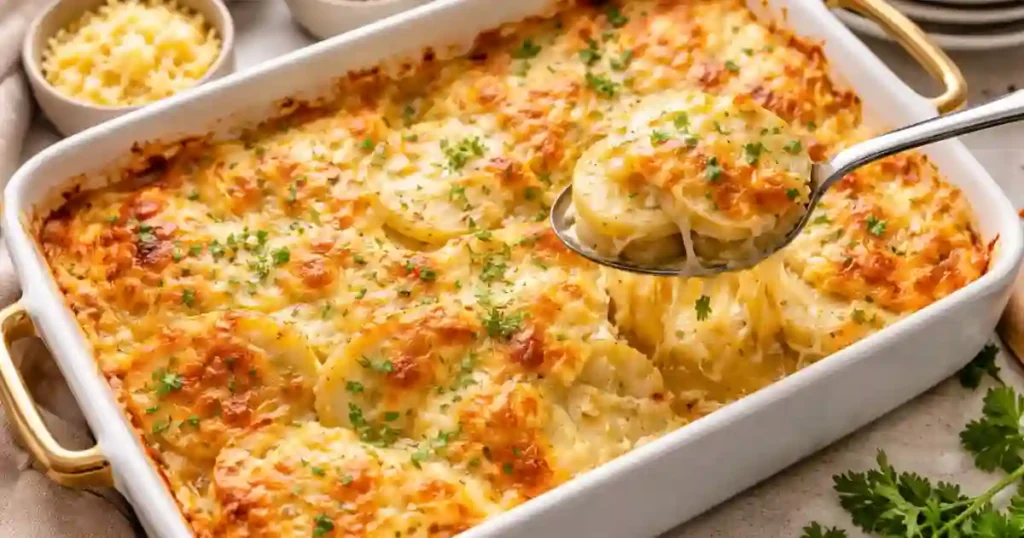
Why Cheesy Scalloped Potatoes So Often Disappoint
Let’s be honest for a second. Cheesy scalloped potatoes sound incredible in theory. Thin slices, creamy sauce, bubbling cheese… it’s comfort food at its peak. But then reality hits. You pull the dish out of the oven and something’s off. Maybe it’s watery. Maybe the sauce split. Maybe it just tastes… flat.
It’s strange, because this recipe looks simple. That’s exactly why it trips people up. You expect it to just work. No drama. No guesswork. But somehow, it ends up being one of those dishes that quietly disappoints, especially when you were counting on it.
And yeah, it stings more when it’s for something important. A holiday dinner. Guests coming over. Or just one of those nights where you wanted something comforting and reliable.
This version is different. It’s built around what actually works, not what looks good on paper. The goal is simple. Cheesy scalloped potatoes that come out creamy, flavorful, and perfectly cooked every single time. The kind where the inside is rich and soft, and the top gets that golden, slightly crisp finish.
We’re going to walk through exactly how to get there. Including the small details most recipes skip, even though they matter more than you’d think.
Table of Contents
Table of Contents
Why You’ll Love This Cheesy Scalloped Potatoes Recipe
- Simple ingredients you probably already have, nothing fancy or hard to find
- Creamy, rich texture that actually turns out right, not watery or bland
- Perfect for holidays, family dinners, or when you just want real comfort food
- A reliable crowd-pleaser that people go back for without hesitation
- Balanced flavor with a golden, slightly crisp top and soft, tender layers inside
What makes this version stand out is how it focuses on the details most recipes ignore. The layering, the seasoning, the texture contrast. It’s not complicated, just intentional. And honestly, that’s what makes the difference between “it’s fine” and “can I have the recipe?”
Why Most Cheesy Scalloped Potatoes Fail
Here’s the part most recipes don’t really talk about. When cheesy scalloped potatoes go wrong, they usually fail in the same predictable ways.
The first issue is texture. You either get potatoes that are still slightly firm in the center or a sauce that feels thin and watery. That usually comes down to slicing. If the potatoes aren’t evenly thin, they won’t cook at the same rate. Some pieces soften, others resist.
Then there’s the sauce problem. A lot of recipes rely on milk alone, which sounds fine until it hits high heat for a long time. That’s when things start separating or losing richness. You end up with something that looks creamy but tastes diluted.
Seasoning is another weak spot. Potatoes absorb a lot of flavor, which means under-seasoning doesn’t just stay mild, it becomes bland. And bland scalloped potatoes are honestly worse than no potatoes at all.
Common mistakes that ruin cheesy scalloped potatoes
- Slicing potatoes too thick or unevenly
- Using low-fat milk without balance
- Not seasoning each layer
- Rushing the baking time
- Skipping the resting step after baking
Why this matters more than you think
A lot of people assume they just need a better recipe. But it’s rarely about the ingredient list. It’s about small execution details that quietly make or break the dish.
What Makes These Cheesy Scalloped Potatoes Different
So what actually fixes all of this?
It’s not one big trick. It’s a combination of small adjustments that work together. And once you see it, it feels obvious. But until then, it’s easy to miss.
First, the sauce. Instead of relying only on milk, a richer base creates stability and depth. That doesn’t mean heavy or overwhelming. Just balanced enough to stay creamy through baking.
Second, layering. Not just throwing everything into a dish, but building it intentionally. Potatoes, seasoning, sauce, repeat. That layering is what creates consistent flavor throughout instead of pockets of blandness.
Then there’s texture. The goal isn’t just soft potatoes. It’s contrast. Creamy inside with a slightly crisp, golden top. That contrast is what makes people go back for another serving without thinking about it.
Key differences in this method
- Balanced cream-based sauce for stability
- Even, thin potato slices for consistent cooking
- Layer-by-layer seasoning
- Controlled baking for proper texture
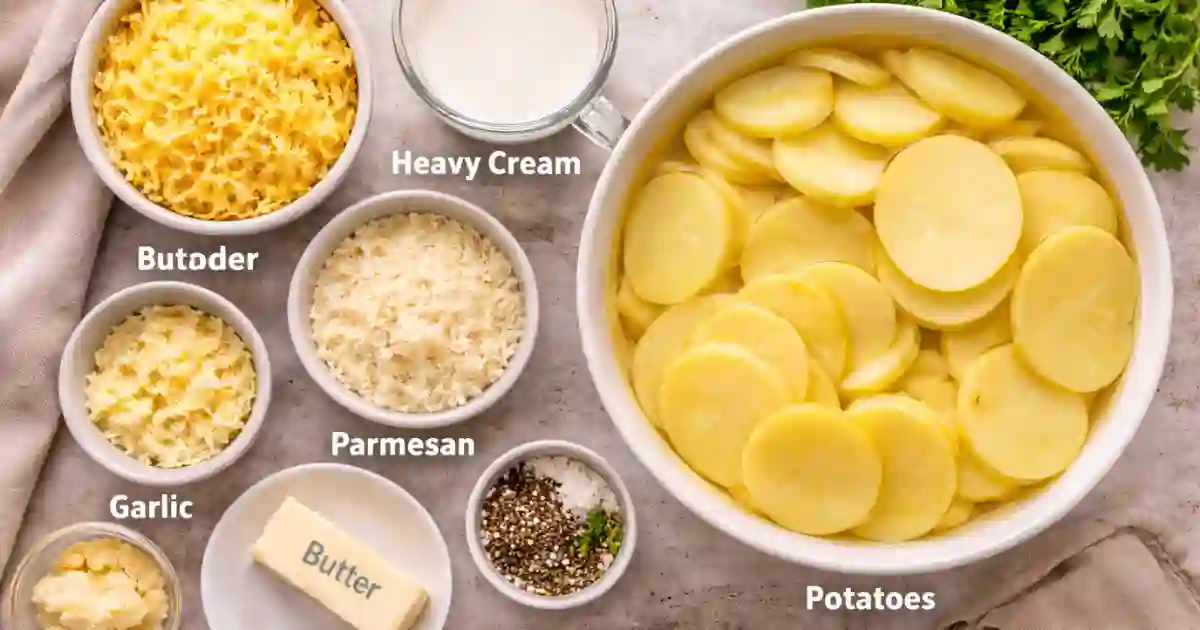
Ingredients for Cheesy Scalloped Potatoes
At a glance, the ingredients for cheesy scalloped potatoes look simple. And they are. But the quality and combination matter more than the quantity.
Potatoes are the foundation, so choosing the right type helps more than most people realize. Starchy potatoes tend to create a softer, creamier texture. Waxy ones hold shape but don’t absorb flavor as well.
The dairy element is where richness comes from. This is where many recipes fall short by playing it too safe. A slightly richer base creates a noticeable difference in both texture and taste.
Ingredient list
- Potatoes, thinly sliced
- Cheese, preferably sharp cheddar
- Cream or a mix of cream and milk
- Butter
- Garlic
- Salt and pepper
Small ingredient choices that change everything
- Fresh garlic instead of powder adds depth
- Proper salt levels bring out the cheese flavor
- A mix of cheeses can create more complexity
How to Make Cheesy Scalloped Potatoes Step by Step
Making cheesy scalloped potatoes isn’t complicated, but it does require a bit of attention. This is one of those recipes where small details matter more than speed.
Start by preparing your potatoes. Slice them as evenly and thinly as possible. This step sets the foundation for everything else. If the slices vary too much, the final texture will too.
Next comes the sauce. Gently heating it before assembling helps everything blend smoothly once baked. Cold ingredients going straight into the oven tend to separate or cook unevenly.
Step by step instructions
- Preheat your oven and prepare a baking dish
- Slice potatoes thinly and evenly
- Prepare the cream sauce with butter, garlic, and seasoning
- Layer potatoes, sauce, and cheese in the dish
- Repeat layers until everything is used
- Bake until potatoes are tender and the top is golden
- Let it rest before serving
Why resting matters
It’s tempting to serve immediately, but letting the dish sit helps the sauce thicken and settle. Cutting too early can make it look watery even if it’s not.
Watch the video below to see how to make Cheesy Scalloped Potatoes from start to finish.
Pro Tips for Perfect Cheesy Scalloped Potatoes
This is where things shift from good to consistently great. These tips might seem small, but they’re the difference between guessing and knowing.
One thing people underestimate is slicing consistency. It sounds repetitive, but it really does affect everything. Even a slight variation can change cooking time.
Another detail is oven patience. Rushing this dish rarely works. It needs steady heat and enough time for the layers to fully soften and absorb flavor.
Pro tips
- Use a mandoline for even slices if possible
- Season every layer, not just the sauce
- Cover early in baking, then uncover for a golden top
- Let it rest before serving
Why is my sauce curdled?
Curdling usually happens when the heat is too high or the dairy isn’t balanced. Using a richer mixture and steady baking temperature helps prevent this.
Variations and Substitutions
Once you understand the base, cheesy scalloped potatoes become surprisingly flexible.
You can adjust richness, flavor, or even texture depending on what you prefer. Some people want something heavier and indulgent. Others want a lighter version that still feels satisfying.
Popular variations
- Add cooked bacon for a smoky flavor
- Use different cheeses like gruyère or parmesan
- Add herbs like thyme for extra depth
Substitution ideas
- Use milk instead of cream for a lighter version
- Try dairy-free alternatives if needed
- Swap cheeses based on preference
How to Store, Reheat, and Make Ahead
One of the underrated benefits of cheesy scalloped potatoes is how well they hold up after cooking. In some cases, they even taste better the next day.
Storing is straightforward. Once cooled, cover and refrigerate. The flavors continue to develop, which can actually improve the overall taste.
Reheating takes a bit more care. Too much heat can dry it out, so it’s better to warm it slowly.
Storage tips
- Refrigerate in an airtight container
- Consume within a few days
Reheating tips
- Reheat in the oven for best texture
- Add a splash of cream if it looks dry
Serving Tips
Serving cheesy scalloped potatoes well is half the experience. The way it looks and feels on the plate matters more than people expect.
- Let it rest for at least 10 minutes before serving so it holds its shape
- Use a wide spoon or spatula to lift clean layers instead of breaking them apart
- Sprinkle a bit of fresh herbs like parsley on top for color contrast
- Serve in a warm dish to keep the sauce creamy longer
- Pair with roasted meats, grilled chicken, or even a simple salad to balance richness
If you’re serving guests, a golden top with visible layers instantly makes it feel more impressive, even if the recipe itself is simple.
Helpful Notes
A few small insights can completely change how your cheesy scalloped potatoes turn out.
- If your potatoes release too much water, it’s often because they weren’t baked long enough or sliced too thick
- For deeper flavor, you can lightly toast the garlic in butter before adding it to the sauce
- Mixing two types of cheese creates a more complex taste than using just one
- If the top browns too quickly, loosely cover it and continue baking
- Taste your sauce before layering, this is your only chance to adjust seasoning properly
Also, and this might sound minor, but it’s not, trust your instincts while cooking. If something looks too dry or too thick, adjust slightly. Recipes guide you, but they don’t see what you see in real time.
Nutrition (Approximate per serving)
- Calories: 320 to 400
- Carbohydrates: 30 to 35 grams
- Protein: 10 to 14 grams
- Fat: 18 to 25 grams
- Saturated Fat: 10 to 15 grams
- Sodium: 400 to 600 mg
These values can vary depending on the type of cheese and cream used. If you’re looking to lighten it, using a mix of milk and cream instead of only cream can reduce the fat content slightly without losing too much texture.
Cheesy Scalloped Potatoes

Ingredients
Potato Layers
- 1 kg potatoes thinly sliced
- 200 g sharp cheddar cheese shredded
Cream Sauce
- 250 ml heavy cream
- 250 ml milk
- 50 g butter
- 2 cloves garlic minced
- 1 tsp salt or to taste
- 1/2 tsp black pepper
Instructions
- Preheat the oven to 180°C (350°F). Grease a baking dish lightly with butter.
- Slice the potatoes thinly and evenly using a mandoline or sharp knife.
- In a saucepan, melt butter over medium heat. Add garlic and cook briefly until fragrant.
- Add cream, milk, salt, and pepper. Heat gently without boiling, stirring until combined.
- Layer potatoes in the baking dish, followed by a portion of sauce and a sprinkle of cheese. Repeat layers until all ingredients are used.
- Cover with foil and bake for 40 minutes.
- Remove foil and continue baking for 25 to 30 minutes until the top is golden and the potatoes are tender.
- Let the dish rest for at least 10 minutes before serving to allow the sauce to thicken.
Notes
Frequently Asked Questions (FAQ)
What are cheesy scalloped potatoes?
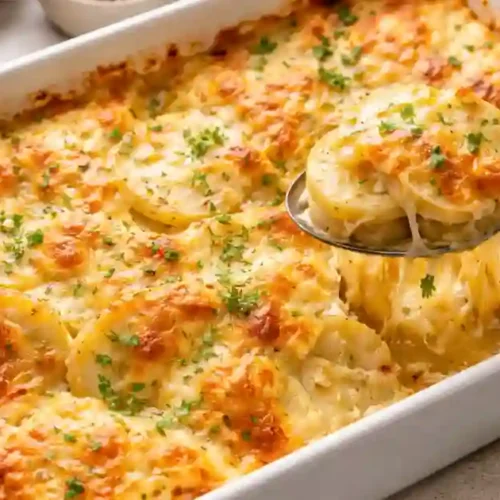
Cheesy scalloped potatoes are thinly sliced potatoes baked in a creamy, seasoned sauce with layers of cheese until tender and golden on top. The ideal result is soft, rich layers with a lightly crisp, cheesy surface.
Why are my scalloped potatoes still hard after baking?
If your potatoes are still firm, they were likely sliced too thick or the dish didn’t bake long enough. Consistent thin slices and enough oven time are key to fully tender potatoes.
What cheese works best for cheesy scalloped potatoes?
Sharp cheddar is the most common choice because it melts well and adds strong flavor. You can also mix in cheeses like gruyère for extra depth.
Can I use milk instead of cream?
Yes, but the result will be lighter and less rich. For the best texture, a combination of milk and cream works better than milk alone.
How do I know when scalloped potatoes are done?
They’re done when a knife slides easily through the layers and the top is golden and bubbling.
Can you freeze scalloped potatoes?
Yes, but the texture may change slightly. Dairy-based sauces can separate after freezing, so results may vary
Can I make this recipe ahead of time?
Yes. You can assemble it ahead and bake later, or bake it fully and reheat before serving.
Conclusion: Why This Recipe Works When Others Don’t
At the end of the day, cheesy scalloped potatoes aren’t complicated. But they are precise in a way that most recipes don’t fully explain.
Once you understand the balance between slicing, layering, and sauce consistency, everything starts to click. The dish becomes predictable in a good way. Reliable. Repeatable.
And maybe that’s the real win here. Not just making something that tastes good once, but something you can come back to without second-guessing every step.
Because when it works, it’s not just another side dish. It’s the one people remember.
For delicious and easy recipes, follow me on my Facebook and Pinterest
This recipe was written and tested by Rasha, the founder of Recipesedeas. Rasha is a food enthusiast living in the USA, sharing her family-inspired recipes and culinary adventures