
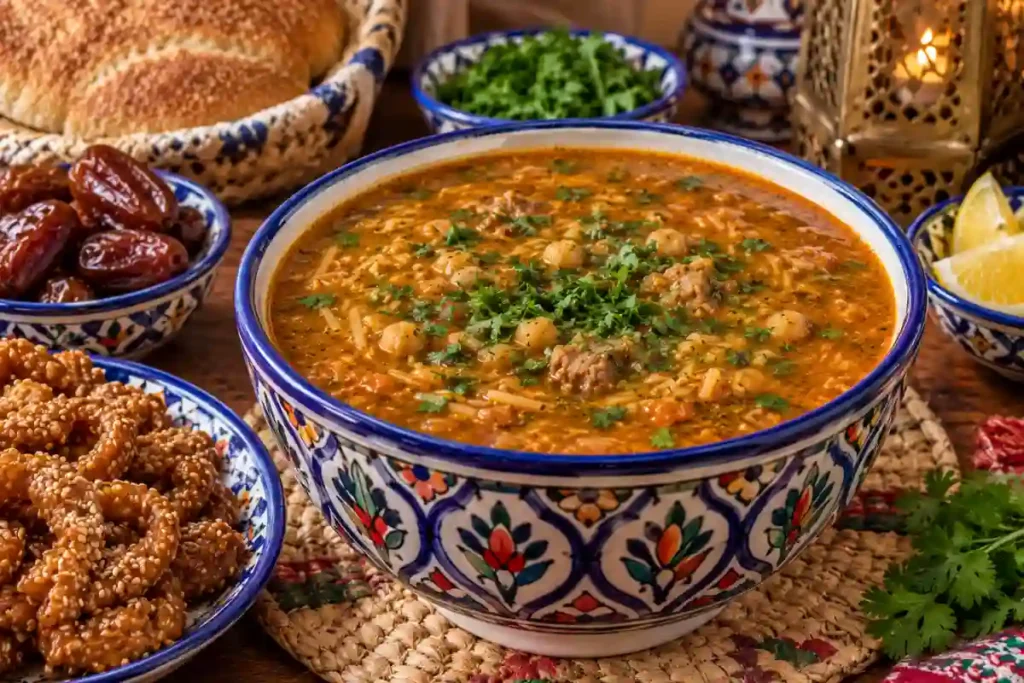
If you are searching for an authentic Moroccan harira recipe, you want the real one. Not the quick version. The one that tastes like a kitchen in Casablanca during Ramadan, right after Maghrib.
In my family, harira is not just soup. It is the first spoon after a long day of fasting. My mom makes a big pot every day in Ramadan. The whole house smells like tomatoes, ginger, and fresh cilantro. We break our fast with dates and chebakia, then harira with bread and lemon. That first spoon is always the best.
If you tried harira before and it felt flat or too thick like paste, this version will fix that. The secret is not more spices. It is the tadouira and the lemon at the end.
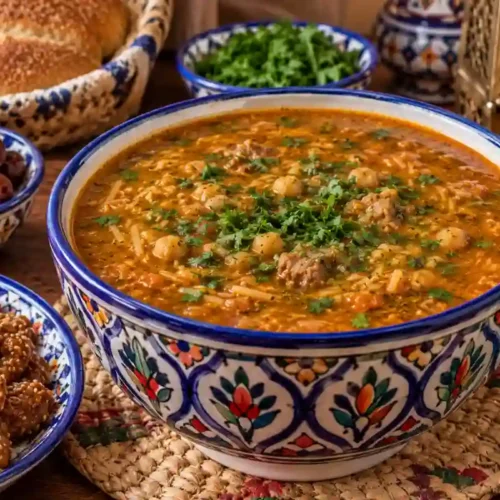
Authentic Moroccan Harira Soup

Equipment
- Large soup pot
- Blender
- Cutting board
- Chef’s knife
- Measuring cups and spoons
- Mixing bowl
- Whisk
- Wooden spoon
- Ladle
Ingredients
Soup Base
- 2 tablespoons olive oil
- 1 medium onion, finely chopped
- 2 stalks celery, finely chopped
- 300 g beef, cut into small cubes Optional; omit for a vegetarian version.
Legumes and Tomato Base
- 200 g dried chickpeas, soaked overnight and drained Peel after soaking if desired.
- 150 g green or brown lentils, rinsed No soaking required.
- 800 g fresh ripe tomatoes Blended until smooth.
- 1 tablespoon tomato paste
Herbs and Spices
- 1 bunch fresh cilantro Blend half with the tomatoes and reserve the rest for finishing.
- 1 bunch fresh parsley Blend half with the tomatoes and reserve the rest for finishing.
- 1 teaspoon ground ginger
- 1 teaspoon ground turmeric
- 0.5 teaspoon ground black pepper Adjust to taste.
- 0.25 teaspoon ground cinnamon
- 0.5 teaspoon paprika
- 1 teaspoon salt Adjust to taste.
Vermicelli and Tadouira
- 50 g vermicelli, broken into short pieces
- 3 tablespoons all-purpose flour For the tadouira thickening mixture.
- 1 cup water For mixing the tadouira.
- 2 liters water For cooking the soup; add extra as needed.
- 1 tablespoon butter Optional; omit for a lighter or dairy-free version.
For Serving
- 2 medium lemons, cut into wedges Serve alongside the soup for freshly squeezed juice.
Instructions
- Soak the dried chickpeas in plenty of water overnight. Drain and rinse them before cooking. Finely chop the onion and celery, blend the tomatoes until smooth, and prepare the herbs. Blend half of the cilantro and parsley with the tomatoes, reserving the remaining herbs for the end.
- Heat the olive oil in a large soup pot over medium heat. Add the chopped onion and celery and cook until softened, stirring occasionally.
- If using beef, add the cubes to the pot and brown them lightly. For a vegetarian version, skip the beef and continue with the vegetables.
- Add the blended tomatoes and herbs, tomato paste, chickpeas, lentils, ginger, turmeric, black pepper, cinnamon, paprika, and salt. Stir well to combine the ingredients.
- Pour in approximately 2 liters of water and bring the soup to a boil. Reduce the heat and simmer gently for 45–60 minutes, until the chickpeas are tender. Check occasionally and add more water if necessary.
- Add the broken vermicelli and cook for about 5 minutes, or until just tender. Avoid overcooking, because the pasta will continue to soften in the hot soup.
- In a separate bowl, whisk the flour with 1 cup of water until completely smooth and free of lumps. This mixture is called tadouira and gives harira its characteristic silky body.
- Reduce the heat and slowly pour the tadouira into the soup in a thin stream while stirring continuously. Simmer gently for several minutes, stirring frequently, until the soup lightly coats the back of a spoon. Do not add all the mixture at once or let the soup become overly thick.
- Stir in the optional butter and the reserved chopped cilantro and parsley. Taste and adjust the salt as needed. If the soup is too thick, add a little warm water until the consistency is silky and spoonable.
- Ladle the hot harira into bowls and serve with fresh lemon wedges. Squeeze lemon juice into each serving just before eating. For a traditional Moroccan Iftar, serve with dates, chebakia, and fresh bread.
Notes
Table of Contents
Table of Contents
Why You’ll Love This Harira
This harira is silky, not heavy. Hearty enough for Iftar, but not a stew. The tomato base is bright, the chickpeas and lentils make it filling, and the herbs keep it fresh. And it tastes even better the next day.
What Makes It Authentic
Real Moroccan harira is not thick because of too much flour. It is silky because of tadouira – a little flour mixed with water and added slowly at the end while stirring. That is what gives it the body.
It is also about herbs. Cilantro, parsley, and celery are not garnish. They are the flavor. My mom blends half with the tomatoes and chops the rest fresh at the end.
Ingredients You Need
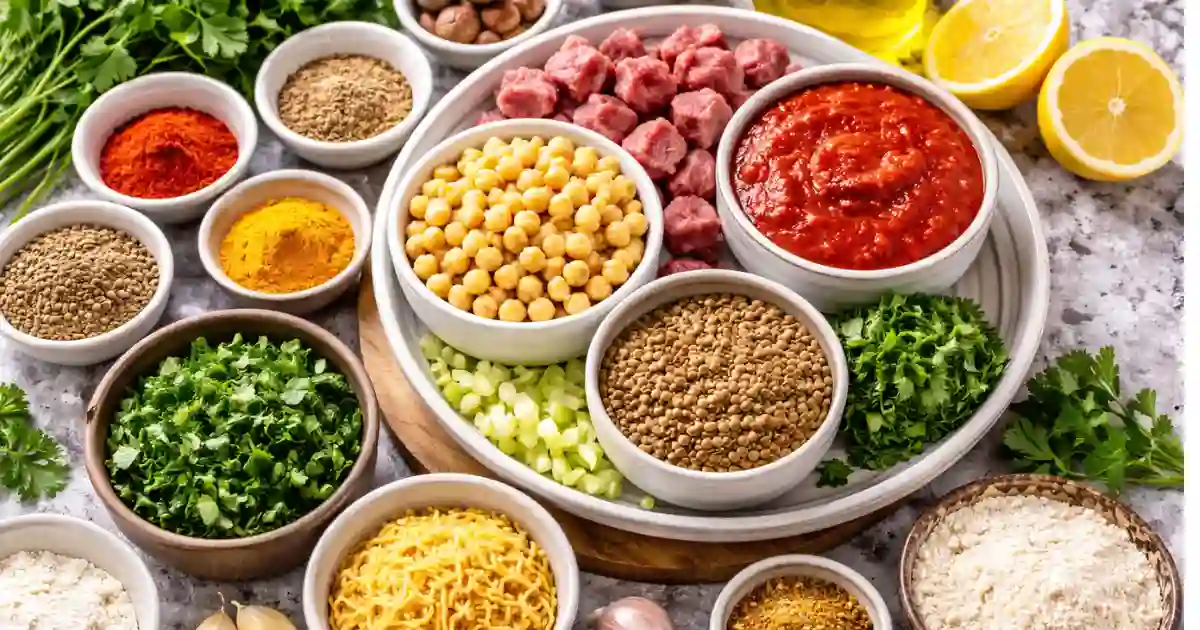
Legumes: Dried chickpeas soaked overnight, peeled if you have time, and green or brown lentils. No need to soak lentils.
Tomato Base: Fresh tomatoes blended, plus a spoon of tomato paste.
Meat (optional): Small cubes of beef. Many families make it vegetarian and it is still authentic.
Spices: Ginger, turmeric, black pepper, cinnamon, a little paprika. Not too much.
Herbs: Lots of cilantro, parsley, celery and onion.
For the end: Broken vermicelli and your tadouira.
How to Make It Step by Step
Step 1: Build the base
Heat olive oil in a big pot. Add chopped onion and celery, cook until soft. If using beef, add it now and brown lightly. Add blended tomatoes, chickpeas, lentils, all the spices, and half the herbs blended. Stir well and cover with water.
Step 2: Simmer
Bring to a boil, then lower the heat and simmer 45 to 60 minutes until chickpeas are tender. Your kitchen should smell earthy and warm.
Step 3: Finish properly
Add broken vermicelli and cook 5 minutes. Mix 3 tbsp flour with 1 cup water until smooth – no lumps. Pour it slowly into the soup while stirring all the time. Let it simmer gently until it coats the back of a spoon. Don’t make it paste. It will thicken more as it rests.
Finish with a little butter if you want, and fresh herbs.
The Secret My Mom Taught Me
Two things.
First, add the tadouira slowly. If you dump it, you get lumps. Pour in a thin stream while stirring.
Second, lemon is not optional. At the table, everyone squeezes fresh lemon. It wakes up all the spices. Without lemon, harira tastes flat.
Common Mistakes
Adding too much flour. Harira should be silky, not like porridge.
Forgetting to add water the next day. It always thickens overnight, just add warm water when reheating.
Overcooking the vermicelli until it disappears.
Skipping fresh herbs at the end.
How We Serve It
We never serve harira alone. Always with dates, chebakia, fresh bread, and lemon wedges. Everyone adds their own lemon.
Storage
Keeps 3 days in the fridge. It gets thicker – that’s normal. Add water when reheating.
If you want to freeze, freeze without vermicelli. Add fresh pasta when you reheat.
Helpful Notes
Use dried chickpeas if you can. They taste better cooked in the soup.
Blend half your herbs with tomatoes, save the other half chopped for the end. You get both deep flavor and fresh brightness.
If it tastes bland, it needs salt or lemon, not more spices.
Nutrition Information
This is an estimate for 1 bowl, based on 10 servings with a little beef:
Calories: ∼285 kcal | Protein: 16g | Carbs: 32g | Fiber: 8g | Fat: 10g
Harira is naturally balanced. You get protein from chickpeas and lentils, fiber that keeps you full, and anti-inflammatory spices like turmeric and ginger. That’s why it is perfect for Iftar – nourishing without feeling heavy.
If you want it lighter: skip the beef and butter, use a bit less vermicelli. If you want more protein: add more lentils.
Frequently Asked Questions About Authentic Moroccan Harira Recipe
Can I use canned chickpeas?
Yes, if you are short on time. Rinse them well and add them later so they don’t get mushy. But dried chickpeas soaked overnight taste deeper.
Can I make it vegetarian?
Yes. Simply omit the meat. Increase lentils slightly if desired. The flavor remains rich due to spices and herbs.
Why is my harira too thick the next day?
Normal. The lentils, pasta and tadouira keep absorbing water. Just add warm water while reheating and stir. Adjust salt after.
Do I need to soak lentils?
No. Only chickpeas need soaking.
Can I make it ahead for Ramadan?
Yes, my mom does. Make the base today, but add vermicelli tomorrow when you reheat. It stays silky.
Why does my harira taste bland?
It needs salt and lemon. Always finish with fresh lemon at the table – it changes everything.
Conclusion
Harira is more than soup in my house. It is Ramadan. It is the pot that never leaves the stove, the smell that tells you it is time to break the fast, the bowl we all share with bread and lemon.
Make it once with patience – build the base, add the tadouira slowly, and don’t forget the lemon at the end. The next day, when it tastes even better, you will understand why Moroccans never do Iftar without it.
If you love the warm spices in this harira, you will also love my mom’s Authentic Moroccan Harira – sweet and savory for festive gatherings. And for Fridays, try our authentic Moroccan couscous with vegetables that we make every week and try my beef tagine with prunes.
For more delicious and easy recipes, follow me on Facebook and Pinterest
If you enjoyed this recipe, feel free to leave a comment below or follow me on my culinary journey!
This recipe was written and tested by Rasha, the founder of Recipesedeas. Rasha is a food enthusiast living in the USA, sharing her family-inspired recipes and culinary adventures