
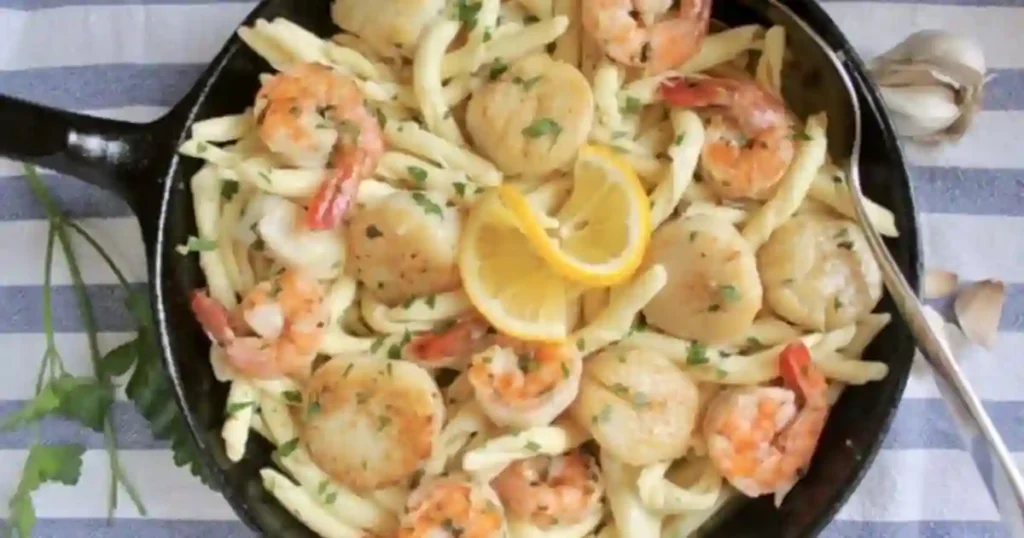
If you have ever stared at raw shrimp and scallops in your kitchen and thought, “This could go very right… or very wrong,” you are not alone. Seafood pasta with shrimp and scallops sounds like something best left to restaurants, yet it is surprisingly forgiving once you understand a few key details. Usually, the difference between an average plate and a great one comes down to timing, heat, and knowing when to stop cooking.
This garlic butter seafood pasta keeps things simple on purpose. There is no heavy cream masking the seafood, no complicated steps that turn dinner into a project. Instead, the flavors stay clean and balanced so the shrimp and scallops actually taste like shrimp and scallops. It is the kind of Italian seafood pasta that works just as well for a quiet weeknight as it does for guests, which is probably why people end up making it more often than planned.
A lot of hesitation around shrimp and scallop pasta recipes comes from fear of overcooking. Rubbery shrimp and dry scallops can ruin the experience fast. The good news is that both cook quickly, almost faster than you expect, and once you learn the visual cues, it becomes second nature. This recipe focuses on those cues so you can cook with confidence instead of guessing.
By the end of this guide, you will know exactly how to make seafood pasta with shrimp and scallops that stays tender, garlicky, and balanced. No stress, no unnecessary extras, just a solid dish you will want to return to.
Garlic Butter Seafood Pasta with Shrimp and Scallops
Ingredients
Pasta
- 12 oz pasta (linguine, spaghetti, or busiati) cook to al dente
Seafood
- 12 pieces large raw shrimp peeled and deveined
- 1 lb sea scallops fresh or fully thawed
Garlic Butter Sauce
- kosher salt for brining and pasta water
- 3 tbsp extra virgin olive oil
- 3 cloves garlic finely minced
- 3 oz unsalted butter
- 1/3 cup seafood broth used instead of wine
- fresh parsley finely chopped
- freshly ground black pepper to taste
- lemon wedges for serving
Instructions
- Dissolve kosher salt in cold water and brine the scallops for 10 minutes. Rinse briefly and pat very dry with paper towels.
- Bring a large pot of well-salted water to a boil and cook the pasta until al dente. Reserve 1 cup of pasta water, then drain.
- Heat a large skillet over high heat with olive oil. Add scallops in a single layer and sear for about 90 seconds without moving.
- Add shrimp, garlic, and parsley. Cook for about 2 minutes, then gently turn the seafood.
- Pour in seafood broth and let it bubble briefly. Add butter and black pepper, stirring gently until the sauce comes together.
- Add cooked pasta to the pan and toss gently, using reserved pasta water as needed to loosen the sauce.
- Serve immediately with lemon wedges and extra parsley if desired.
Notes
Table of Contents
Table of Contents
Why You’ll Love Seafood Pasta with Shrimp and Scallops
This seafood pasta with shrimp and scallops hits that sweet spot between comfort food and something you would proudly serve to guests. It feels special without being complicated, which is honestly rare.
- Quick and easy, ready in about 30 minutes
- Simple ingredients that let the seafood shine
- Perfect for date nights, family dinners, or entertaining
- A true crowd pleaser that feels restaurant worthy
- Rich, garlicky flavor without a heavy sauce
What sets this version apart is the balance. Brining the scallops, high heat cooking, and a light garlic butter sauce create tender seafood with clean, focused flavor. It is satisfying, a little indulgent, and quietly impressive.
How to Choose the Best Shrimp and Scallops
Not all seafood is created equal. To get that restaurant-quality sear, look for “Dry-Packed” scallops. Unlike “wet” scallops, they aren’t treated with phosphates, meaning they won’t shed excess water in the pan. For the shrimp, “Flash-Frozen” (IQF) is often better than the “fresh” counter options, which are usually just thawed frozen shrimp. Aim for 16/20 count size for a meaty, satisfying bite.
Why Dry-Packed Scallops are Essential for SEO-Worthy Searing
If you’ve ever wondered why restaurant scallops have that perfect brown crust, the answer is ‘Dry-Packed’ scallops. Most grocery store scallops are ‘Wet-Packed,’ meaning they are treated with STPP (sodium tripolyphosphate), which causes them to absorb water. When these hit the pan, they release that water, effectively steaming instead of searing. For this seafood pasta with shrimp and scallops to reach its full potential, always opt for dry-packed to ensure a true maillard reaction.
Ingredients for Seafood Pasta with Shrimp and Scallops
The ingredient list for seafood pasta with shrimp and scallops is short, but quality matters more here than quantity. This is not a recipe where you want to hide behind heavy seasoning. Each ingredient plays a clear role, so choosing well makes a noticeable difference.
You will need:
- 12 ounces pasta such as linguine, spaghetti, or busiati
- 12 large raw shrimp, peeled and deveined
- 1 pound sea scallops, fresh or fully thawed
- Kosher salt, for brining and pasta water
- 3 tablespoons extra virgin olive oil
- 3 cloves garlic, finely minced
- 3 ounces good quality butter
- One third cup dry white wine or seafood broth
- Fresh parsley, finely chopped
- Freshly ground black pepper
- Lemon wedges, for serving
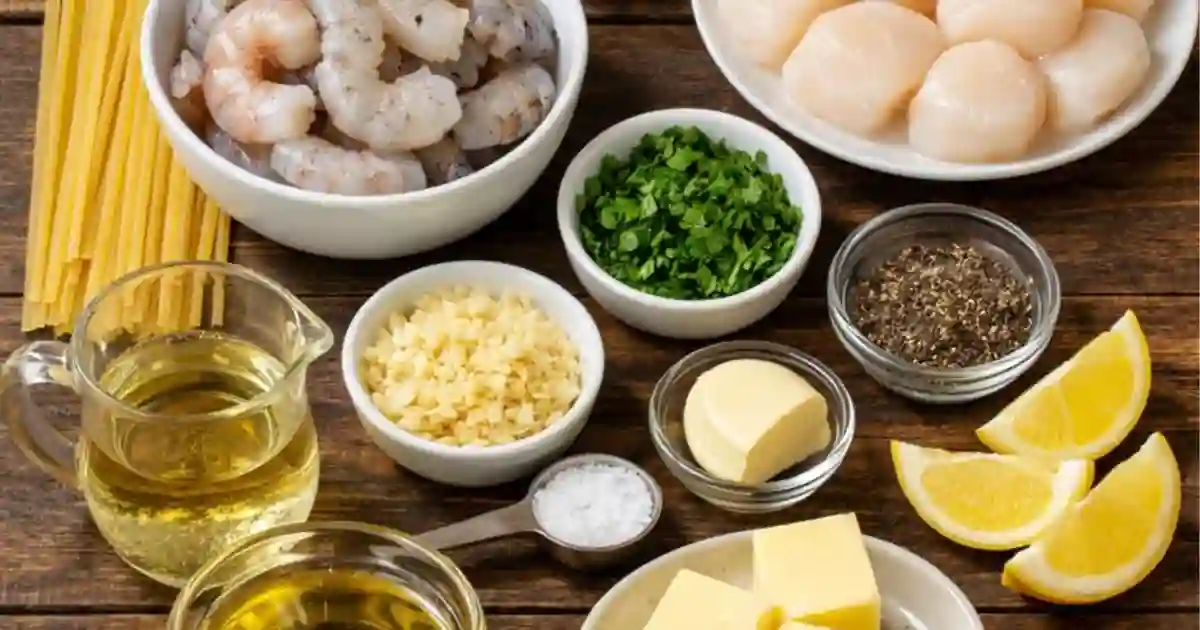
Shrimp size matters here. Large shrimp give you a better texture and are easier to cook evenly. With scallops, look for dry scallops rather than wet ones if possible, since they sear better and develop flavor instead of steaming. Garlic should be fresh, not pre minced, because its aroma carries the sauce.
This simple combination is what gives shrimp and scallop pasta its appeal. Nothing feels overworked, and nothing competes with the seafood itself.
Seafood Pasta Mastery: Ingredient Guide & Swaps
| Ingredient | Role | Best Substitute | Pro Tip |
| Scallops | Sweetness & Texture | Jumbo Lump Crab | Pat dry until the paper towel stays bone-dry. |
| Shrimp | Heartiness & Snap | Langoustines | Use 16/20 count for the best meat-to-pasta ratio. |
| Dry White Wine | Acidity & Deglazing | Seafood Broth + Lemon | Use a wine you’d actually drink (Pinot Grigio). |
| Butter | Richness & Emulsion | Ghee (for higher smoke point) | Add at the very end to create a glossy emulsion. |
How to Make Seafood Pasta with Shrimp and Scallops
This is a fast moving recipe, so having everything prepped before you turn on the heat makes the process smooth and calm. Once the pan is hot, things happen quickly.
- Brine and dry the scallops.
Dissolve 3 tablespoons of kosher salt in 16 ounces of cold water. Add the scallops and let them soak for 10 minutes. Remove them, rinse briefly, and place them on a rack or paper towels to dry thoroughly. This step improves seasoning and texture.- Why Brining Scallops is a Game Changer You might be tempted to skip the 10-minute brine, but here is why you shouldn’t: The salt solution seasons the scallops deeply and helps break down the tough muscle fibers. This results in a velvety, tender texture inside while allowing the exterior to caramelize faster. It is the secret technique chefs use to avoid that “rubbery” texture.
The Culinary Science Behind Brining Scallops
Brining is not just about salt; it’s about protein denaturation. When scallops soak in a salt solution, the salt helps the proteins retain more moisture during the high-heat searing process. This prevents the scallop from shrinking excessively and ensures that the center remains succulent even if the exterior gets a deep, golden crust. It’s the difference between a scallop that feels like silk and one that feels like rubber.
- Cook the pasta.
Bring a large pot of well salted water to a boil. Cook the pasta until al dente according to package instructions. Reserve about one cup of pasta water before draining. - Sear the seafood.
Heat a large heavy pan over high heat and add the olive oil. When the oil is shimmering, add the scallops in a single layer. Sear for about 90 seconds without moving them. Add the shrimp, garlic, and parsley, and cook for another 2 minutes. - Finish the sauce.
Turn the seafood once, then pour in the wine or broth. Let it bubble for a minute, then add the butter and black pepper. Stir gently until the butter melts and the sauce comes together. - Combine and serve.
Add the cooked pasta directly to the pan. Toss gently, adding reserved pasta water as needed to loosen the sauce. Serve immediately with lemon wedges.

See how to make this Seafood Pasta with Shrimp and Scallops recipe in the video below
How to Tell When Your Seafood is Perfectly Done
Stop guessing and start looking for these three signs:
- The Shape: Shrimp should form a loose “C” shape. If they curl into a tight “O”, they are overcooked and will be tough.
- The Color: Scallops should transition from translucent to a milky white with a golden-brown crust.
- The Touch: Press the center of a scallop; it should feel firm on the edges but have a slight “springy” give in the middle.
Tips for Perfectly Cooked Shrimp and Scallops
Cooking seafood pasta with shrimp and scallops is less about strict timing and more about paying attention. Seafood gives you visual signals when it is ready, and learning those signals makes a huge difference.
Shrimp are done when they turn pink and curl into a loose C shape. If they curl tightly into an O, they are already overcooked. Scallops should develop a golden crust on the outside while remaining slightly translucent in the center. If they turn completely opaque, they have gone too far.
High heat is essential, but overcrowding the pan is not. Give the seafood space so it sears instead of steaming. Also, resist the urge to keep stirring. Letting the seafood sit undisturbed is what creates flavor.
Most importantly, remember that seafood continues cooking for a short time after leaving the heat. Stopping slightly early often gives better results than pushing it to be “just sure.”
Pasta Shape and Sauce Pairing Tips
Not all pasta works equally well for shrimp and scallop pasta. Long shapes like linguine and spaghetti are popular for a reason. They hold onto the garlic butter sauce without overpowering the seafood.
Busiati, if you can find it, is another excellent option. Its twisted shape traps bits of sauce and garlic, making each bite more flavorful. Short pasta can work, but it changes the eating experience and tends to emphasize pasta over seafood.
The sauce here is light, not creamy, so the pasta should support that lightness. Overly thick or ridged shapes can feel heavy with this style of seafood pasta.
Substitutions and Variations
This shrimp and scallop pasta recipe is flexible once you understand the base.
- No wine: Use seafood broth or chicken broth instead.
- Creamy version: Add a small splash of cream at the end, but keep it subtle.
- Spicy twist: Add a pinch of red pepper flakes with the garlic.
- Dairy free: Use extra olive oil instead of butter.
- Frozen seafood: Thaw completely and dry very well before cooking.
Each variation changes the character slightly, but the core technique stays the same.
Nutrition Information
Seafood pasta with shrimp and scallops is naturally high in protein and rich in minerals like zinc and selenium. Shrimp and scallops are both lean proteins, and the sauce relies more on fat quality than quantity. Butter and olive oil add richness without overwhelming the dish when used in moderation.
This balance makes the recipe feel indulgent while still being relatively light compared to cream based pasta dishes.
Serving and Storage Tips for Seafood Pasta with Shrimp and Scallops
For serving, use wide shallow bowls and twist the pasta gently with tongs for a clean presentation. Finish with fresh parsley and lemon wedges so everyone can add brightness to taste. A light green salad or crusty bread pairs perfectly without stealing attention from the seafood.
Seafood pasta is best enjoyed fresh, but leftovers can be stored in an airtight container in the refrigerator for up to one day. Reheat gently over low heat with a splash of water or broth. Avoid microwaving too long, as it can overcook the shrimp and scallops.
Helpful Notes
- Pat shrimp and scallops very dry before cooking to get proper searing.
- Do not overcrowd the pan or the seafood will steam instead of brown.
- Taste the sauce before adding extra salt, since the seafood is already seasoned.
- If the pasta looks dry, add reserved pasta water a little at a time.
- This recipe scales well, but cook seafood in batches if doubling it.
What to Serve with Your Seafood Pasta
Since this dish is rich in garlic and butter, you want sides that provide a crisp contrast.
- Vegetables: A simple arugula salad with shaved parmesan and a balsamic glaze.
- Bread: Warm, crusty sourdough to mop up the remaining garlic butter sauce.
- Wine: A chilled glass of Vermentino or Chablis cuts through the richness of the scallops beautifully.
Frequently Asked Questions for Seafood Pasta with Shrimp and Scallops
Is this dish high in protein?
Yes! A single serving of shrimp and scallops provides roughly 25-30g of lean protein, making it excellent for muscle recovery.
Can I make it low carb?
Absolutely. Replace the linguine with zucchini noodles (zoodles) or spaghetti squash to enjoy the garlic butter seafood flavors without the heavy carbohydrates.
Can I use frozen scallops for seafood pasta with shrimp and scallops?
Yes, as long as they are fully thawed and thoroughly dried. Excess moisture prevents proper searing.
How do I know when scallops are done?
They should be golden on the outside and just opaque in the center. Overcooked scallops become firm and dry.
Can I make this dish ahead of time?
Seafood pasta is best served immediately. Reheating can overcook the seafood and change the texture.
What wine pairs best with shrimp and scallop pasta?
A dry white wine like Pinot Grigio or Sauvignon Blanc works well and mirrors the acidity in the dish.
Conclusion
Seafood pasta with shrimp and scallops does not need to feel intimidating. Once you understand how quickly seafood cooks and how little it needs to shine, the whole process becomes more intuitive. This recipe focuses on timing, heat, and balance rather than excess.
If you try it once, chances are you will come back to it again, maybe adjusting the garlic, the wine, or the pasta shape to suit your mood. That flexibility is what makes this kind of dish feel timeless. Cook it, trust your instincts, and let the seafood do the talking.
If you enjoyed this Seafood Pasta with Shrimp and Scallops , you will love my [Crab and Shrimp Stuffed Salmon and Shrimp Fried Rice Recipe] recipe too
For delicious and easy recipes, follow me on my Facebook and Pinterest
If you enjoyed this recipe, feel free to leave a comment below or follow me on my culinary journey!
This recipe was written and tested by Rasha, the founder of Recipesedeas. Rasha is a food enthusiast living in the USA, sharing her family-inspired recipes and culinary adventures