
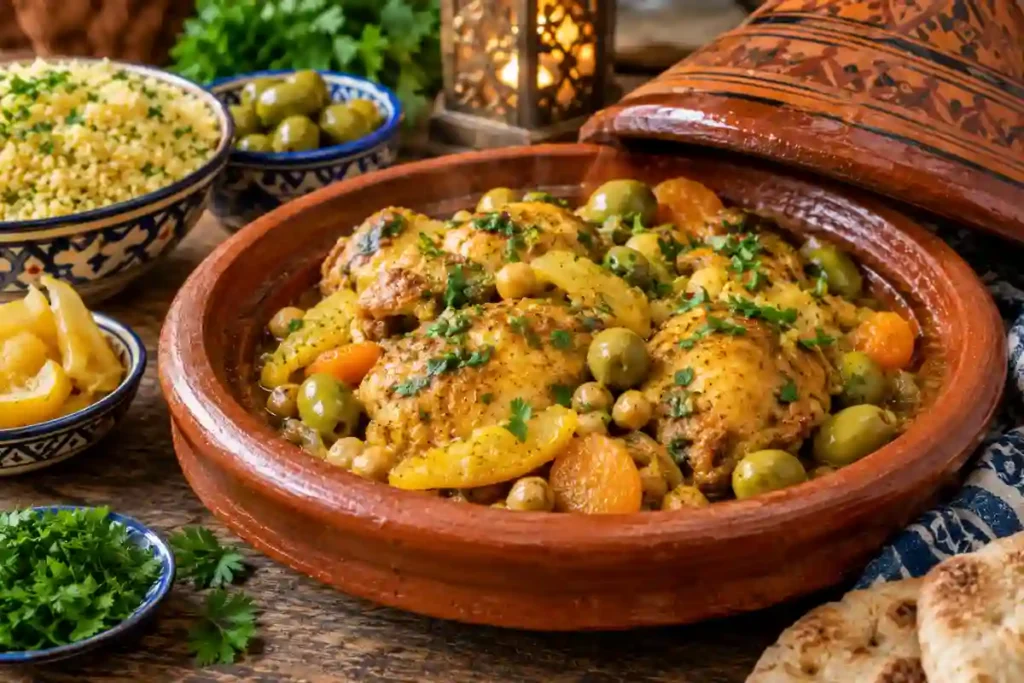
If you have been searching for an authentic Moroccan chicken tagine recipe, this is the one we actually make at home. Not the complicated version. The real one with preserved lemon and green olives that fills the kitchen with smell and tastes even better the next day.
In my family, chicken tagine is for Sundays when couscous is not on the menu. My mom makes it in a regular Dutch oven, not even in the clay tagine every time. She says the secret is not the pot, it is time. Slow cooking and not rushing.
Authentic Moroccan Chicken Tagine with Preserved Lemon and Green Olives

Equipment
- Heavy-bottomed Dutch oven or tagine pot
- Cutting board
- Chef’s knife
- Measuring spoons
- Wooden spoon
- Tongs
- Lid for the cooking pot
Ingredients
Chicken and Seasoning
- 1.2 lb bone-in chicken thighs Approximately 4 medium thighs, skin removed if desired.
- 0.5 teaspoon ground cumin
- 1 teaspoon paprika
- 0.5 teaspoon salt Use sparingly at first because preserved lemon and olives are salty; adjust at the end.
- 0.5 teaspoon ground black pepper
Aromatics and Spices
- 2 tablespoons olive oil
- 2 medium yellow onions, thinly sliced
- 3 cloves garlic, minced
- 1 tablespoon fresh ginger, finely grated
- 1 teaspoon ground coriander
- 1 pinch cayenne pepper Optional; adjust to taste.
- 2 leaves bay leaves
Sauce and Traditional Additions
- 0.5 cup chicken stock Use unsalted or low-sodium stock if possible.
- 1 cup green olives, pitted Rinse if particularly salty.
- 1 whole preserved lemon Remove seeds and finely chop the rind; rinse briefly if very salty.
- 0.5 cup dried apricots, halved Optional for a sweet-savory variation.
For Finishing and Serving
- 2 tablespoons fresh parsley, chopped For garnish.
- 0.5 whole fresh lemon Optional, for juice at the table or as a substitute for preserved lemon.
Instructions
- Pat the chicken thighs dry with paper towels. Season with the cumin, paprika, black pepper, and a small amount of salt. Set aside while preparing the remaining ingredients.
- Heat the olive oil in a heavy-bottomed Dutch oven or tagine pot over medium heat. Add the sliced onions and cook for 8–10 minutes, stirring occasionally, until soft and lightly golden.
- Add the minced garlic and grated ginger. Cook for about 30 seconds, stirring continuously, until fragrant without allowing the garlic to burn.
- Stir in the ground coriander, cayenne pepper if using, and bay leaves. Let the spices cook for approximately 30 seconds to release their aroma.
- Add the seasoned chicken thighs to the pot. Brown them lightly on both sides for a few minutes. The chicken does not need to cook through at this stage.
- Pour in the chicken stock. Add the pitted green olives, chopped preserved lemon rind, and dried apricots if using. Stir gently to distribute the ingredients around the chicken.
- Cover the pot, reduce the heat to low, and simmer gently for 35–45 minutes, or until the chicken is thoroughly cooked and tender. Turn the chicken once during cooking if needed. Check occasionally and add a small splash of water or stock if the sauce becomes too dry.
- Check that the chicken has reached an internal temperature of 74°C (165°F) at its thickest part, avoiding the bone when measuring. The sauce should be glossy and slightly thickened.
- Taste the sauce before adding any more salt, as preserved lemon and olives can contribute considerable saltiness. Adjust the seasoning if necessary. If using fresh lemon instead of preserved lemon, add a modest squeeze of juice at the end.
- Remove the bay leaves. Sprinkle the chopped fresh parsley over the tagine and let it rest for about 10 minutes before serving so the juices settle and the flavors come together.
- Serve hot with Moroccan bread, khobz, pita, or couscous to soak up the savory sauce. A simple cucumber and tomato salad makes a refreshing accompaniment.
Notes
Table of Contents
Table of Contents
Why You’ll Love This Chicken Tagine
It is one pot and forgiving. The chicken stays tender because we use thighs, the sauce is light but full of flavor, and the preserved lemon and olives cut the richness so you want more bread.
It also looks impressive without stress. Perfect when guests come.
What Is Chicken Tagine?
Tagine is both the pot with the cone lid and the dish inside. The pot traps steam so the chicken cooks gently and stays juicy.
What makes chicken tagine different from regular chicken stew is balance: savory onion and spices, bright salty preserved lemon, and green olives. Some families add apricots for a little sweetness, we do sometimes.
Ingredients You Need
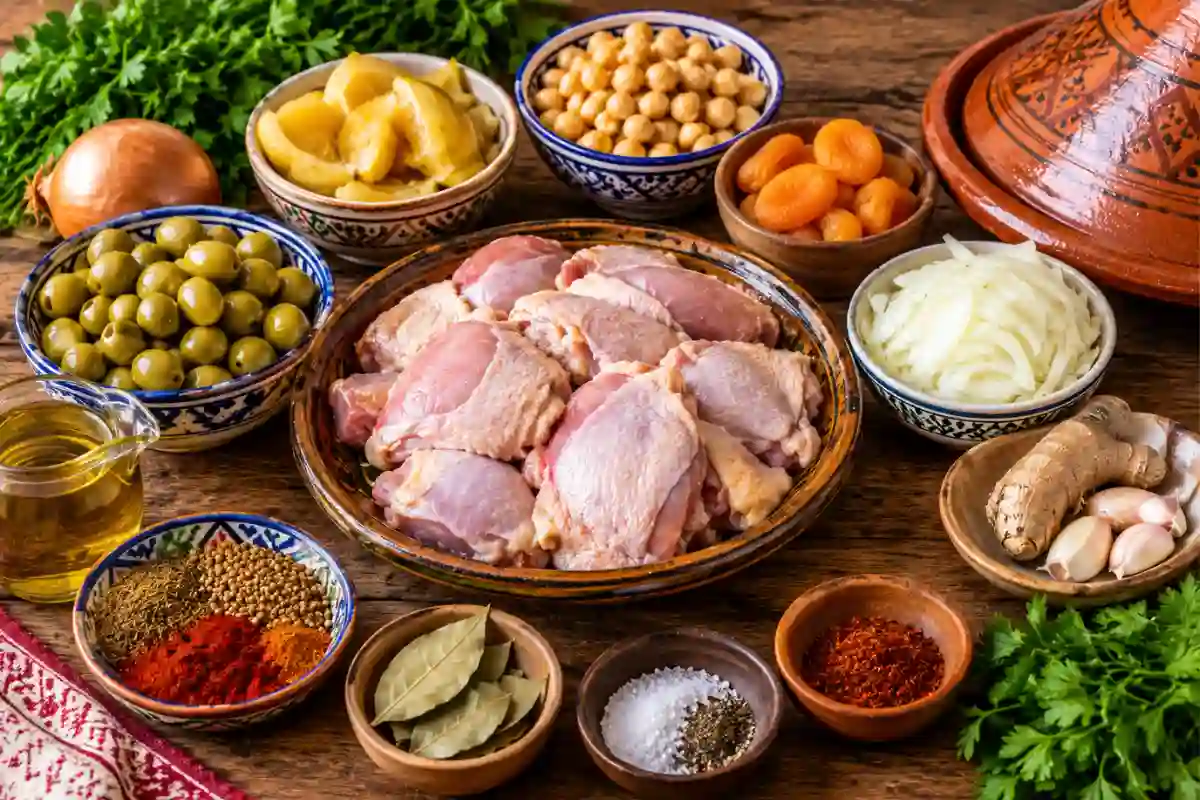
Main: Chicken thighs bone-in, yellow onion sliced, garlic, fresh ginger, green olives pitted, preserved lemon chopped, chickpeas, dried apricots if you like sweet-savory.
Spices: Cumin, paprika, ground coriander, a pinch of cayenne, salt and black pepper, bay leaves.
Preserved lemon is the key. If you don’t have it, use fresh lemon at the end but use less. It will still work, but preserved lemon gives that deep authentic taste.
How to Make It Step by Step
Step 1: Season
Pat chicken dry. Season with salt, pepper, cumin and paprika.
Step 2: Sauté
Heat olive oil in a heavy pot. Cook onions until soft and golden. Add garlic and ginger, 30 seconds until fragrant.
Step 3: Bloom spices
Add coriander, cayenne and bay leaves. Stir 30 seconds.
Step 4: Brown
Add chicken, brown lightly on both sides. Not cooking through, just color.
Step 5: Build sauce
Pour a little chicken stock, add chickpeas, olives, preserved lemon and apricots. Stir gently.
Step 6: Simmer slow
Cover, low heat, 35-45 minutes until chicken is tender and sauce thickens a bit.
Step 7: Serve
Taste at the end – olives and preserved lemon are salty, so add salt only now. Finish with fresh parsley.
Tips From My Mom
Use thighs, not breast. Breast dries out.
Don’t rush the simmer. Low and slow is everything.
Rest 10 minutes before serving. Like harira and beef tagine, it is better the next day.
What to Serve With It
Keep it simple. This tagine loves:
Couscous – the most traditional, soaks the sauce
Bread – Moroccan khobz or pita to scoop
Simple salad – cucumber tomato with lemon and olive oil
Avoid heavy sides. Let the tagine shine.
What to Store With Chicken Tagine
Fridge: 3-4 days in airtight container, chicken covered by sauce.
Freezer: 3 months. Cool completely first.
Reheat: Low heat on stove with splash of water. Microwave is okay in short bursts.
Store couscous, bread and salad separately. Don’t mix them into the sauce.
Nutrition Information
Estimate per serving, without couscous:
Calories: ∼420 kcal | Protein: 34g | Carbs: 18g | Fat: 24g | Fiber: 4g
Thighs keep it juicy and high in protein. Olives and olive oil give good fats. If you want it lighter, use less oil and skip apricots.
Helpful Notes
Thighs are better than breast – they don’t dry out.
Preserved lemon is the difference. If you use fresh lemon, add it at the very end and use less.
Don’t add salt at the beginning. Olives and preserved lemon are already salty. Taste at the end only.
If you want sweet-savory, keep apricots. If you want more savory and tangy, use only olives and preserved lemon.
Frequently Asked Questions
Can I make it ahead?
Yes. My mom says it is better the next day. The flavors settle.
Can I freeze it?
Yes. Freeze without fresh parsley.
Is it spicy?
Not traditionally. It is warm and aromatic rather than hot. You can adjust cayenne to your preference.
What is the secret ingredient?
Preserved lemon. It gives that salty citrus taste you can’t get with fresh lemon.
What is the secret ingredient in tagine?
he real secret ingredient in tagine is time and gentle cooking, but flavor-wise, it is often preserved lemon. Preserved lemon adds a deep, slightly salty citrus note that fresh lemon simply cannot replicate. Combined with olives and slow simmering, it creates that unmistakable tagine taste that feels rich, layered, and comforting.
What spices are essential for chicken tagine?
The most essential spices for chicken tagine are ground cumin, coriander, paprika, and black pepper. Cumin provides warmth, coriander adds a subtle citrusy note, and paprika brings depth and color. A small pinch of cayenne or chili can be added for gentle heat, while bay leaves help round out the overall aroma during slow cooking.
What is the secret to a good tagine?
The secret to a good tagine lies in building flavor gradually. Start by gently cooking onions, garlic, and spices to release their aromas before adding the chicken. Using enough liquid to create steam, covering the dish, and cooking slowly over low heat allows the ingredients to meld together. Rushing the process is the fastest way to lose the authentic tagine texture and flavor.
Conclusion
Chicken tagine is not about perfection. It is about patience. Onions soft, spices bloomed, chicken simmered slow until tender. Once you make it, you will understand why it stayed for generations.
Serve it with bread, squeeze a little fresh lemon if you need, and enjoy it slowly. Bessaha!
If you liked this Moroccan Chicken Tagine, try my beef tagine with prunes and our Friday Moroccan couscous with vegetables and try my Authentic Moroccan Harira.
For more delicious and easy recipes, follow me on Facebook and Pinterest
This recipe was written and tested by Rasha, the founder of Recipesedeas. Rasha is a food enthusiast living in the USA, sharing her family-inspired recipes and culinary adventures